

Categories
Change Password!
Reset Password!



Adjunct individualized homeopathic medicine improves long-term symptom control and reduces relapse in allergic rhinitis treated with fluticasone furoate.
A prospective randomized controlled trial investigating individualized homeopathic medicine (IHM) alongside standard therapy for allergic rhinitis (AR) reports no added short-term benefit, but a marked improvement in long-term outcomes after discontinuation.
AR is commonly treated with intranasal corticosteroids (INS) such as fluticasone furoate, yet relapse remains a concern. Complementary approaches like individualized homeopathy are extensively utilized, though evidence has been limited. In total, 210 adults suffering from moderate-to-severe AR (total nasal symptom score [TNSS] ≥6) were segregated 1:1 to:
Treatment duration was 12 weeks, followed by a 6-week treatment-free follow-up. In this open-label study, the primary endpoint was TNSS. Secondary endpoints were visual analog scale (VAS) and mini-rhinoconjunctivitis quality of life questionnaire (RQLQ). Assessments were conducted at baseline, 4, 12, and 18 weeks via intention-to-treat analysis. During the active treatment phase, both groups illustrated significant improvements. TNSS scores declined markedly at 4 and 12 weeks in both arms, with no pivotal difference between groups.
Similarly, repeated-measures analysis exhibited no meaningful Group × Time interaction at 12 weeks (TNSS: p=0.146; partial η²=0.009), indicating comparable short-term potency. However, differences emerged after therapy cessation. At 18 weeks, patients who had received adjunct IHMs reported substantially lower symptom scores compared with SOC alone. Quality of life and symptom burden also favored the adjunct group (Table 1).
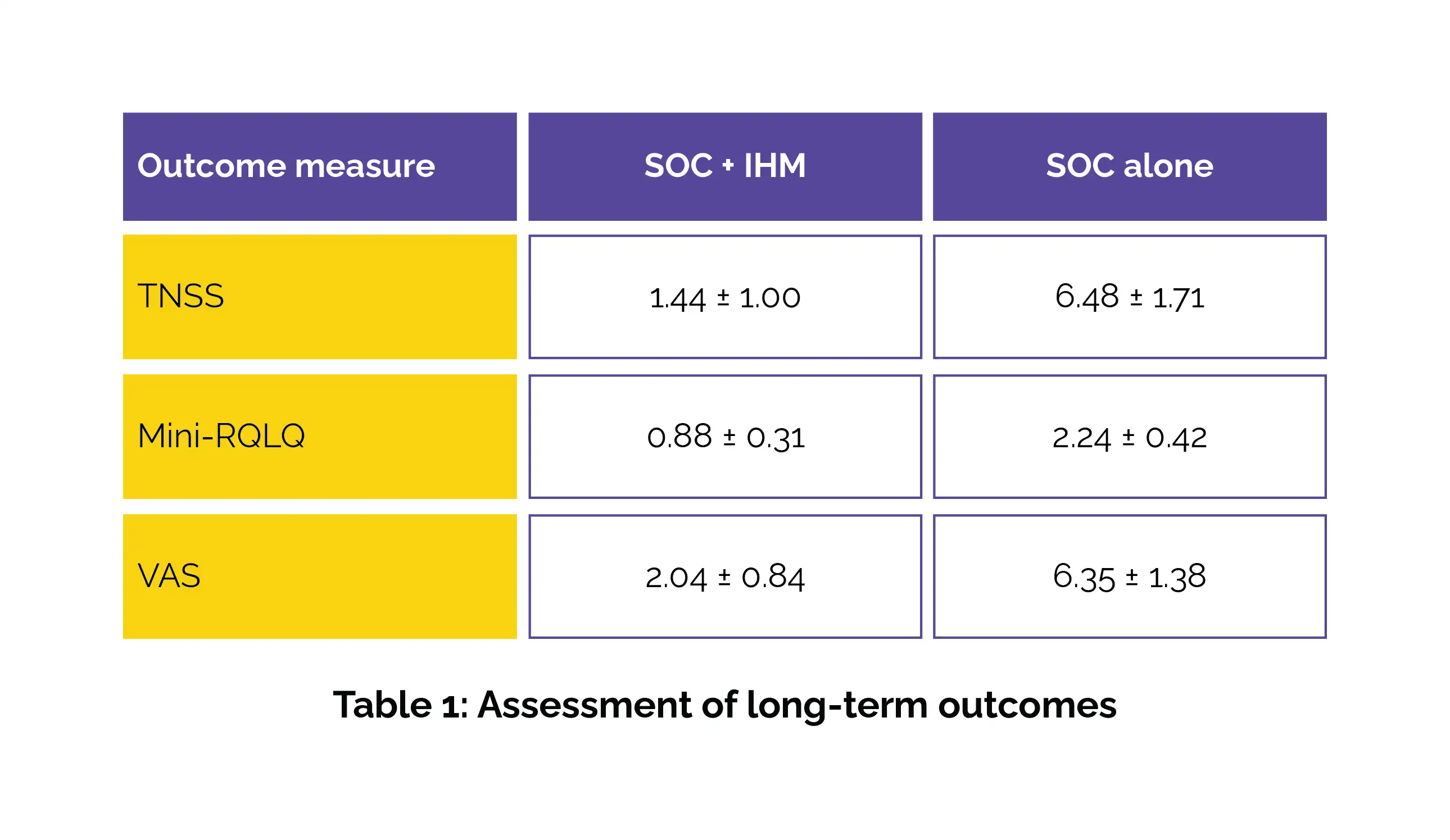
Statistical analysis confirmed a strong Group × Time interaction at 18 weeks (TNSS: p<0.001; partial η²=0.738), suggesting a sustained post-treatment effect. The study reported minimal dropout (<5%) and no serious adverse events, supporting the safety of the combined approach. Adjunct individualized homeopathy mitigates AR symptom relapse and improves quality of life after discontinuation of INS therapy. While IMH does not enhance short-term outcomes when combined with fluticasone furoate, it may yield sustained post-treatment benefits and minimize relapse risk. Further double-blind, large-scale studies are warranted to substantiate potency and inform guideline integration.
Homeopathy
Effect of Individualised Homeopathic Medicine as Adjunct to Fluticasone Furoate for Allergic Rhinitis: A Prospective, Randomised, Open-Label, Controlled Trial
Ashish Kumar Dixit et al.














Comments (0)