

Categories
Change Password!
Reset Password!


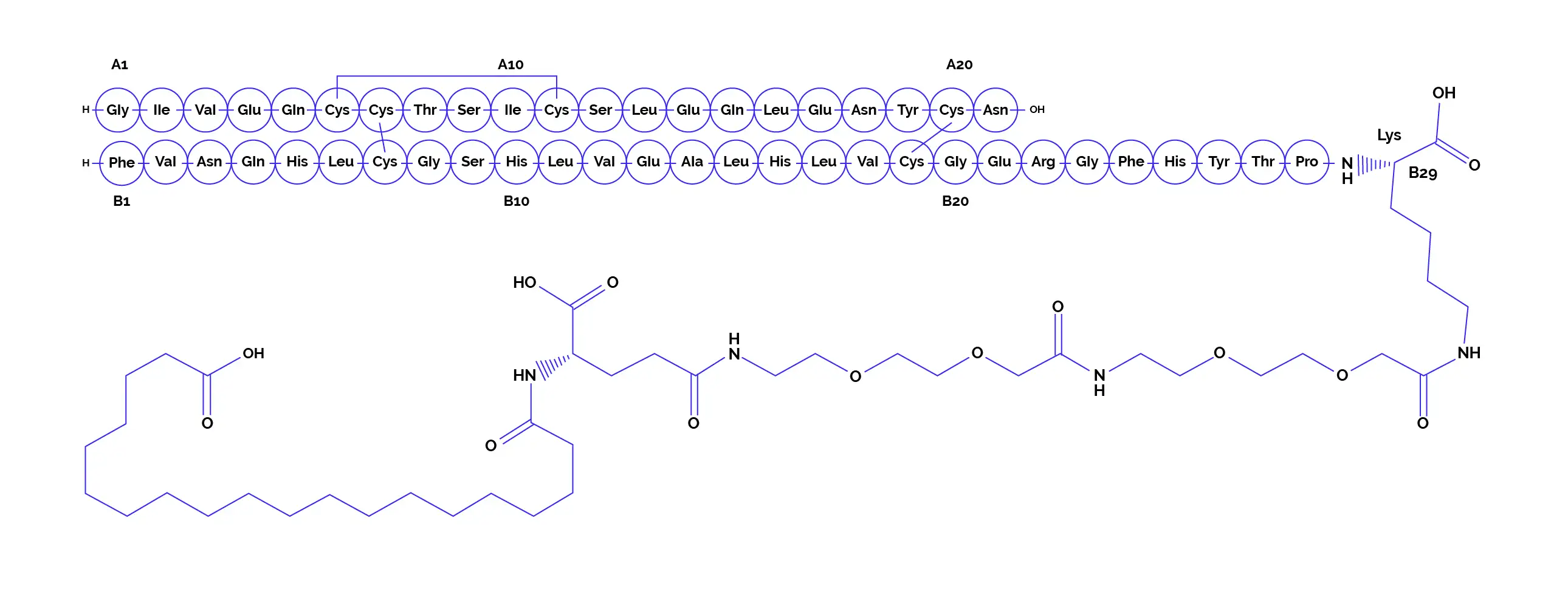
Insulin icodec-abae is a once-weekly, ultra-long-acting basal insulin analogue given by subcutaneous injection.
Insulin icodec-abae is a once-weekly, ultra-long-acting basal insulin analogue given by subcutaneous injection.[1,2] It binds reversibly to albumin, delaying its release into the circulation and reducing insulin receptor binding and clearance. This produces a slow, sustained glucose-lowering effect throughout the weekly dosing interval.[3]
This drug is Food and Drug Administration (FDA) authorized for type 2 diabetes mellitus (T2DM) management.[1] Its half-life of approximately one week supports once-weekly dosing in place of daily basal insulin injections.[1,4]
Pharmacological Class: Human insulin analogue[1]
It is indicated as an adjunct to diet and exercise to boost glycemic control in adults suffering from T2DM. In pediatrics, the drug's safety and efficacy have not been determined.[1]
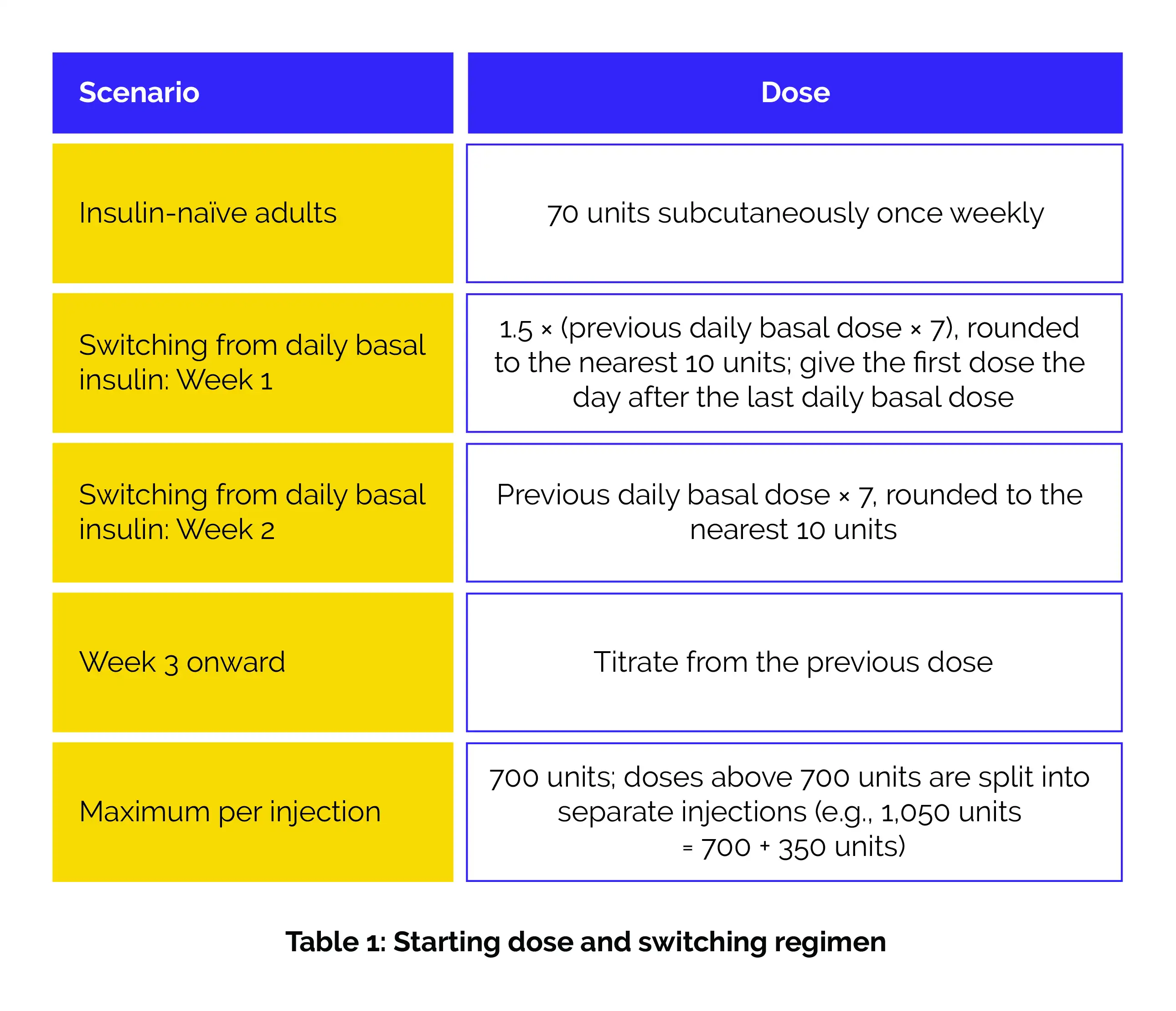
Administer subcutaneously once a week on a fixed day, using the thigh, abdomen or upper arm and alternating injection points within the selected area. Individualize and titrate the dose according to metabolic requirements, blood glucose testing, and glycemic goals. The recommended starting regimens are presented below in Table 1.
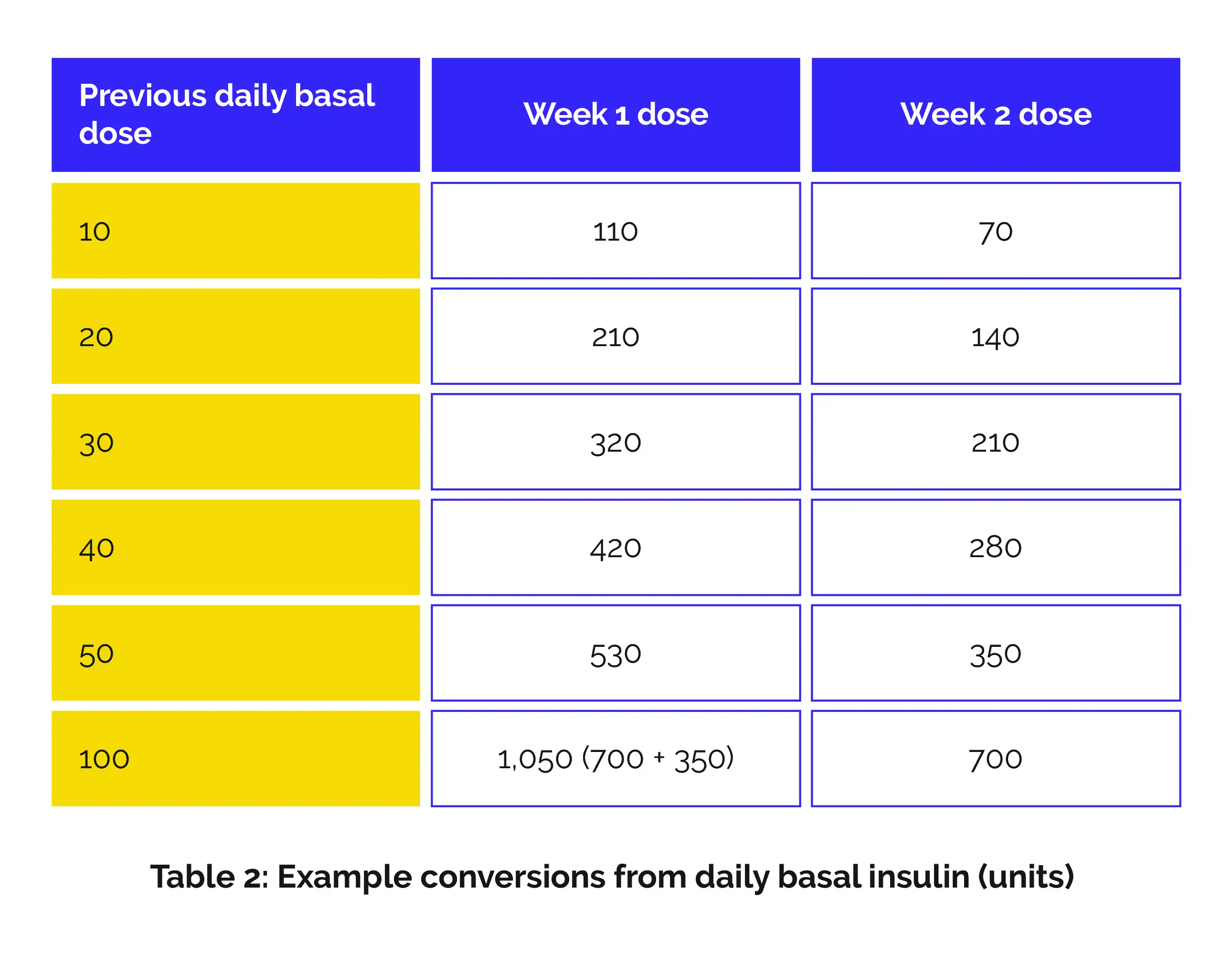
Example conversions from a previous daily basal dose are given below in Table 2.
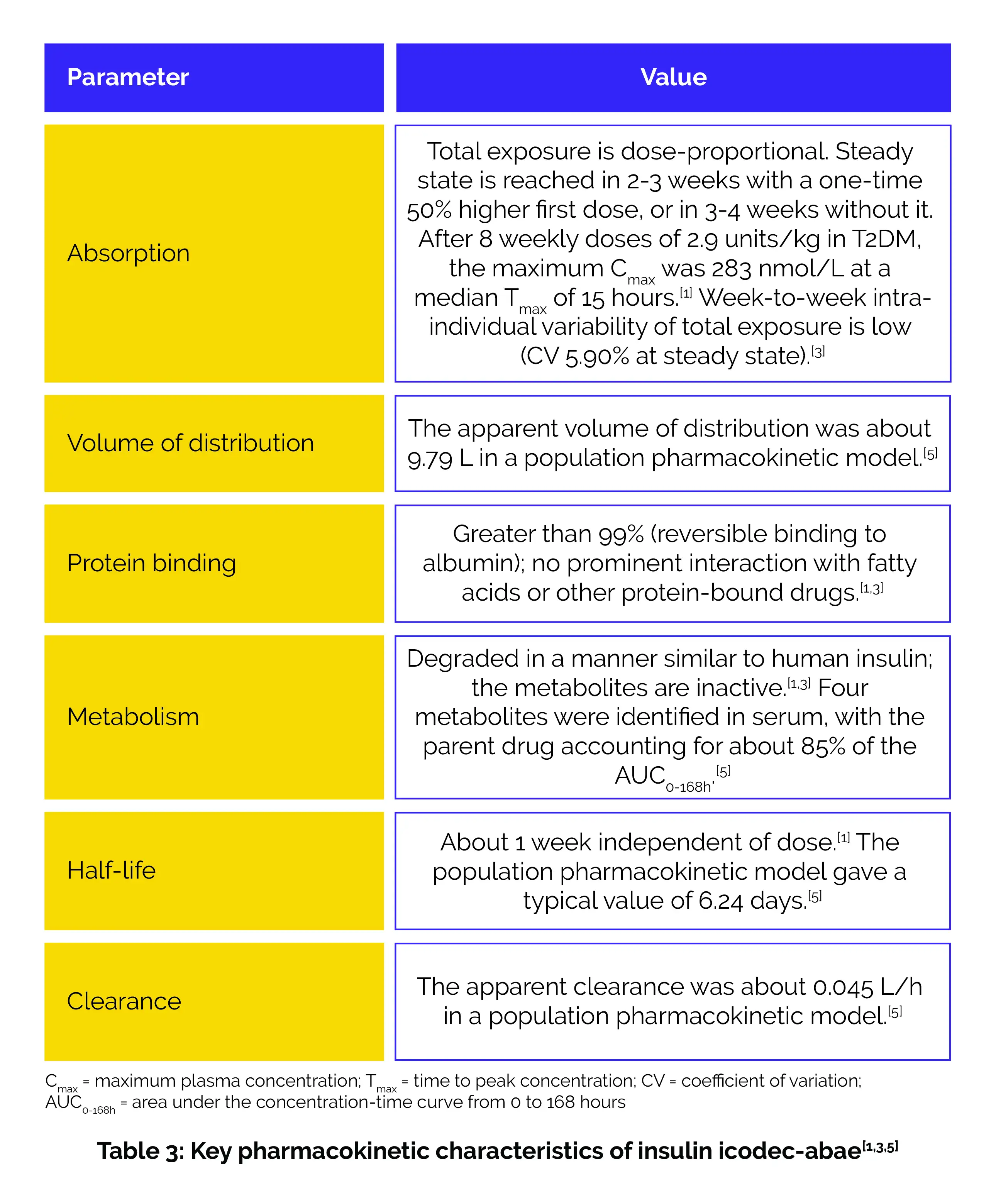
The key pharmacokinetic characteristics of insulin icodec-abae following subcutaneous administration are summarized below in Table 3.
Special populations:
It is contraindicated:
1. Agents that may lower insulin requirements (increased risk of hypoglycemia): Other antidiabetic agents, glucagon-like peptide-1 (GLP-1) receptor agonists, sulfonylureas, monoamine oxidase (MAO) inhibitors, beta-blockers, angiotensin-converting enzyme (ACE) inhibitors, salicylates, anabolic steroids and sulfonamides. Monitor blood glucose and adjust the dose if needed.
2. Agents that may increase insulin requirements (risk of hyperglycemia): Oral contraceptives, thiazides, glucocorticoids, thyroid hormones, sympathomimetics, growth hormone and danazol.
3. Agents with variable effects: Octreotide and lanreotide may either increase or decrease insulin requirements, and alcohol may either strengthen or weaken the glucose-lowering effect.
4. Sympatholytic agents: Beta-blockers and other drugs that block the sympathetic nervous system may make the symptoms of hypoglycemia less noticeable.
5. Thiazolidinediones (TZDs): Peroxisome proliferator-activated receptor gamma (PPAR-γ) agonists given with insulin can cause fluid retention and heart failure. Monitor patients, and consider stopping or reducing the TZD if heart failure develops.[1,3]
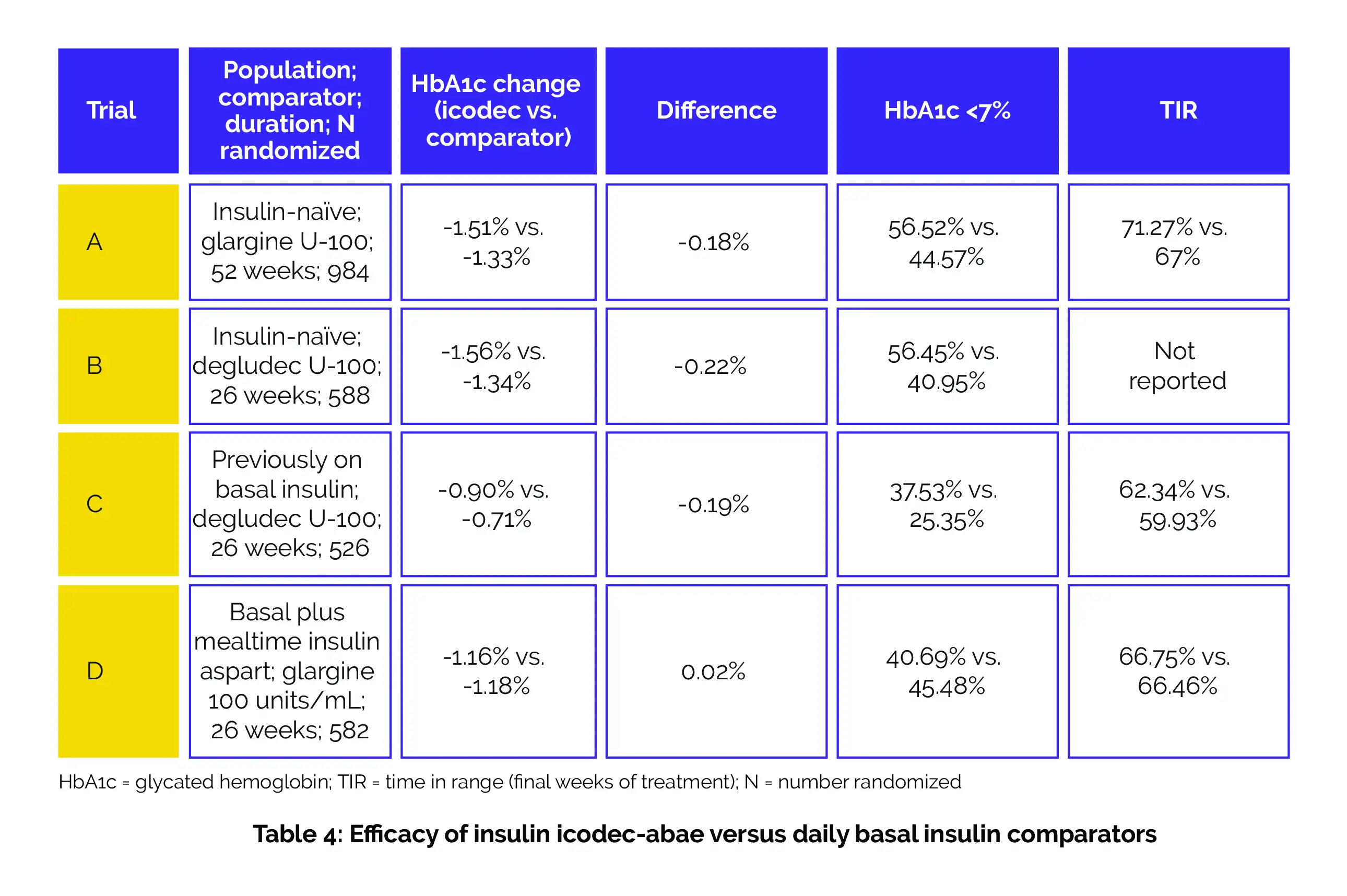
The ONWARDS clinical program compared once-weekly insulin icodec-abae with once-daily basal insulins in adults with T2DM. The FDA label describes four trials (Trials A-D, corresponding to ONWARDS 1, 3, 2 and 4, respectively) that differ in baseline insulin treatment and comparator.[1,3,4] The efficacy measure was the alteration in glycated hemoglobin (HbA1c) from baseline.
Key findings: Insulin icodec-abae lowered HbA1c at least as much as the daily comparator in all four trials. In Trials A, B and C, a higher proportion of patients reached HbA1c below 7%. In Trial D (with mealtime insulin aspart), the difference was 0.02% and met the 0.3% non-inferiority margin. The fasting plasma glucose target was 80-130 mg/dL in all arms (Table 4).
Safety: Hypoglycemia was the most common adverse reaction; severe (Level 3) episodes were rare in the insulin-naïve trials, while Level 2 hypoglycemia was most frequent (50.9%) in the trial with concomitant mealtime insulin.[1]
Clinical significance: The findings support insulin icodec-abae as a once-weekly basal insulin option for adults with T2DM, whether insulin-naïve, on daily basal insulin, or on a basal-bolus regimen, with attention to hypoglycemia risk.[1,4]












Comments (0)