

Categories
Change Password!
Reset Password!


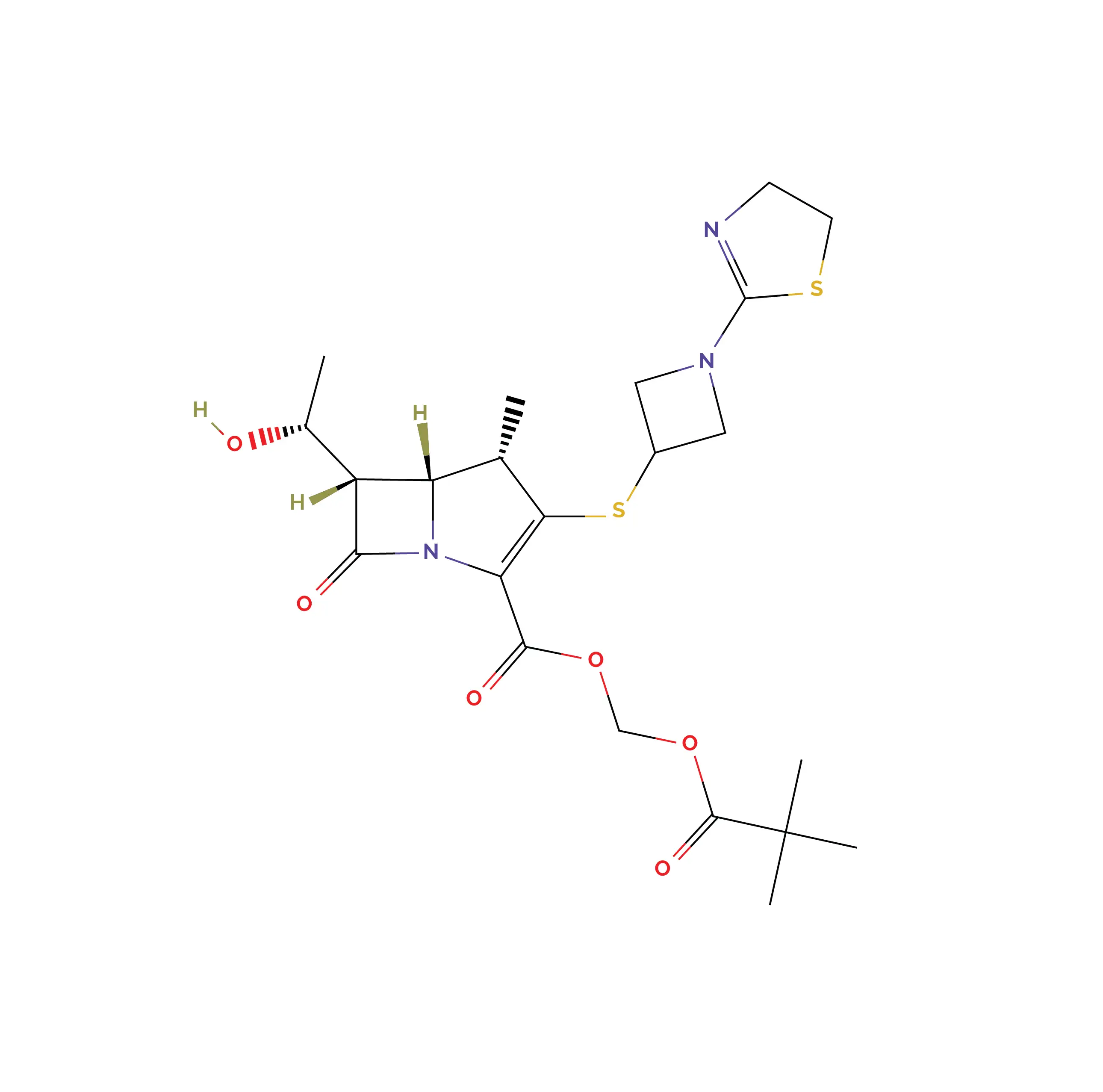
Tebipenem pivoxil is an orally administered prodrug of tebipenem. It is a carbapenem antibacterial that kills bacteria by binding essential penicillin-binding proteins (PBPs) and disrupting cell wall biosynthesis.
Tebipenem pivoxil is an orally administered prodrug of tebipenem. It is a carbapenem antibacterial that kills bacteria by binding essential penicillin-binding proteins (PBPs) and disrupting cell wall biosynthesis. This drug is Food and Drug Administration (FDA) approved for adults battling complicated urinary tract infection (cUTI), including pyelonephritis, triggered by susceptible Enterobacterales and Enterococcus faecalis. It is indicated for those who have restricted or no other oral therapeutic options.[1,2]
Pharmacological class: β-lactam antibacterial[3]
It is indicated for cUTI caused by susceptible:
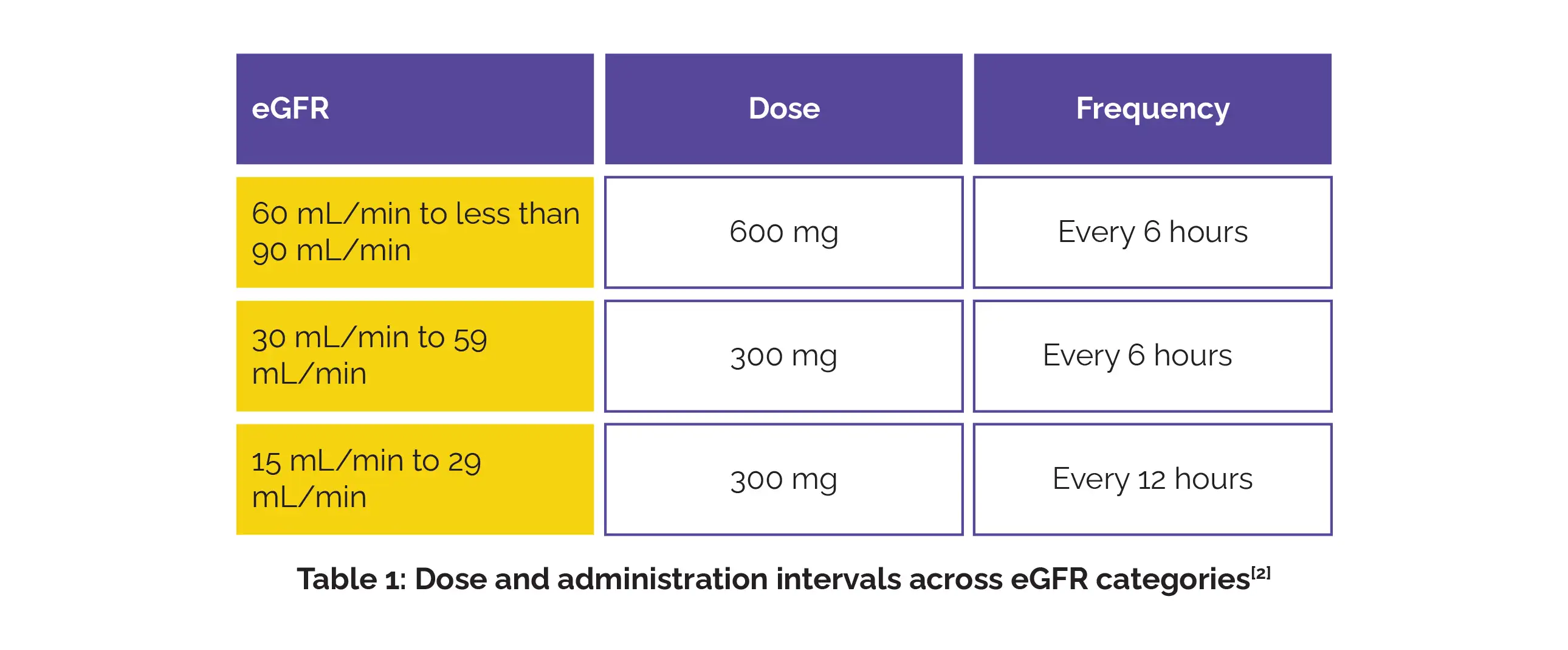
Recommended dosage: In adults with an estimated glomerular filtration rate (eGFR) of 60–150 mL/min, administer 600 mg of tebipenem (two 300 mg tablets) orally at 6-hour intervals for 7–10 days.
The recommended dosage for adults across different levels of renal function is presented below in Table 1.
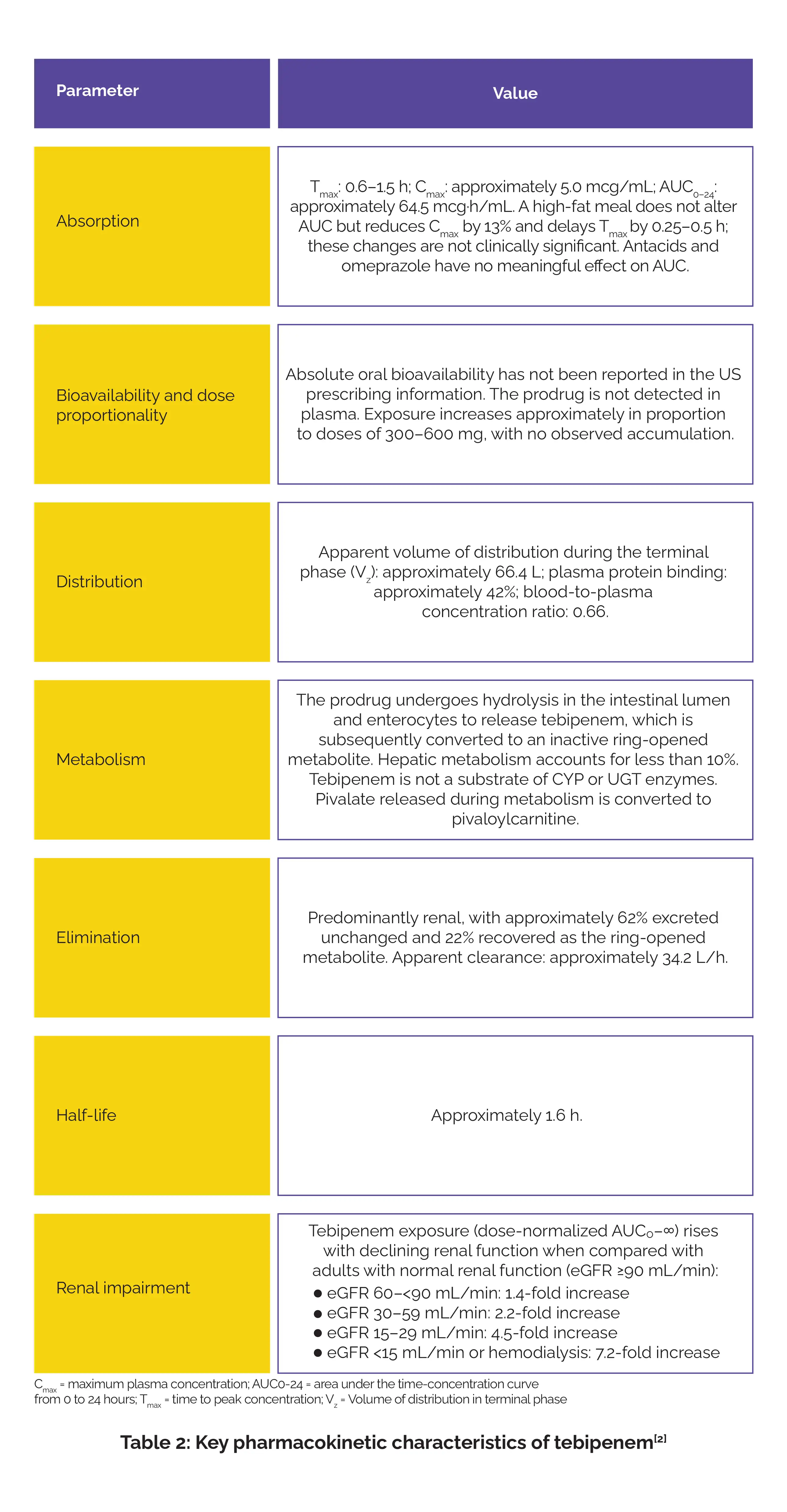
The key pharmacokinetic characteristics of tebipenem following oral administration are summarized below in Table 2, including its absorption, distribution, metabolism, elimination, and the effects of renal impairment.
It is contraindicated in those with:
1. Organic anion transporter 1/3 (OAT1/OAT3) inhibitors: Tebipenem is a substrate of OAT1 and OAT3. Co-administration with inhibitors such as probenecid may increase its plasma concentrations. Combined use is generally not recommended; if necessary, increase monitoring for treatment-associated adverse reactions.
2. Valproic acid and divalproex sodium: Carbapenem co-administration may decrease valproic acid concentrations below the therapeutic range, potentially precipitating breakthrough seizures. Avoid the combination where possible. If co-administration is necessary, monitor serum concentrations and consider supplemental anticonvulsant treatment.
3. Other pivalate-generating agents: Combined administration may enhance carnitine depletion through urinary pivaloylcarnitine excretion. Concomitant use is generally not recommended. If required, counsel patients about potential manifestations of carnitine depletion, including hypoglycemia, myalgia, fatigue, and confusion.
4. Interference with newborn screening: Tebipenem use during pregnancy, particularly before delivery, may lead to a false-positive result for isovaleric acidemia in newborn screening tests. Prompt evaluation of positive results is recommended.[2]
Commonly reported
Serious adverse reactions
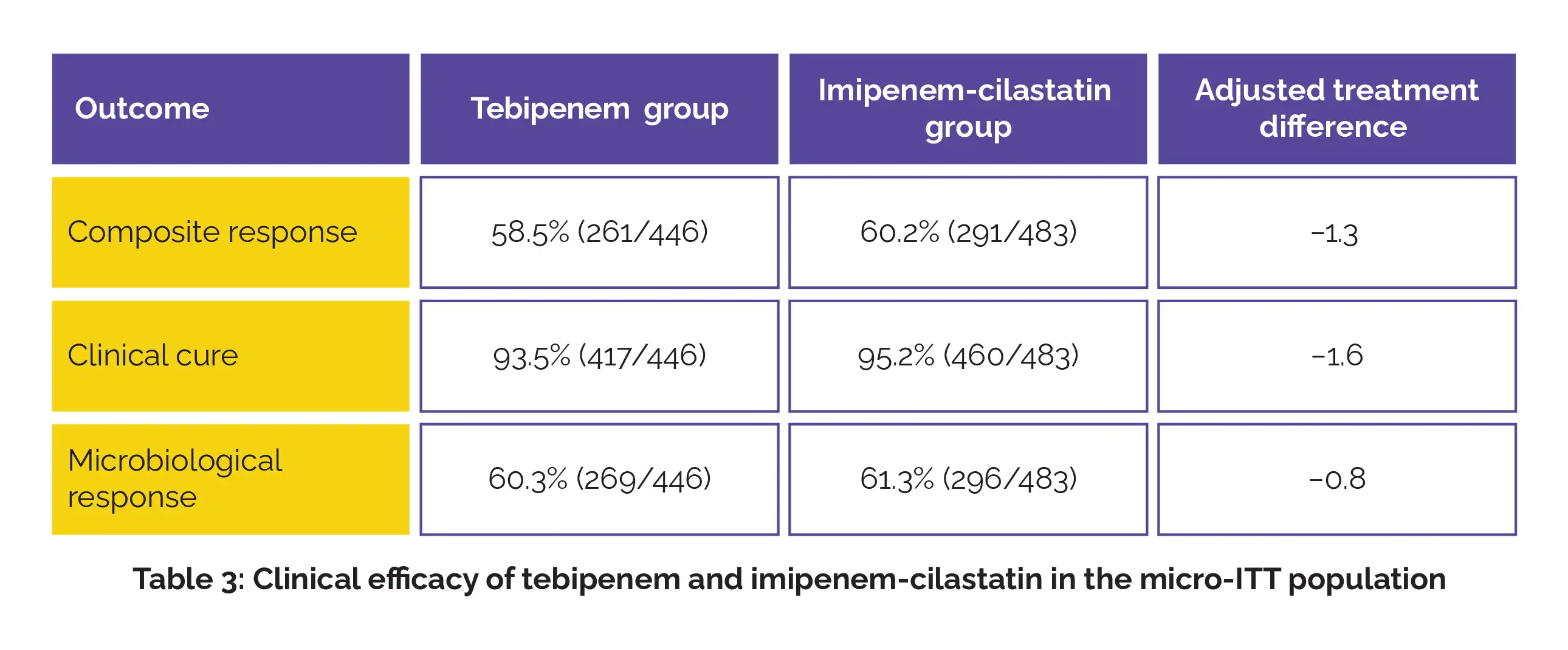
The PIVOT-PO trial assessed oral tebipenem pivoxil hydrobromide (TBP-PI-HBr) against intravenous (IV) imipenem-cilastatin in hospitalized adults with cUTIs or acute pyelonephritis (AP). This global, randomized, double-blind, non-inferiority study used a prespecified 10-percentage-point margin.
Primary endpoint: The proportion of patients in the microbiological intent-to-treat (micro-ITT) population achieving an overall response at the test-of-cure visit, based on both clinical cure and microbiological eradication.
Key findings: Oral TBP-PI-HBr met the prespecified criterion for non-inferiority to IV imipenem-cilastatin (Table 3).
Treatment effects were also comparable among participants with extended-spectrum β-lactamase (ESBL) + Enterobacterales infections. The overall safety profiles were similar, with diarrhea and headache among the most frequently reported treatment-emergent adverse events; no new safety signals were identified.
Clinical significance: The findings supported the potential of oral TBP-PI-HBr as an oral treatment option for cUTI and AP, including infections caused by ESBL-positive Enterobacterales.[4]
1. Tebipenem pivoxil. DrugBank. Available from: https://go.drugbank.com/drugs/DB16840
2. Tebipenem pivoxil tablets. FDA Label. Available from: https://www.accessdata.fda.gov/drugsatfda_docs/label/2026/215960Origs000lbl.pdf
3. Jain A, Utley L, Parr TR, Zabawa T, Pucci MJ. Tebipenem, the first oral carbapenem antibiotic. Expert Rev Anti Infect Ther. 2018 Jul;16(7):513-522.
4. Hong DK, Ascioglu S, Bhatt N, Critchley IA, Gaber M, Gasink LB, et al. Oral Tebipenem Pivoxil Hydrobromide versus Intravenous Imipenem-Cilastatin in Patients with Complicated Urinary Tract Infections or Acute Pyelonephritis: Efficacy and Safety Results from the Phase 3 PIVOT-PO study. Open Forum Infect Dis. 2026 Jan 11;13(Suppl 1):ofaf695.003.










Comments (0)