

Categories
Change Password!
Reset Password!



Endometriosis, a chronic estrogen-dependent inflammatory ailment, triggers severe pelvic pain and dysmenorrhea.
Long-term administration of once-daily oral linzagolix, particularly at a 200 mg dose combined with hormonal add-back therapy, sustains high pain response rates and quality-of-life improvements in women with endometriosis over 12 months.
Endometriosis, a chronic estrogen-dependent inflammatory ailment, triggers severe pelvic pain and dysmenorrhea. While the 24-week pivotal EDELWEISS 3 trial established the short-term potency of linzagolix—an oral Gonadotropin-Releasing Hormone (GnRH) antagonist—the EDELWEISS 6 study explored whether efficacy, safety, bone mineral density (BMD) protection, and tolerability are sustained through 12 months of active treatment and a subsequent 6-month off-treatment follow-up.
EDELWEISS 6 was a prospective, randomized, double-blind extension and withdrawal study. A total of 353 premenopausal women with moderate-to-severe endometriosis who successfully completed the 6-month EDELWEISS 3 trial were recruited. Volunteers received either 75 mg linzagolix alone or 200 mg linzagolix combined with hormonal add-back therapy (ABT) once daily from month 6 to month 12, followed by a 6-month post-treatment follow-up.
Co-primary endpoints focused on the reduction of dysmenorrhea and non-menstrual pelvic pain at month 12, alongside assessments for dyschezia (difficulty in defecating), dyspareunia (painful intercourse), quality of life (checked via the Endometriosis Health Profile-30 [EHP-30] questionnaire), analgesic use, body mass index (BMI), and adverse events (such as vasomotor symptoms).
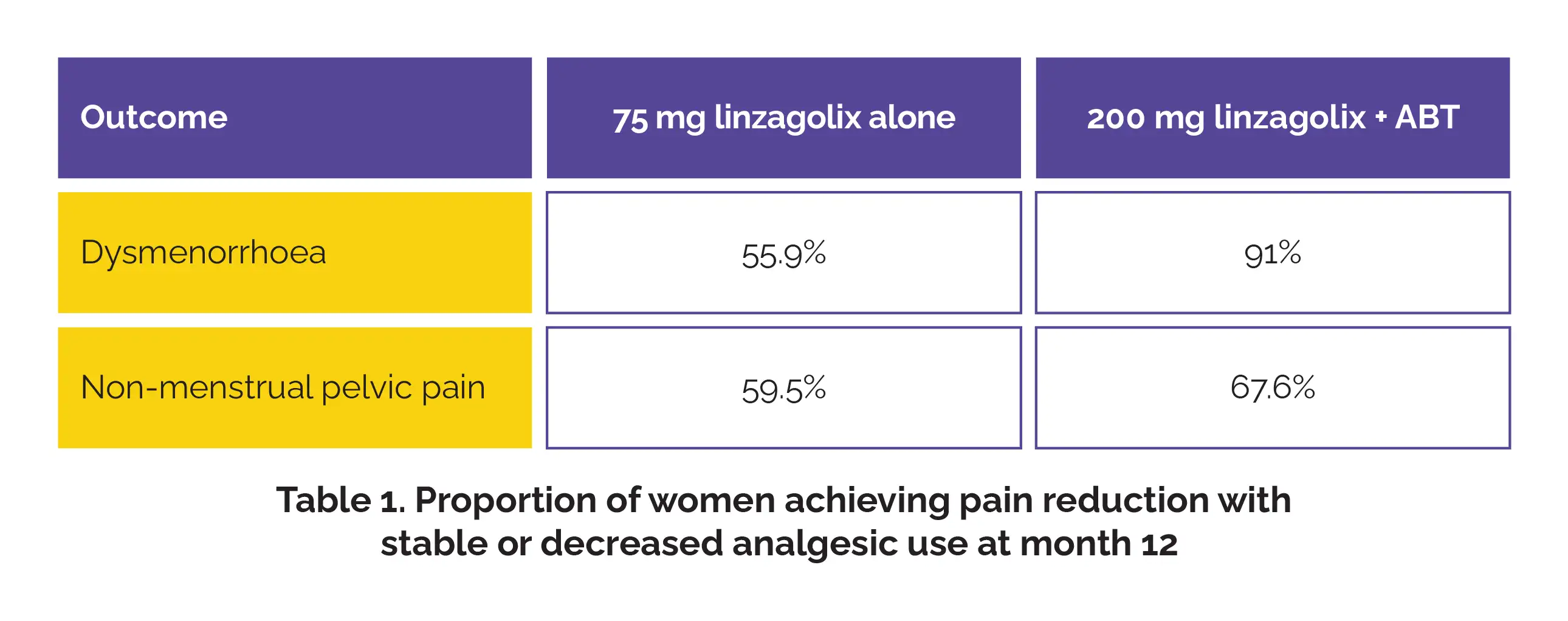
At month 12, therapeutic efficacy was robustly maintained. Both linzagolix regimens improved dysmenorrhoea and non-menstrual pelvic pain, with higher response rates for dysmenorrhoea in the 200 mg linzagolix + ABT group (Table 1):
Both dosing regimens yielded steady reductions in daily dyschezia, dyspareunia, and overall pelvic pain scores, with superior outcomes observed in the 200 mg + ABT cohort. EHP-30 total scores illustrated clear improvements across all five dimensions. Safety outcomes remained favorable: BMI changes were minimal, adverse events such as hot flushes occurred in fewer than 1% of participants, and risks of BMD loss were successfully mitigated by concomitant ABT. Partial symptom relief persisted for several months during the subsequent 6-month off-treatment follow-up period.
Oral linzagolix (200 mg once daily with hormonal ABT) represents an effective, safe, and durable long-term medical therapy for endometriosis-linked pain, reducing analgesic reliance and substantially boosting health-related quality of life. Additionally, the 75 mg monotherapy regimen provides a valuable alternative for long-term care in those who require or prefer treatment without concomitant hormonal ABT.
Human Reproduction Open
Linzagolix, with and without add-back therapy, in women with endometriosis-associated pain: results from EDELWEISS 6, a double-blind randomized extension and withdrawal study
Jacques Donnez et al.













Comments (0)