

Categories
Change Password!
Reset Password!



Knee osteoarthritis (KOA) is a degenerative joint condition characterized by pain, stiffness, and impaired mobility.
Lower temperatures, higher wind speeds, and daily weather fluctuations are associated with infrapatellar fat pad changes and greater symptom burden in knee osteoarthritis.
Knee osteoarthritis (KOA) is a degenerative joint condition characterized by pain, stiffness, and impaired mobility. Environmental conditions, including temperature, humidity and wind speed, are increasingly investigated for their potential association with symptom fluctuations. The infrapatellar fat pad (IPFP), a specialised adipose tissue structure within the knee, is also recognized as a potential contributor to joint-related symptoms.
However, its involvement in the relationship between weather exposure and clinical outcomes remains unclear. Researchers investigated whether magnetic resonance imaging (MRI)-derived IPFP characteristics statistically mediated the association between environmental factors and clinical symptoms in KOA.
This cross-sectional study included 108 patients with KOA. Meteorological data on temperature, wind velocity, and relative humidity were obtained from local weather records. The authors assessed IPFP characteristics using 3.0-T MRI, examining both morphological measurements and signal intensity (SI) parameters. With the help of Western Ontario and McMaster Universities Osteoarthritis Index (WOMAC), clinical symptoms were monitored.
For minimizing the dimensionality of the MRI-derived IPFP features, principal component analysis (PCA) was utilized. Correlation analysis examined relationships between IPFP characteristics and WOMAC scores, while mediation analysis assessed whether these imaging parameters statistically explained part of the association between environmental exposures and clinical outcomes.
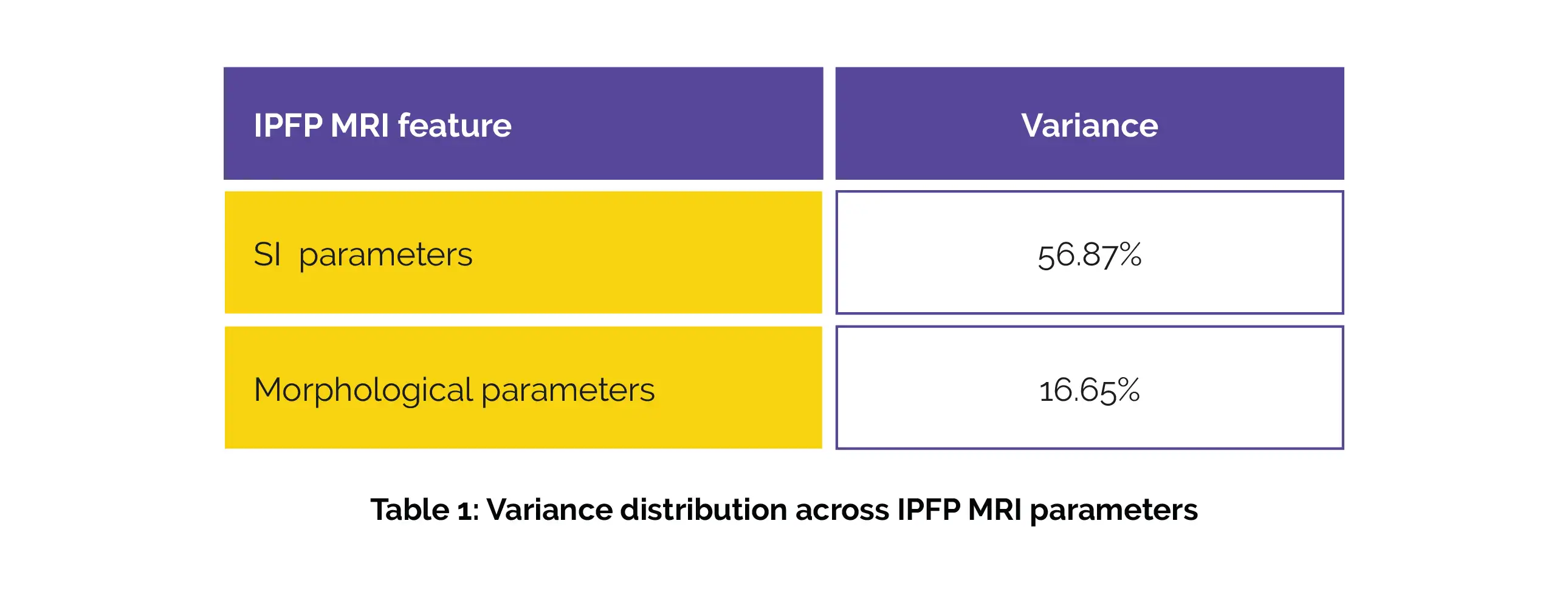
MRI signal intensity contributed more substantially to the variation in IPFP imaging characteristics than morphological measurements. The PCA findings showed a clear difference in the proportion of total variance explained by these two feature categories (Table 1).
Correlation analysis further showed that most SI measurements, including mean SI and standard deviation of SI, were substantially linked with WOMAC scores (r = 0.20–0.49). Environmental conditions were also linked with IPFP signal characteristics. Lower temperatures, higher wind speeds and daily weather fluctuations correlated significantly with increased SI.
Mediation analysis identified a statistically significant mediating role for IPFP MRI parameters, particularly SI measurements, in the associations between environmental exposures and both pain and total WOMAC scores.
Pathological tissue alterations within the IPFP—reflected quantitatively by elevated MRI SI—act as a critical biological link translating external weather stressors into heightened clinical pain and functional impairment in KOA. Targeting IPFP inflammation may yield a novel therapeutic strategy for tackling weather-sensitive osteoarthritis flares.
Osteoarthritis and Cartilage Open
The infrapatellar fat pad mediates environmental exposure for clinical outcomes in knee osteoarthritis
Anping Shen et al.












Comments (0)