

Categories
Change Password!
Reset Password!



Postoperative pain remains a key clinical hurdle influencing recovery velocity, patient comfort, and resource utilization following elective laparoscopic cholecystectomy for symptomatic gallbladder disease.
TAP block + paracetamol exhibits superior postoperative pain relief and is linked with earlier mobilisation, faster oral intake, and greater patient satisfaction after gallbladder surgery.
Postoperative pain remains a key clinical hurdle influencing recovery velocity, patient comfort, and resource utilization following elective laparoscopic cholecystectomy for symptomatic gallbladder disease. Inadequate analgesia exacerbates surgical stress responses, delaying physiological rehabilitation. This study was designed to determine the precise clinical impact of diverse postoperative pain management strategies on holistic patient recovery trajectories.
In this hospital-based prospective observational study, 100 patients undergoing elective laparoscopic cholecystectomy for symptomatic gallbladder disease were included. Postoperative analgesic regimens included intravenous (IV) paracetamol, non-steroidal anti-inflammatory drugs (NSAIDs), opioids, local anaesthetic infiltration, transversus abdominis plane (TAP) block and dexmedetomidine-based combinations.
The degree of pain was checked via visual analog scale (VAS) at 2, 6, 12 and 24 hours. Recovery outcomes, rescue analgesic requirements, postoperative complications and patient satisfaction were also evaluated.
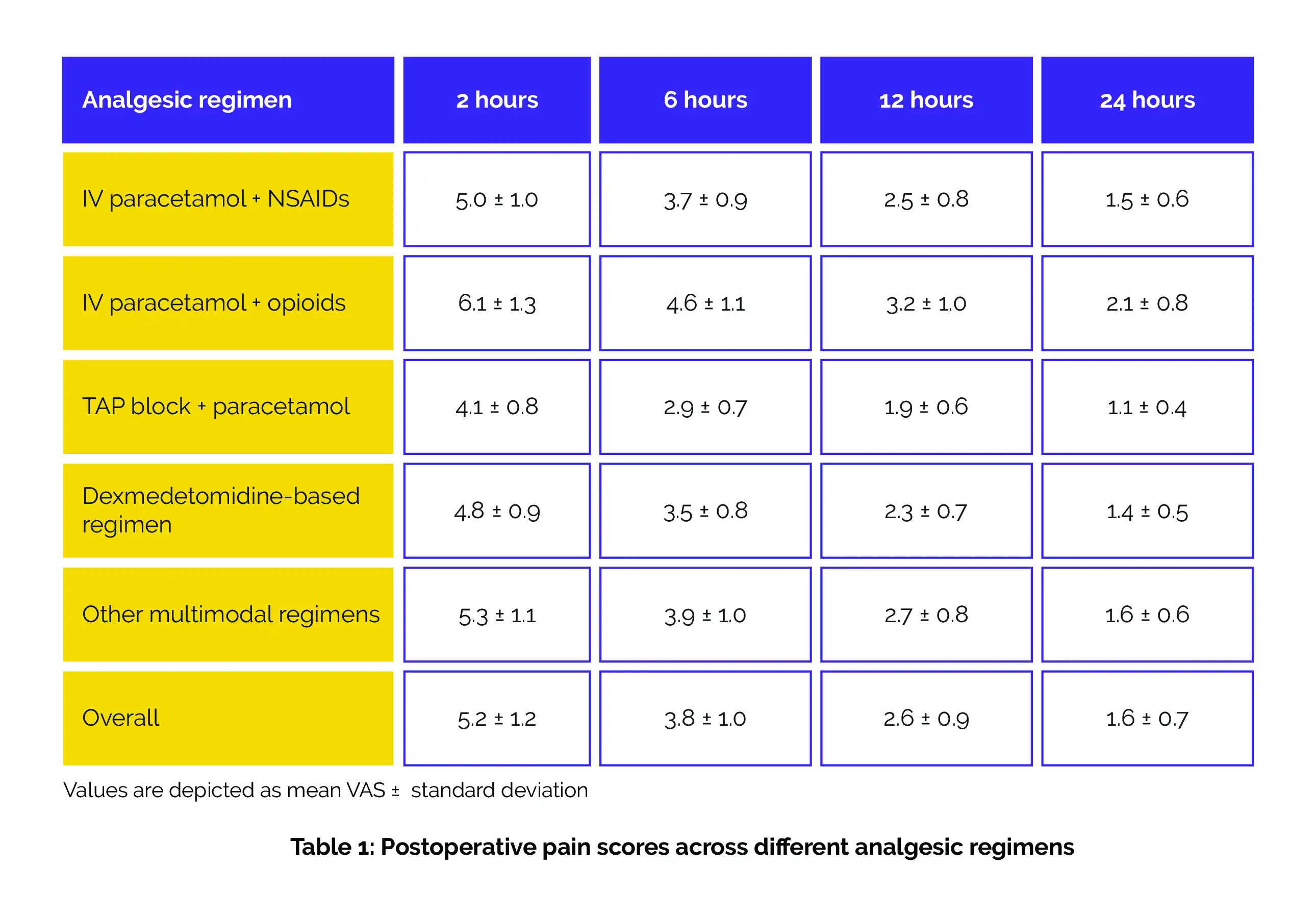
The mean patient age was 46.2 ± 12.3 years, and 62% were females. Symptomatic cholelithiasis (70.0%) was the leading surgical indication, while hypertension (24.0%) was the most common comorbidity. IV paracetamol combined with NSAIDs was the most frequently used analgesic regimen (40.0%). However, TAP block with paracetamol (16.0%) demonstrated the lowest pain scores throughout the first 24 hours (Table 1).
The postoperative recovery outcomes are summarized in Table 2 below:
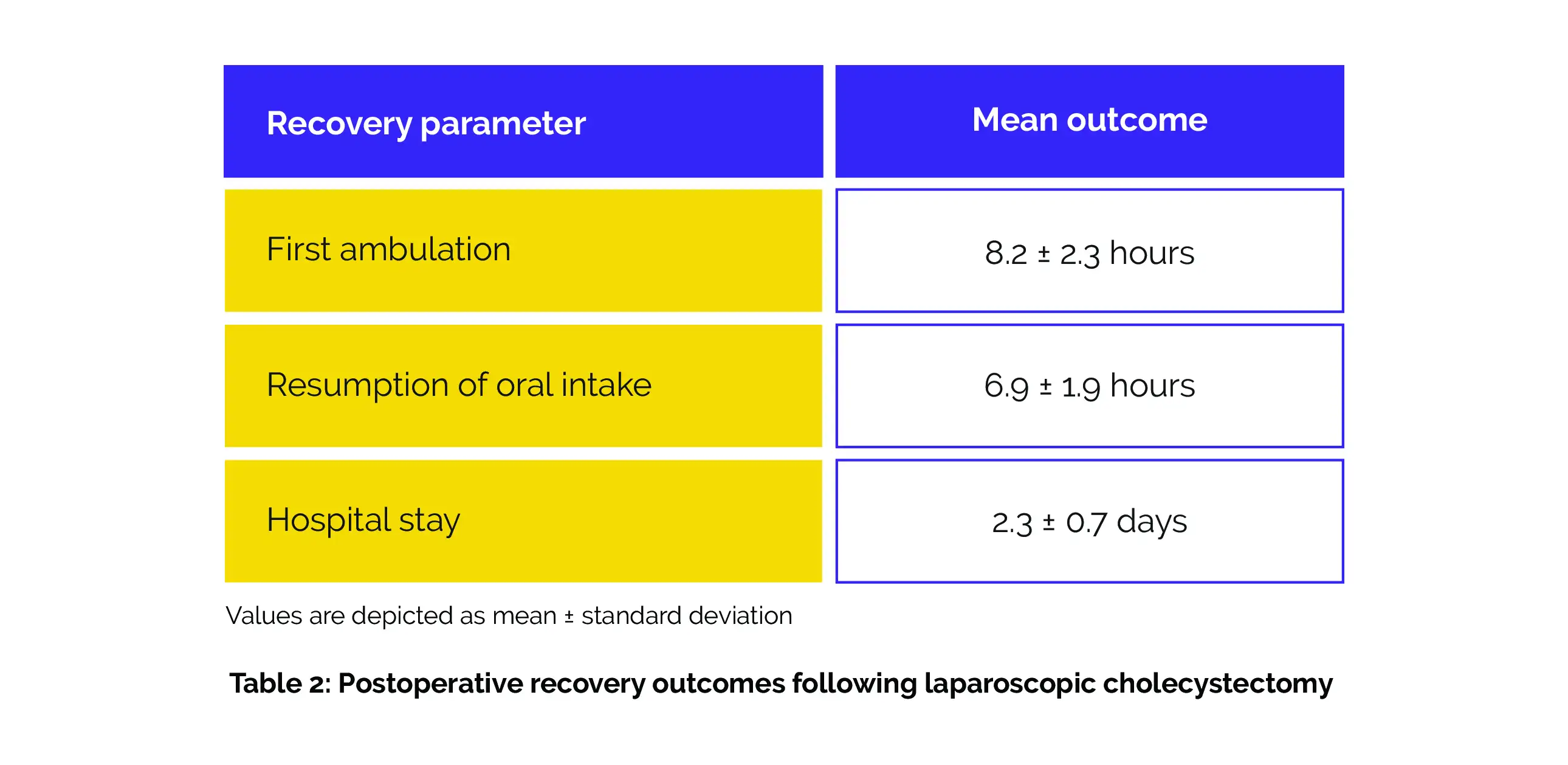
Postoperative nausea and vomiting occurred in 24% of patients, while 30% required rescue analgesia. High patient satisfaction was reported by 66%, with lower pain scores substantially associated with greater satisfaction.
Optimized postoperative pain management markedly enhanced recovery trajectories after gallbladder surgery by encouraging early ambulation and oral nutrition, minimizing hospital length of stay, and decreasing rescue analgesic dependence. Multimodal analgesia frameworks—particularly TAP blocks supplemented with paracetamol—delivered superior analgesic efficacy and correlated directly with elevated patient satisfaction.
International Journal of Pharmacy Research & Technology (IJPRT)
The Influence of Postoperative Pain Management on Recovery in Gallbladder Surgery
Dr. Rohit Kansal et al.










Comments (0)