

Categories
Change Password!
Reset Password!



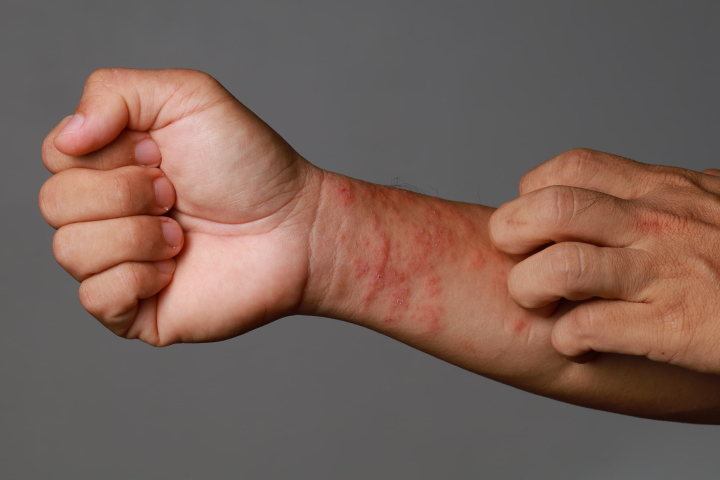
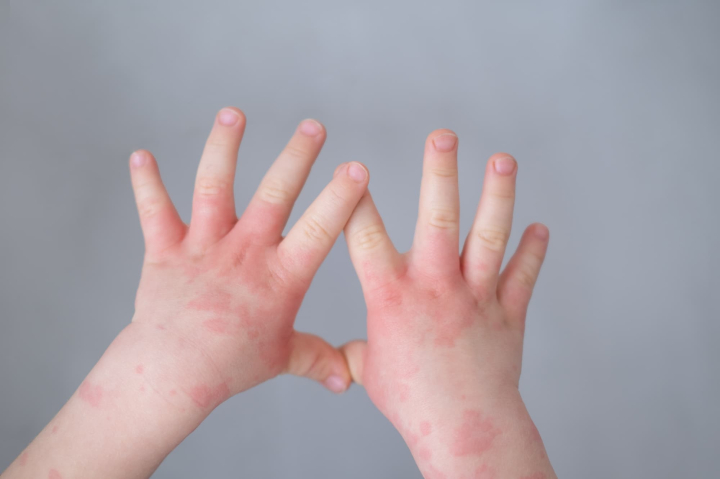
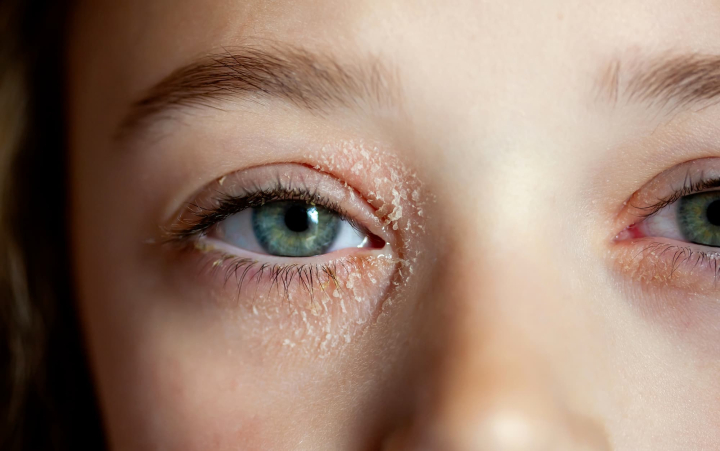
Treatment-emergent eczematous reactions (TEERs) have been reported in people with psoriasis receiving biologic therapies.
Among patients receiving biologic therapy for psoriasis, 2.17% develop treatment-emergent eczematous reactions, with increased rates observed with IL-17 inhibitors, higher-dose treatment, and a prior history of atopic dermatitis.
Treatment-emergent eczematous reactions (TEERs) have been reported in people with psoriasis receiving biologic therapies. However, their incidence and associated risk factors remain unclear. This systematic review and meta-analysis estimated their pooled incidence and identified associated factors.
The authors searched PubMed, EMBASE, and Web of Science for research reporting novel-onset or exacerbated eczema in psoriasis sufferers treated with tumor necrosis factor (TNF), interleukin (IL)-17, IL-12/23, or IL-23 inhibitors. Notably, 2 eligible studies of the oral tyrosine kinase 2 (TYK2) inhibitor deucravacitinib were examined separately as an exploratory subgroup.
The findings were pooled using a random-effects approach after applying the Freeman–Tukey double arcsine transformation. The key outcome was the pooled incidence of TEERs. Secondary analyses examined differences as per the biologic class, dosage, and demographic characteristics.
The overall incidence of TEERs was 2.17%, with noticeable differences across biologic classes. IL-17 inhibitors exhibited the highest incidence (3.47%), followed by IL-12/23 inhibitors (2.15%), TNF inhibitors (1.02%), and IL-23 inhibitors (0.09%). Within the IL-17 class, incidence was higher with secukinumab (5.3%) than with ixekizumab (1.51%).
High-dose regimens exhibited greater incidence than low-dose regimens (7.65% vs. 3.36%). Rates were nearly 6% in East Asian populations vs. 1% in Western populations. A prior diagnosis of atopic dermatitis showed the strongest association at the patient level (hazard ratio, 12.40).
In patients with psoriasis, TEERs varied according to biologic class, dosage, and population characteristics. IL-17 inhibitors, particularly secukinumab, and high-dose regimens showed higher incidence, while a history of atopic dermatitis emerged as the strongest patient-level risk factor. These findings highlight the importance of considering individual susceptibility and treatment-related factors when assessing eczema during biologic therapy.
BioDrugs
Incidence and Risk Factors of Treatment-Emergent Eczematous Reactions in Patients with Psoriasis Treated with Biologics: A Systematic Review and Meta-Analysis
Yifei Feng et al.









Comments (0)