

Категории
Сменить пароль!
Сброс пароля!



Определение оптимального времени для повторного обследования пациентов после пародонтальной терапии может повлиять на планирование лечения и выявление участков, требующих дальнейшего вмешательства.
Повторная оценка через 3 или 6 месяцев после пародонтальной терапии даёт сопоставимые клинические результаты и показатели, сообщаемые пациентами, при пародонтите III/IV стадии.
Определение оптимального времени для повторного обследования пациентов после пародонтальной терапии может повлиять на планирование лечения и выявление участков, требующих дальнейшего вмешательства. В этом рандомизированном клиническом исследовании изучалось, влияет ли повторная оценка через 3 или 6 месяцев после этапов 1–2 пародонтологического лечения на клинические исходы, качество жизни, связанное со здоровьем полости рта, по оценке пациентов, и достижение конечных точек лечения (EoT) у пациентов с пародонтитом III/IV стадии.
В исследование были включены 40 участников, которые были распределены либо на повторную оценку через 3 месяца (контроль), либо через 6 месяцев (тест) после этапов 1–2 пародонтологического лечения. Первичной конечной точкой было количество зубов, достигших EoT, определяемого как участок пародонта с глубиной кармана (PPD) <6 мм, или PPD 4 или 5 мм без кровоточивости при зондировании. К вторичным конечным точкам относились изменения клинических пародонтальных показателей и качества жизни, связанного со здоровьем полости рта, которое оценивали по 14-пунктному опроснику Профиль влияния стоматологического здоровья (OHIP-14).
Время повторной оценки не оказало существенного влияния на долю зубов или участков пародонта, достигших EoT. Аналогичным образом, сообщаемое пациентами качество жизни, связанное со здоровьем полости рта, было эквивалентным между двумя группами (таблица 1).
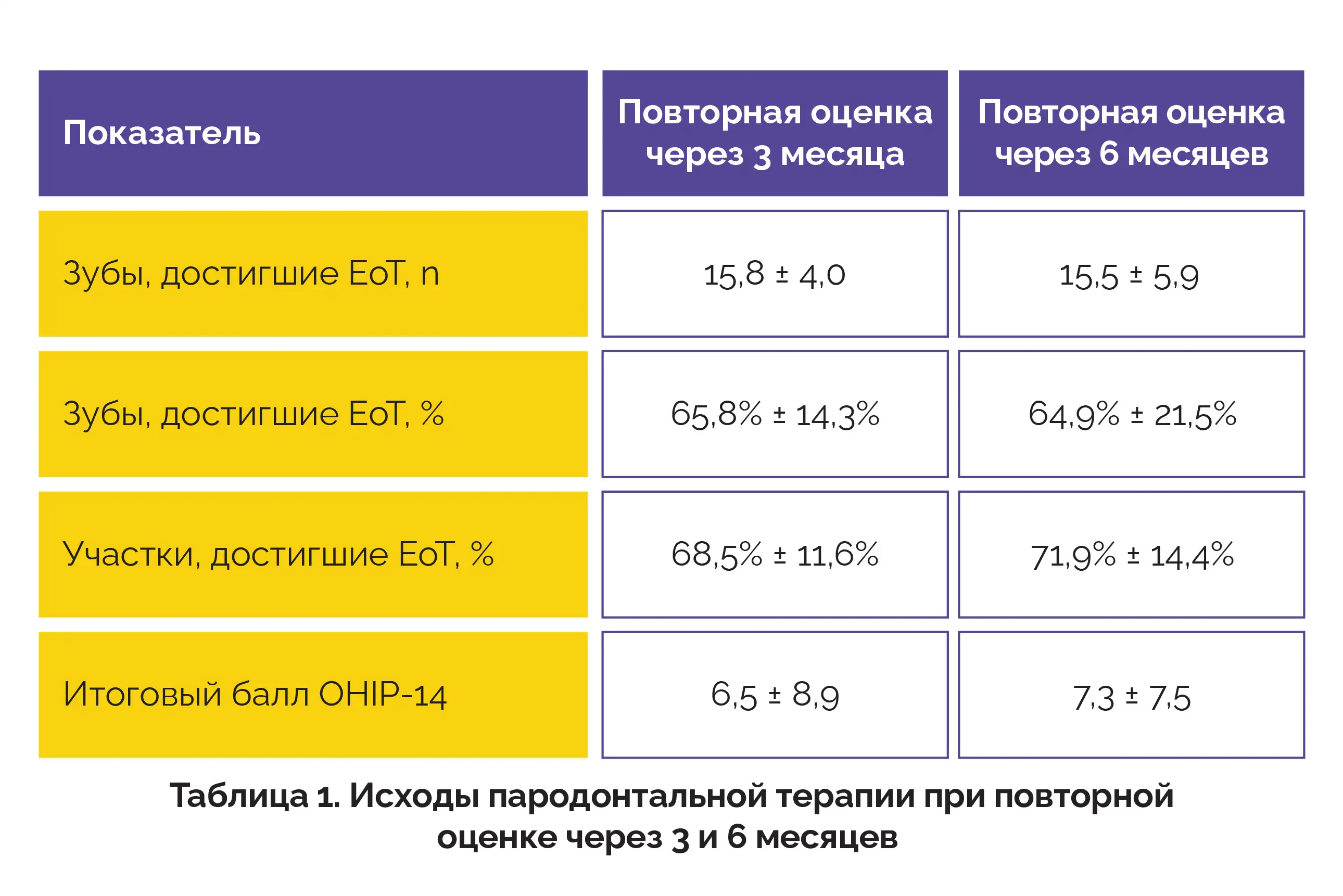
Не было отмечено статистически значимых различий между группами 3 и 6 месяцев для этих исходов. Вероятность сохранения остаточных пародонтальных карманов при повторной оценке была связана с рядом исходных характеристик и характеристик на уровне участков:
Повторные оценки через 3 или 6 месяцев после этапов 1–2 терапии пародонтита обеспечили сходные клинические исходы и исходы с точки зрения пациента. Нехирургическое пародонтологическое лечение часто не позволяло достичь конечных точек лечения (EoT) на участках, связанных с внутрикостными дефектами, тогда как участки с преимущественно горизонтальной резорбцией кости чаще достигали EoT. Следовательно, анатомические особенности и исходное состояние пародонта отдельных участков могут быть более важными детерминантами остаточного заболевания, чем сроки проведения повторной оценки — через 3 или 6 месяцев.
Journal of Periodontal Research
Timing of Re-Evaluation After Periodontal Therapy: A Randomized Clinical Trial
Walter Castelluzzo и соавт.












Комментарии (0)