

Категории
Сменить пароль!
Сброс пароля!



Скрининг наличия аутоантител (AAB) к островковым клеткам выявляет лиц с повышенным риском развития клинической (3-й) стадии сахарного диабета 1 типа (СД1) до появления симптомов заболевания.
Внедрение скрининга доклинической стадии СД1 в рутинную клиническую практику организационно выполнимо и позволяет практически полностью исключить жизнеугрожающие эпизоды диабетического кетоацидоза. Данная проактивная модель способствует повышению доступности медицинской помощи для различных групп населения и обеспечивает своевременное получение пациентами из групп риска современных болезнь-модифицирующих препаратов.
Скрининг наличия аутоантител (AAB) к островковым клеткам выявляет лиц с повышенным риском развития клинической (3-й) стадии сахарного диабета 1 типа (СД1) до появления симптомов заболевания. Раннее выявление с систематическим мониторингом позволяет своевременно проводить обучение, снижает психологическое бремя диагноза, предотвращает диабетический кетоацидоз (ДКА) и предоставляет возможность для раннего вмешательства с помощью теплизумаба для отсрочки развития заболевания.
Хотя Американская ассоциация диабетологов (ADA) рекомендует скрининг AAB у лиц с высоким риском, его интеграция в рутинную клиническую практику остается сложной задачей. Целью настоящего исследования являлась оценка осуществимости внедрения скрининга и наблюдения за пациентами с доклинической стадией СД1 на базе двух педиатрических центров, участвующих в программе T1DX-QI, а также анализ готовности медицинского персонала и выявление организационных барьеров.
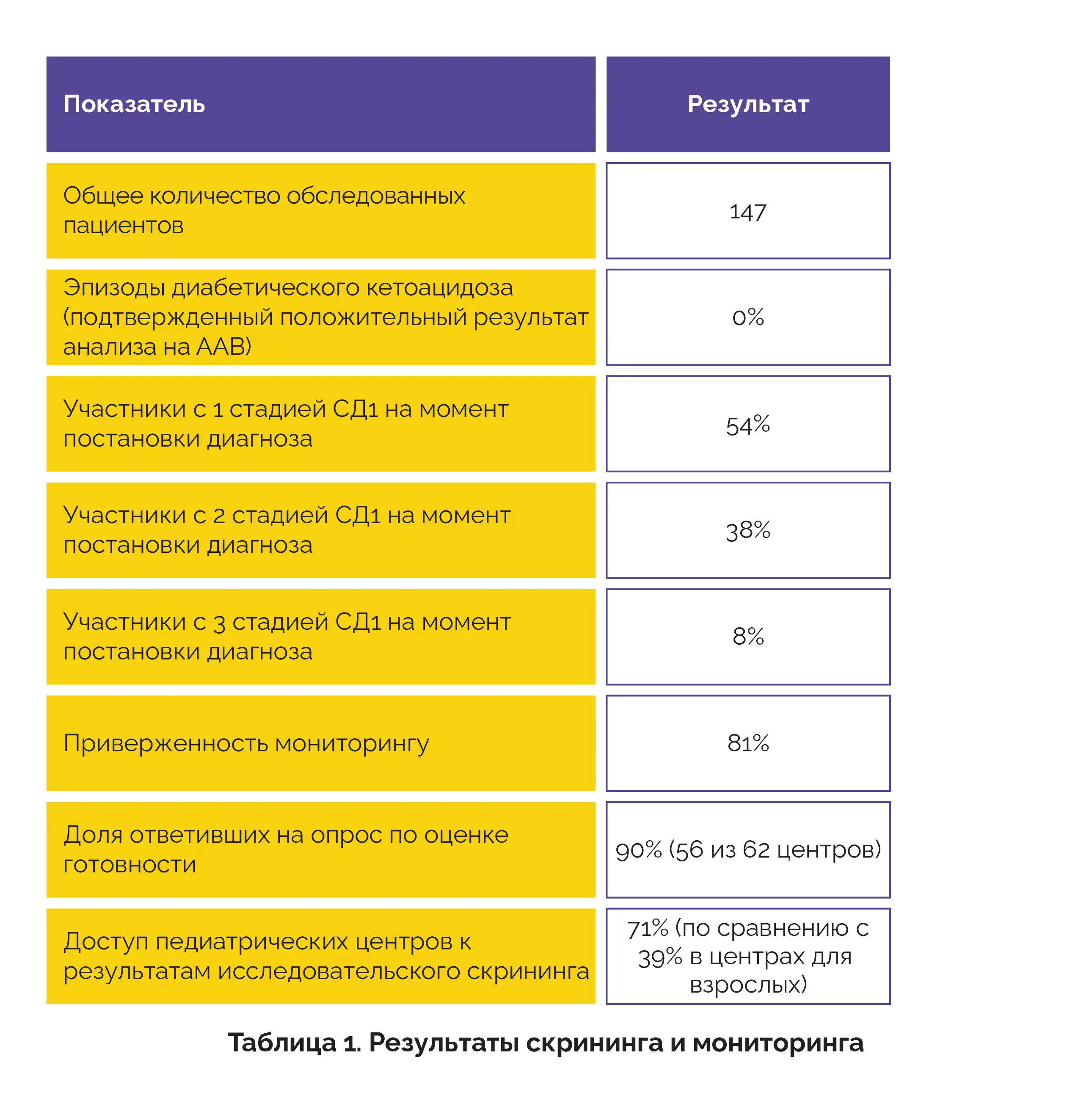
В ходе пилотного проекта были успешно разработаны и внедрены стандартные операционные процедуры, охватывающие интеграцию с электронными медицинскими картами, назначение лабораторных тестов и взаимодействие со страховыми системами. Таблица 1 показывает статус скрининга и мониторинга в исследовании в течение 12-месячной активной фазы.
Качественный анализ выявил многочисленные ключевые барьеры и факторы, способствующие внедрению:
Реализация скрининга доклинической стадии СД1 в реальной клинической практике достижима и позволяет обеспечить раннее выявление заболевания без зарегистрированных случаев ДКА у лиц с подтвержденными положительными результатами. Для успешного масштабирования этих программ в различных медицинских учреждениях необходимо продолжать оптимизировать клинические процессы и инфраструктуру системы здравоохранения.
BMJ Open Diabetes Research & Care
Bringing early detection to life: real-world operationalization of a presymptomatic type 1 diabetes screening and monitoring pilot program
Carla Demeterco-Berggren и соавт.















Комментарии (0)