

Категории
Сменить пароль!
Сброс пароля!


Наследуемые вариации в сигнальном пути иммунного ответа TLR4 начинают рассматриваться как важные детерминанты риска рецидивирующего вульвовагинального кандидоза, что подчёркивает растущую роль генетических особенностей организма-хозяина в предрасположенности к хроническим грибковым инфекциям.
Хотя рецидивирующий вульвовагинальный кандидоз (РВВК) распространён и может серьёзно нарушать качество жизни, его склонность к рецидивам отмечается лишь у части женщин, даже среди тех, кто подвергается сопоставимым воздействиям окружающей среды. Такая вариабельность всё чаще указывает на иммуногенетику хозяина как возможную причину предрасположенности. В этом исследовании авторы поставили целью выяснить, связаны ли конкретные полиморфизмы толл-подобных рецепторов (TLR) с повышенным риском РВВК у женщин репродуктивного возраста.
Было проведено исследование генетических ассоциаций с участием греческих женщин с РВВК, впервые возникшим вульвовагинальным кандидозом, вагинитом, ассоциированным с Gardnerella, и здоровых женщин из контрольной группы. Отобранные полиморфизмы генов TLR2 и TLR4 были проанализированы с использованием методики генотипирования однонуклеотидных полиморфизмов TaqMan. Распределения генотипов, частоты аллелей, отношения шансов и характеристики сцепления впоследствии оценивали с использованием как аллельной, так и доминантной моделей наследования для определения их связи с предрасположенностью к заболеванию.
Анализ включил 63 женщины с РВВК, 37 женщин с первым эпизодом инфекции, 36 женщин с вагинитом, ассоциированным с Gardnerella, и 61 здоровую женщину контрольной группы. Полученные результаты продемонстрировали выраженную ассоциацию между определёнными вариантами TLR4 и предрасположенностью к рецидивирующим грибковым инфекциям, тогда как для полиморфизмов TLR2 значимых ассоциаций выявлено не было (таблица 1).
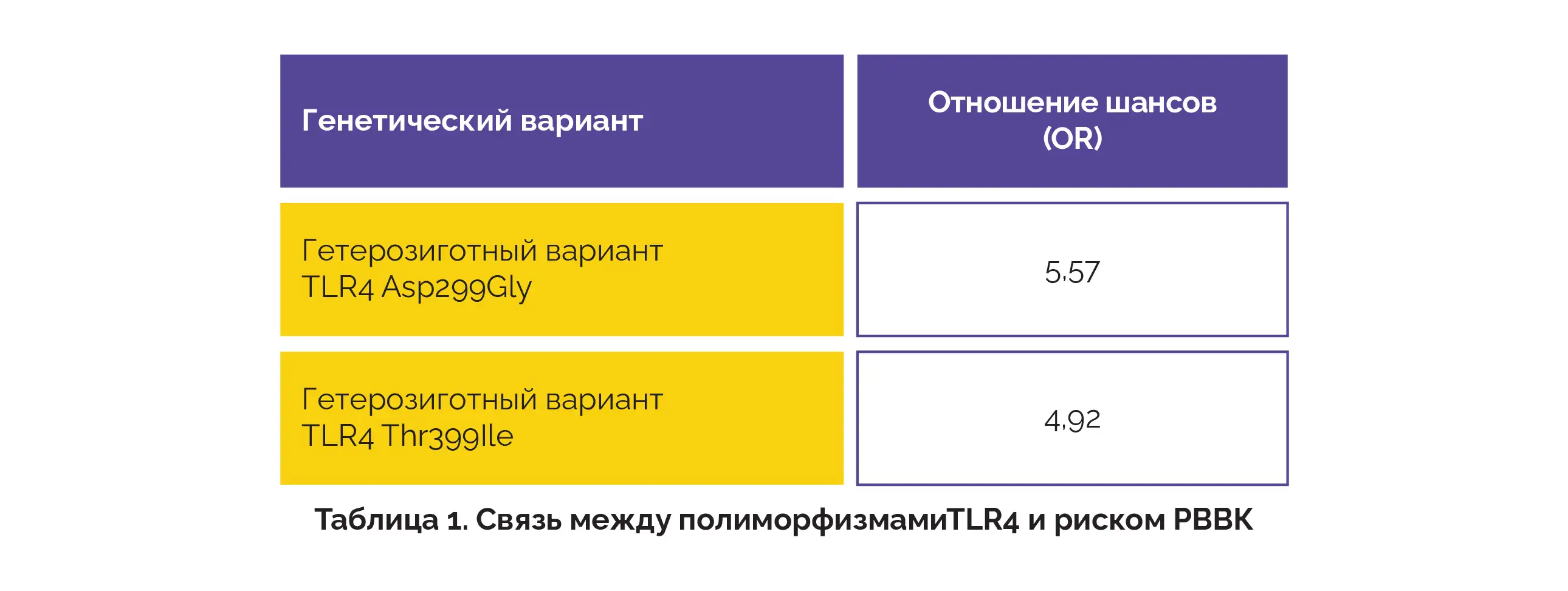
Дополнительные анализы выявили, что оба варианта TLR4 нередко обнаруживались одновременно, указывая на то, что ослабление противогрибковой защиты слизистых оболочек может быть обусловлено не отдельными мутациями, а их сочетанием в составе гаплотипов. Значимых связей между этими полиморфизмами и как впервые возникшим ВВК, так и вагинитом, ассоциированным с Gardnerella, отмечено не было.
Данное исследование укрепило представление о том, что РВВК не ограничивается воздействием микроорганизмов и, вероятно, отражает исходный профиль предрасположенности организма-хозяина, связанный с иммунной функцией слизистых оболочек. Выявление генетических маркеров риска в рамках сигнального пути TLR4 в конечном итоге может способствовать разработке персонализированных стратегий профилактики, стратификации риска и более целенаправленных терапевтических подходов для женщин с рецидивирующим течением заболевания.
Microorganisms
Association of TLR4 Polymorphisms with Increased Susceptibility to Recurrent Vulvovaginal Candidiasis in Greek Women
Maria Mavrouli и соавт.

















Комментарии (0)