

Категории
Сменить пароль!
Сброс пароля!


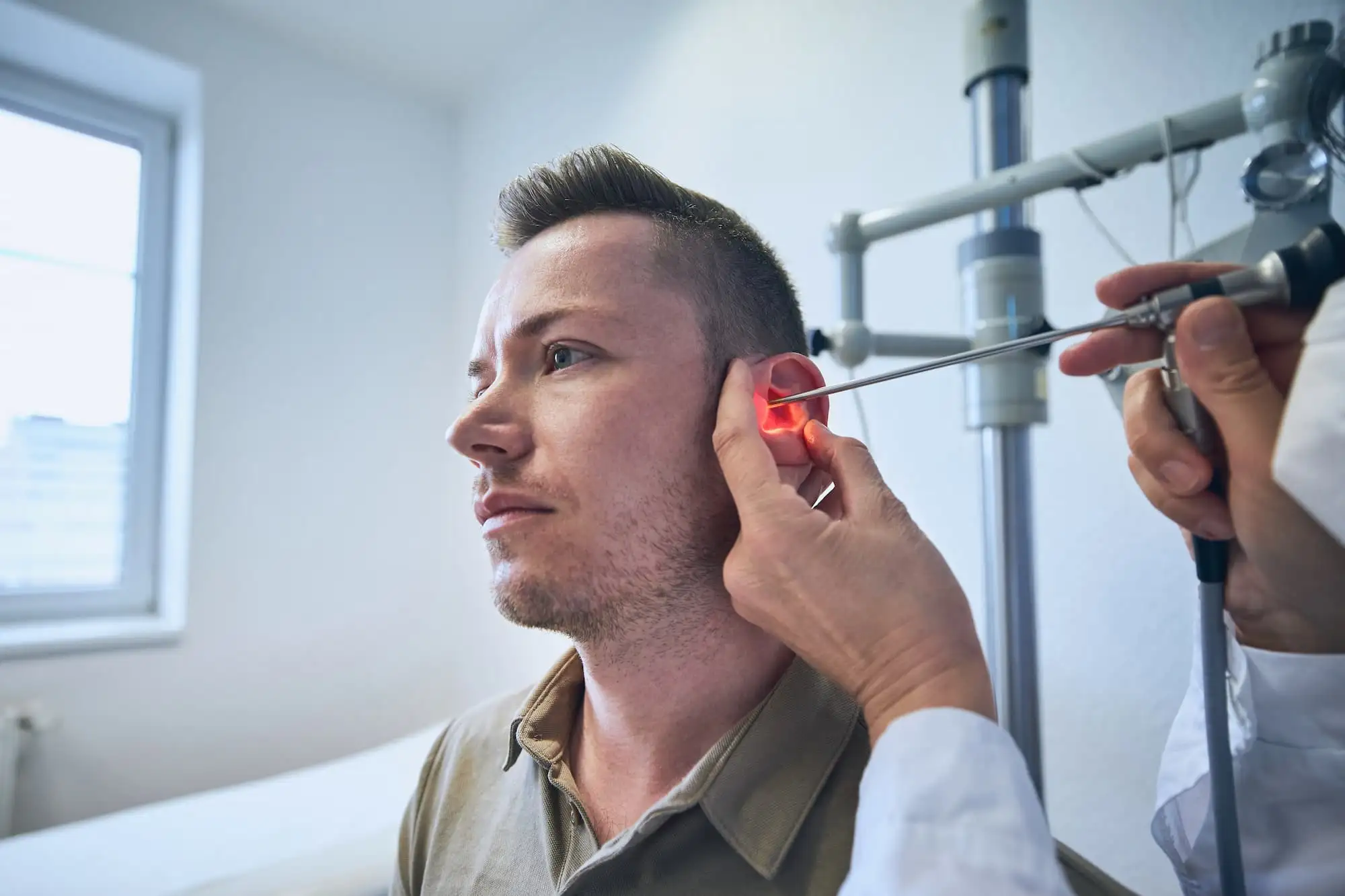
Добавление собственной обогащенной тромбоцитами плазмы пациента во время операции по восстановлению барабанной перепонки может предложить хирургам простую биологическую стратегию для улучшения долгосрочного заживления и восстановления слуха.
Восстановление перфорированной барабанной перепонки, как правило, является успешной процедурой, но не каждый трансплантат приживается в процессе заживления. Даже при использовании современных хирургических методов у части пациентов наблюдается неполное приживление трансплантата или стойкая перфорация, часто требующие дополнительных вмешательств. В последние годы регенеративные методы лечения, направленные на улучшение заживления тканей в местах хирургических вмешательств, привлекают значительное внимание исследователей.
Среди них обогащенная тромбоцитами плазма (PRP) — концентрат аутологичной крови, содержащий высокую концентрацию факторов роста и биоактивных белков, — зарекомендовала себя как перспективное вспомогательное средство в широком спектре хирургических вмешательств. Авторы исследовали, может ли этот биологический усилитель улучшить результаты мирингопластики (операции по восстановлению барабанной перепонки). В проспективное рандомизированное исследование были включены 252 пациента, которым выполнялась реконструкция барабанной перепонки; пациенты были случайным образом распределены на две группы: одной выполнялась стандартная мирингопластика, другой — мирингопластика с дополнением PRP-терапии.
В группе вмешательства PRP наносилась непосредственно на фасциальный трансплантат во время операции. Участники наблюдались в течение одного года для оценки целостности трансплантата, восстановления слуха и послеоперационных событий. Регенеративный подход обеспечил измеримое преимущество в послеоперационном заживлении. У пациентов, получавших местно PRP, наблюдались более высокие показатели успешной приживаемости трансплантата на протяжении всего периода наблюдения (таблица 1).
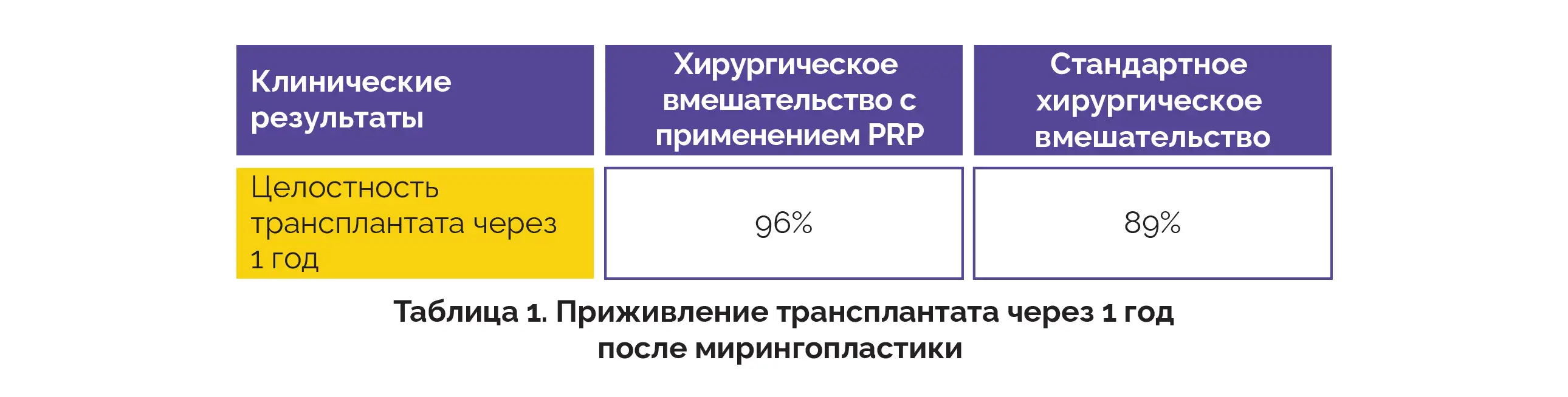
Исходы, связанные с восстановлением слуха, также оказались лучше в группе PRP. Пациенты, пролеченные с помощью PRP, достигли среднего закрытия костно-воздушного интервала на 18,5 дБ, что указывает на более выраженное послеоперационное улучшение слуха, чем в контрольной группе (P = 0,042). Хотя статистическая значимость была относительно скромной, результаты показывают, что биологическое усиление восстановления тканей может способствовать более стойким хирургическим исходам.
Данное исследование дополняет растущее количество доказательств того, что подходы регенеративной медицины начинают оказывать влияние на рутинные ЛОР-операции. Использование естественных факторов роста из собственной крови пациента позволяет проводить мирингопластику с применением PRP-терапии, что может представлять собой стратегию с низким риском для оптимизации заживления и улучшения послеоперационных результатов восстановления слуха.
Indian Journal of Otolaryngology and Head & Neck Surgery
Efficacy of Autologous Platelet-Rich Plasma (PRP) on Graft Uptake in Myringoplasty
Neelakshi Choudhury и соавт.












Комментарии (0)