

Categories
Change Password!
Reset Password!



In older adults, hip fractures are common and are linked with mortality and morbidity.
Perioperative intravenous ketorolac is associated with lower 2-year mortality without increasing 90-day mortality or 2-year surgical complications after hip fracture surgery in older adults.
In older adults, hip fractures are common and are linked with mortality and morbidity. Effective pain control is crucial for early mobilization and recovery, while opioid-sparing strategies may help minimize opioid-related adverse effects.
Ketorolac, a nonsteroidal anti-inflammatory drug (NSAID), is frequently utilized as part of multimodal analgesia. However, concerns regarding renal injury, bleeding, and impaired fracture healing have limited its use in some patients. The aim of this retrospective cohort study was to determine the link between perioperative ketorolac and short- and long-term outcomes after hip fracture surgery.
The TriNetX Research Network was utilized to identify adults aged ≥65 years who underwent fracture fixation or hemiarthroplasty for hip fracture. Patients with pathologic or open fractures, bilateral or multiple procedures, or absolute contraindications to ketorolac were excluded. Perioperative exposure was described as intravenous ketorolac administered within 48 hours of operation.
After applying the 48-hour postoperative landmark, volunteers were matched via propensity scores based on demographics, surgery type, and the Elixhauser Comorbidity Index. The final matched cohort included 11,450 patients, with 5,725 in each group. The key endpoints were 90-day mortality and medical complications. Secondary endpoints were 2-year mortality and surgical complications.
Overall, 90-day mortality and medical complications were comparable between groups. Acute renal failure was less frequent with ketorolac. At 2 years, surgical complication rates remained low and were broadly similar between groups (Table 1).
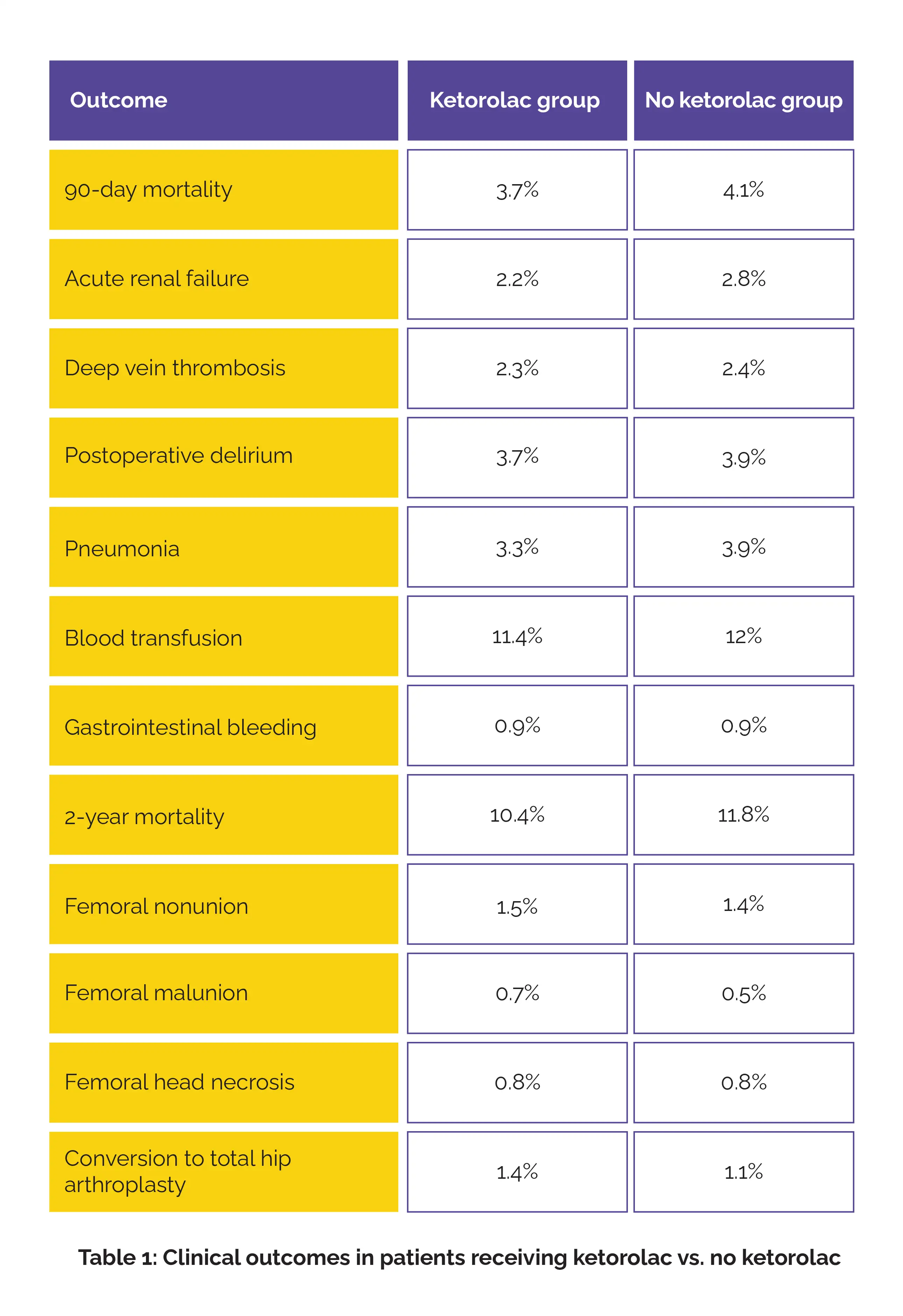
Perioperative intravenous ketorolac was not associated with higher 90-day mortality, major medical complications, or 2-year surgical complications after hip fracture surgery in older adults. The association with lower 2-year mortality is encouraging but does not prove causality. Overall, the findings support carefully selected perioperative ketorolac as part of multimodal, opioid-sparing analgesia, while prospective studies are needed to confirm its long-term safety and benefits.
Journal of the American Academy of Orthopaedic Surgeons
Perioperative Ketorolac Is Associated With Lower Mortality After Surgically Treated Hip Fracture in Older Adults
Stephen J Perle et al.















Comments (0)