

Categories
Change Password!
Reset Password!


Pollen, especially Poaceae grass pollens like Secale, is the predominant aeroallergen in children, causing seasonal peaks in allergic rhinitis and related symptoms.
A large study has found that pollen—especially grasses from the Poaceae family—is the most common cause of clinically relevant aeroallergen sensitization in children, with symptoms peaking during spring and early summer months. Researchers conducted this retrospective study to identify how seasonal symptom patterns align with demographic and clinical trends in children sensitized to aeroallergens, with pollen emerging as the core area of interest.
An analysis was performed involving pediatric patients aged 1 to 18 who underwent standardized skin prick testing. Clinical records were examined to gather data on symptom patterns, medical history, family predisposition to atopy, eosinophil counts, and total immunoglobulin E (IgE) levels. The allergen panel assessed reactions to pollens, house dust mites, molds, and animal dander. Children with underlying chronic or immunologic conditions other than asthma, allergic rhinitis (AR), or atopic dermatitis (AD) were excluded from the study.
Comparisons were made between monosensitized and polysensitized patients, as well as between those sensitized to pollen and those reactive to house dust mites. The results showed that from 2247 children tested, 2017 were eligible, and 500 with confirmed sensitization were analyzed, most of whom were adolescent males. The findings are depicted in Table 1:
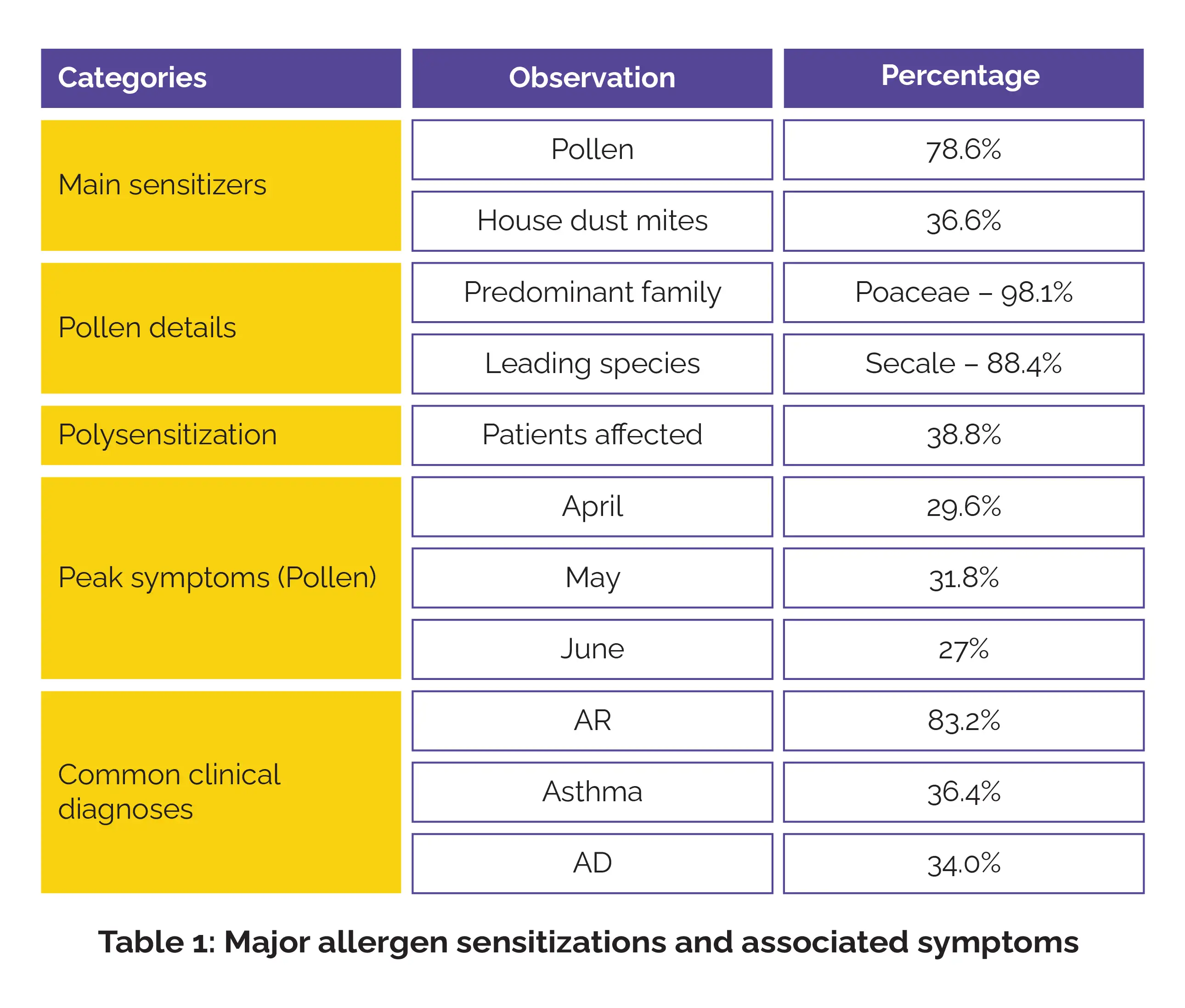
Pollen sensitization emerged as a major contributor to seasonal respiratory symptoms in children, showing a strong association with AR and sneezing (88% vs. 63%; p < 0.01). Meanwhile, house dust mite sensitization was more often linked to skin rashes (25.5% vs. 13%; p = 0.008), highlighting how different allergens can trigger distinct clinical responses. The children with elevated eosinophil levels tend to be younger and experienced AR more frequently than their peers without eosinophilia (p < 0.001), underscoring the role of eosinophils as an important marker of atopic risk in pediatric populations.
The study confirms that pollen—particularly grasses from the Poaceae family—is the dominant aeroallergen in children, with symptom timing closely aligned to seasonal pollen exposure. The prominence of Secale highlights the importance of tailoring allergy testing to regional botanical profiles.
Allergologia et Immunopathologia
Evaluation of clinical and demographic characteristics in children with aeroallergen sensitization: A study based on skin prick test results
Yuksel Kavas Yildiz et al.















Comments (0)