

Categories
Change Password!
Reset Password!



Lamotrigine does not significantly increase the risk of ventricular arrhythmias compared with levetiracetam in patients with epilepsy.
A large international analysis offers reassuring evidence that lamotrigine, a widely prescribed antiseizure medication, does not considerably increase the risk of dangerous heart rhythm disturbances—easing earlier concerns about its cardiac safety.
Olga Taraschenko and other researchers conducted a retrospective, real-world comparison of lamotrigine with levetiracetam, a commonly used antiseizure drug considered to have minimal cardiac effects. The study analyzed over 53,000 patients from two major datasets:
All participants were newly started on antiseizure medication after a first seizure or epilepsy diagnosis. Across both cohorts, lamotrigine was not linked with a higher risk of ventricular tachycardia or ventricular fibrillation (VT/VF)—serious arrhythmias that can be life-threatening.
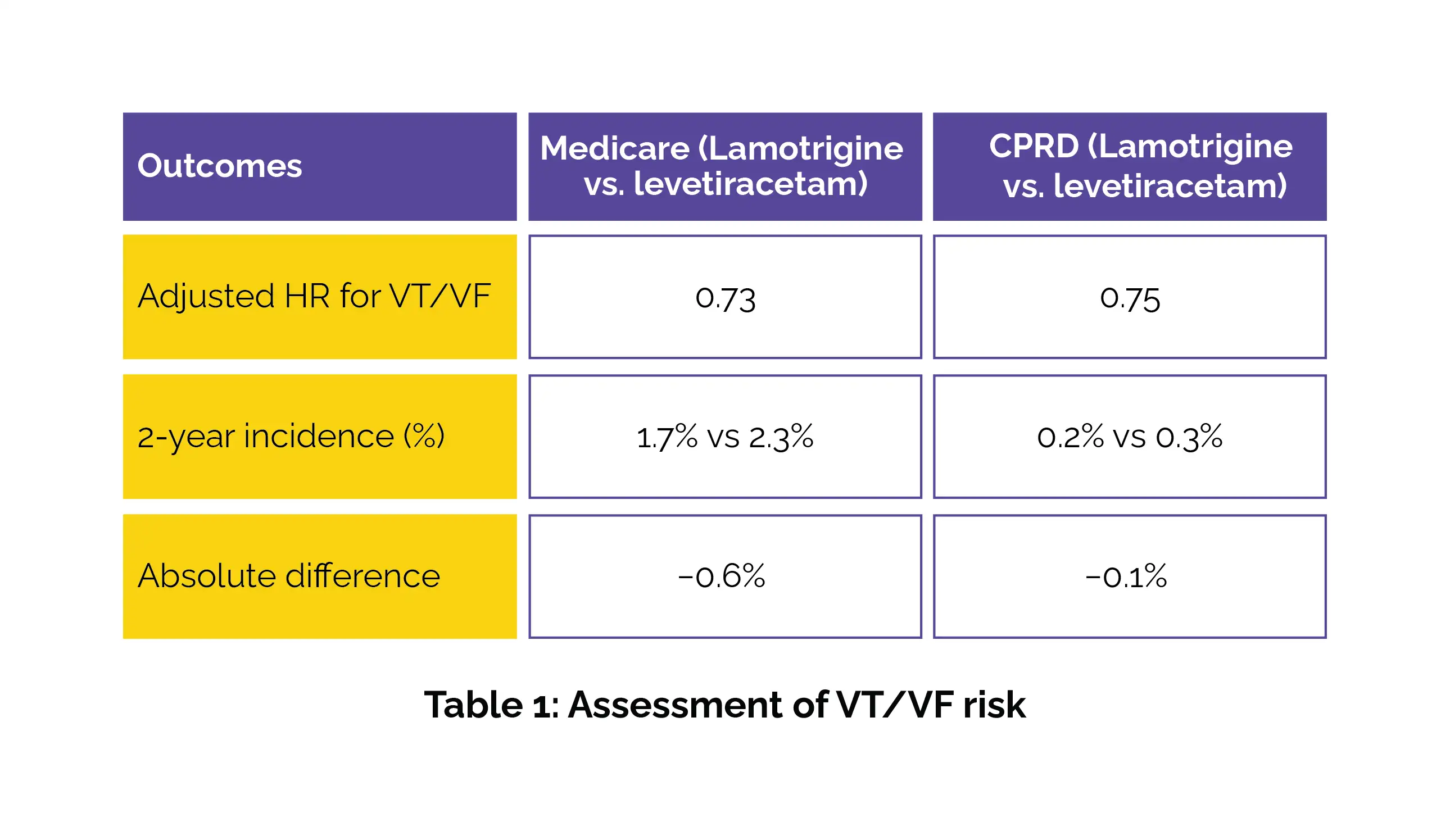
Lamotrigine showed a slightly lower but statistically non-significant risk of ventricular tachycardia/ventricular fibrillation (VT/VF) compared with levetiracetam. At 2 years, absolute event rates remained low in both groups (Table 1).
Multiple sensitivity analyses—accounting for broader arrhythmia definitions, treatment discontinuation, and pre-existing cardiovascular disease—yielded similar findings, strengthening confidence in the results. The findings suggest that earlier warnings about potential cardiac risks with lamotrigine may be overstated. For clinicians, this supports continued use of lamotrigine as a safe and effective first-line antiseizure medication, particularly in scenarios when cardiac safety is a concern.
Neurology
Lamotrigine in Epilepsy: Safe for the Heart after All?
Olga Taraschenko et al.












Comments (0)