

Categories
Change Password!
Reset Password!



GLP-1 receptor agonists significantly improve weight loss and metabolic outcomes after bariatric surgery, though with increased gastrointestinal side effects.
Long-term management of obesity following bariatric surgery remains challenging, as a proportion of patients experience inadequate weight loss or persistent metabolic disturbances. This highlights the need for effective adjunct therapies to sustain and enhance surgical outcomes.
In response, a group of researchers conducted a systematic review and meta-analysis to determine the efficacy and safety of glucagon-like peptide-1 receptor agonists (GLP-1 RA) as an adjunct therapy for improving weight loss and metabolic outcomes in patients after bariatric surgery. They extracted the data from PubMed, Cochrane CENTRAL, and Scopus. Randomized controlled trials comparing GLP-1 RA with placebo in post-bariatric surgery patients were included. Key outcomes assessed were :
Statistical analysis was carried out via random-effects models for calculating standardized mean differences (SMDs), weighted mean differences (WMDs), and risk ratios (RR). GLP-1 RA demonstrated significant improvements in key metabolic outcomes compared to placebo, particularly in weight reduction and glycemic control (Table 1).
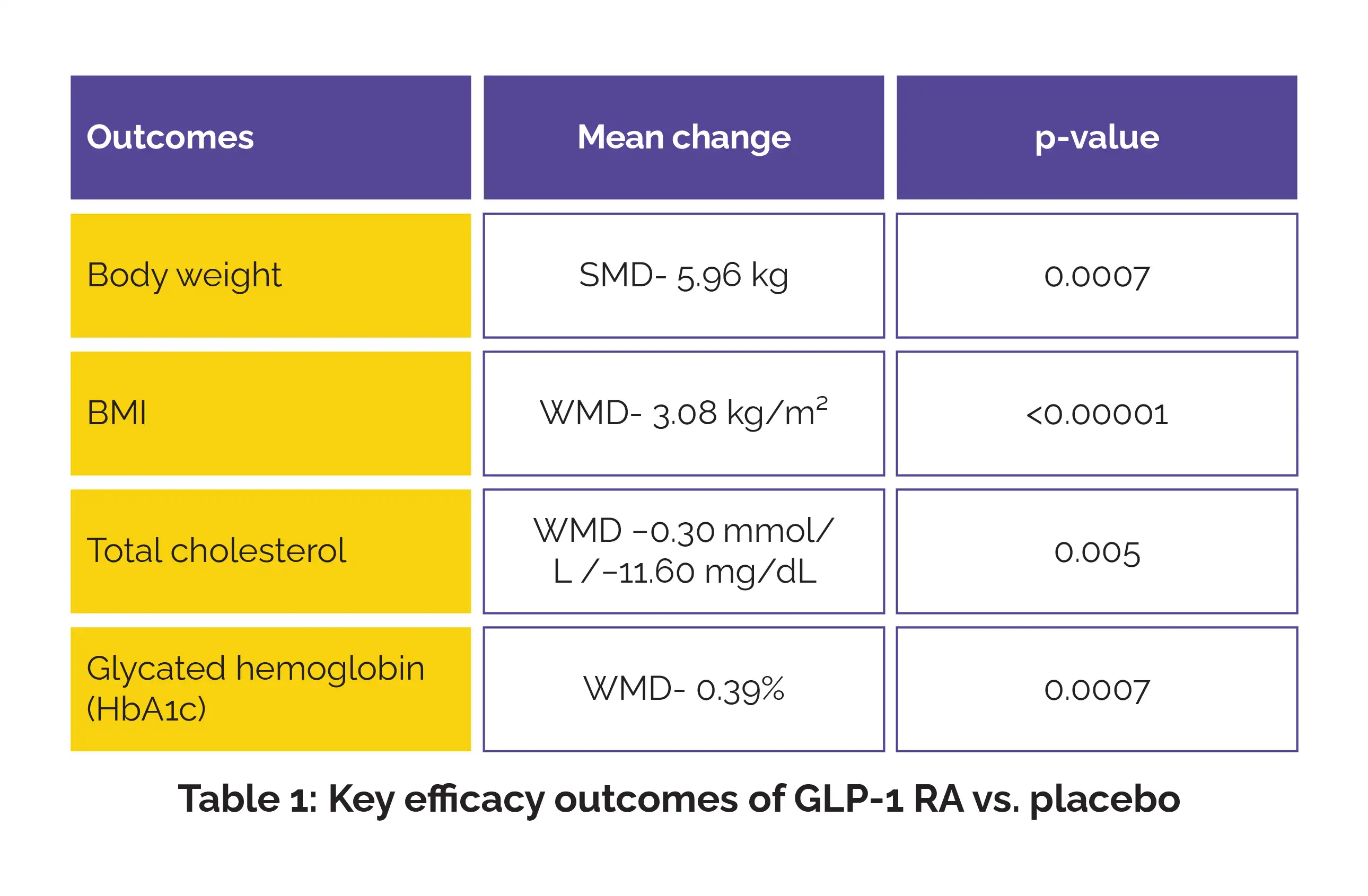
Adverse effects were more frequent with GLP-1 RA, with increased total adverse events (RR: 1.49; p = 0.003) and higher incidence of nausea (RR: 2.23; p = 0.010) compared to placebo. Overall, GLP-1 RA offered significant benefits in improving weight loss and key metabolic parameters after bariatric surgery. But, these benefits were coupled with a higher incidence of mostly mild to moderate adverse effects.
Endocrinology, Diabetes & Metabolism
Efficacy and Safety of Glucagon-Like Peptide-1 Receptor Agonists Following Bariatric Surgery: A Systematic Review and Meta-Analysis
Abdur Rafay Bilalet al.











Comments (0)