

Categories
Change Password!
Reset Password!



Perioperative GLP-1 RA use reduces the risk of pseudoarthrosis, lowers hospital readmissions, and decreases sepsis rates within 90 days after long-segment spinal deformity surgery.
Perioperative administration of glucagon-like peptide-1 receptor agonists (GLP-1 RAs) may noticeably minimize the risk of pseudoarthrosis and early postoperative complications in patients undergoing long-segment spinal deformity surgery, according to a large retrospective cohort study published in "Global Spine Journal".
In this propensity-matched analysis, adult patients with spinal deformity who underwent posterior segmental instrumentation across seven or more spinal levels were included. Patients prescribed a GLP-1 RA within 6 months before or after surgery formed the exposure group, while patients without GLP-1 RA use served as controls. To reduce confounding, cohorts were matched 1:1 based on demographic factors and baseline medical comorbidities.
The key outcome was the incidence of clinically diagnosed pseudoarthrosis at 6 months, 1 year, 2 years, and 3 years after the index procedure. Secondary outcomes included 90-day postoperative medical complications, assessed using risk ratios (RRs) with corresponding P values. Perioperative GLP-1 RA therapy was linked with a statistically significant and durable reduction in pseudoarthrosis risk at all evaluated time points (Table 1):

In addition to improved fusion outcomes, GLP-1 RA use was linked to fewer early postoperative complications. Within 90 days of surgery, those receiving GLP-1 RAs demonstrated lower hospital readmission rates and reduced incidence of sepsis (Table 2).
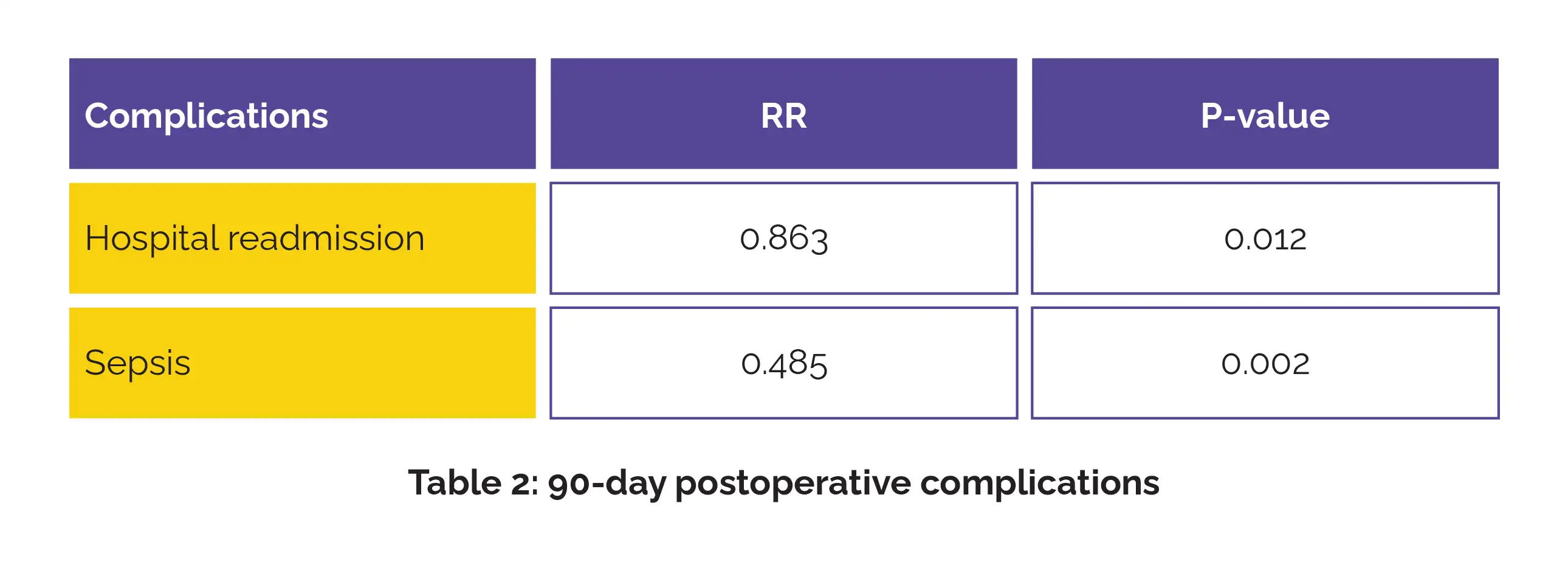
No increase in other short-term medical complications was observed in patients treated with GLP-1 RAs. These findings suggest that GLP-1 RAs, commonly prescribed for type 2 diabetes and obesity, may positively influence bone healing and fusion durability, while also diminishing early postoperative complications such as sepsis and hospital readmission.
Global Spine Journal
Perioperative Glucagon-like Peptide-1 Receptor Agonist Use Is Associated With Lower Pseudoarthrosis Rates Following Long-Segment Spinal Deformity Correction: A Propensity-Matched Analysis
Kyle Stump et al.














Comments (0)