

Categories
Change Password!
Reset Password!



Dentoalveolar and related disorders account for the highest estimated prevalence of orofacial pain globally, followed by myofascial orofacial pain and temporomandibular joint pain.
A global meta-analysis highlights the prevalence of different types of orofacial pain, identifying dentoalveolar disorders, myofascial pain, and temporomandibular joint (TMJ) disorders as important contributors to the global burden.
Published research, led by Grzegorz Zieliński et al., examined the worldwide prevalence of orofacial pain associated with myofascial disorders, TMJ pain, cranial nerve lesions or diseases, and dentoalveolar ailments. The findings also highlight the requisition for standardized diagnostic criteria and reporting practices to boost research consistency.
Study methodology
Researchers executed a systematic literature search of MEDLINE and Scopus databases to identify observational studies issued between 2004 and 2024. The objective was to estimate the global prevalence of different orofacial pain ailments according to the International Classification of Orofacial Pain (ICOP).
However, differences in the available studies prevented the direct application of ICOP categories. Consequently, prevalence estimates were calculated via the available classifications of orofacial pain.
What did the analysis reveal?
The pooled prevalence estimates illustrated substantial variation across different orofacial pain conditions (Table 1):
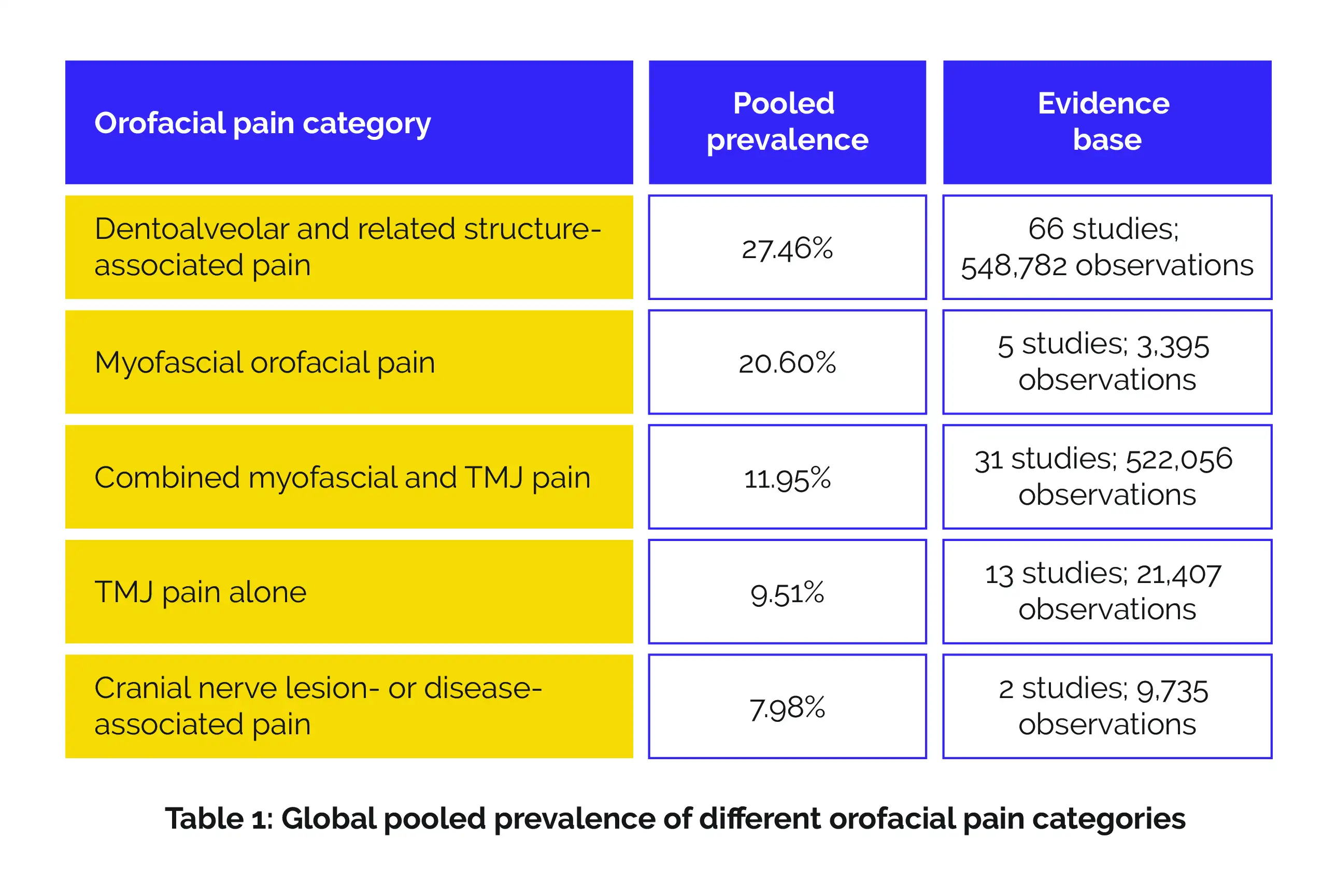
These pooled estimates confirm that while dentoalveolar issues account for the largest share of orofacial pain worldwide, non-odontogenic causes—led by myofascial pain and temporomandibular disorders—impact a substantial proportion of patients. Moving forward, widespread adoption of standardized diagnostic criteria and ICOP-aligned reporting guidelines will be crucial to generate more precise global surveillance data.
Dental and Medical Problems
Global prevalence of orofacial pain associated with myofascial, temporomandibular joint, cranial nerve, and dentoalveolar disorders: A meta-analysis
Grzegorz Zieliński et al.













Comments (0)