

Categories
Change Password!
Reset Password!


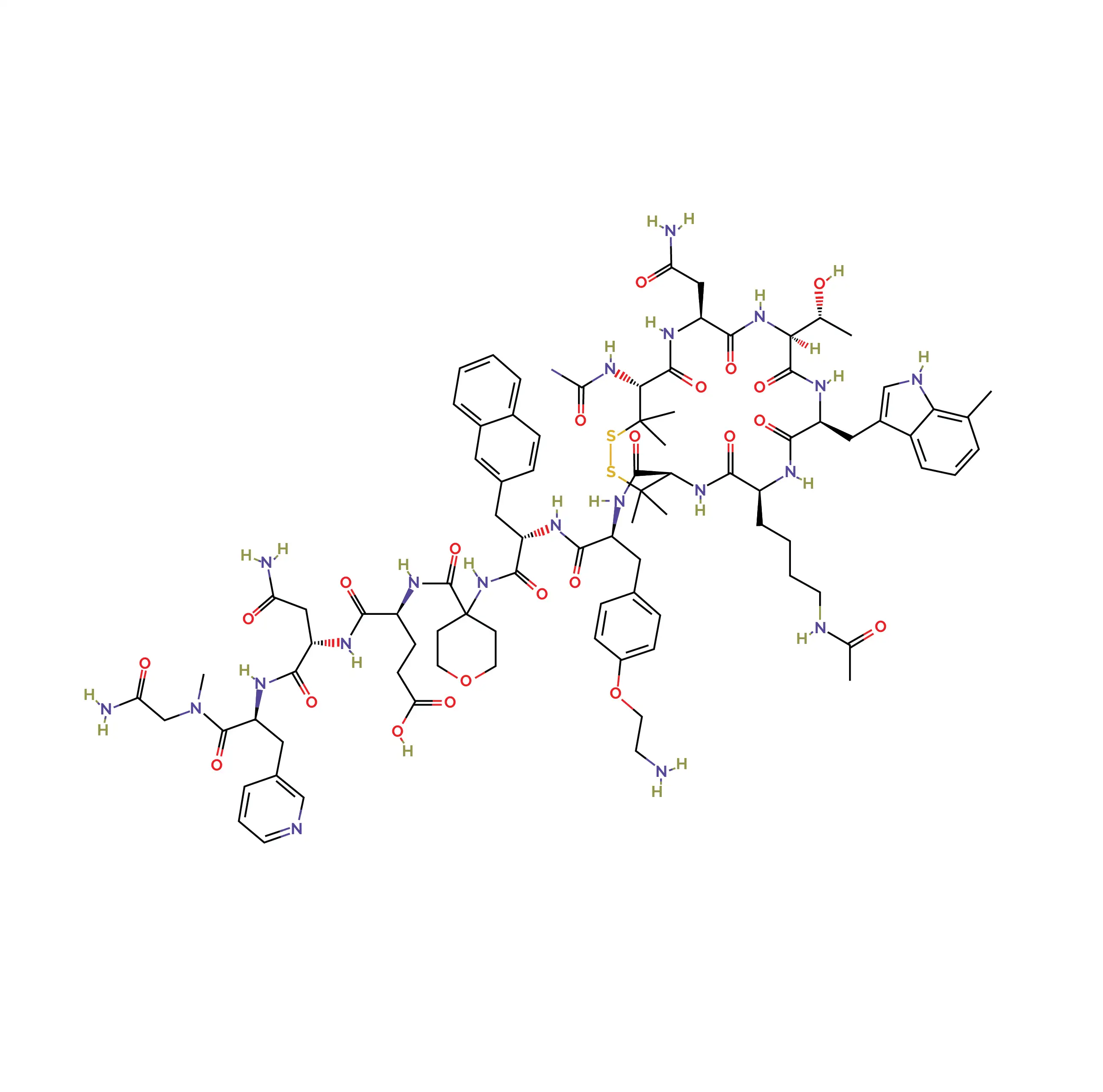
Icotrokinra, a first-in-class oral macrocyclic peptide, received approval from the Food and Drug Administration (FDA) in March 2026 for plaque psoriasis.
Icotrokinra, a first-in-class oral macrocyclic peptide, received approval from the Food and Drug Administration (FDA) in March 2026 for plaque psoriasis. It selectively targets the interleukin-23 (IL-23) receptor, a key component of the inflammatory pathway involved in the pathogenesis of plaque psoriasis.[1]
Pharmacological Class: IL-23 receptor antagonist (RA)
It is indicated for the management of moderate-to-severe plaque psoriasis in:
Icotrokinra selectively binds to the IL-23 receptor with very high affinity, preventing IL-23-mediated receptor activation. Since IL-23 plays a central role in maintaining the inflammatory cascade driving plaque psoriasis, receptor blockade inhibits activation of the IL-23/Th17 pathway. As a result, production of key inflammatory mediators is reduced, leading to decreased immune activation, diminished epidermal inflammation, and clinical improvement in moderate-to-severe plaque psoriasis.[1]
The recommended adult dose is 200 mg orally once daily. Treatment should be taken:
Absorption: After a 200-mg oral dose, icotrokinra attains a mean maximum plasma concentration (Cmax) of 3.62 ng/mL, with a total systemic exposure of 44.8 ng·h/mL. The median time to maximum concentration (Tmax) is 2 hours (range: 0.25–8 hours). Oral bioavailability is low (0.1–0.3% in animal studies).
Food substantially minimizes exposure; a high-fat meal decreases area under the curve (AUC) by 43% and Cmax by 59%. Therefore, icotrokinra must be administered on an empty stomach.
Volume of distribution: Icotrokinra illustrates extensive distribution beyond the bloodstream, with a steady-state apparent volume of distribution of 92,800 L following oral administration. Preclinical studies show that the drug readily reaches disease-relevant tissues, including the skin, joints, and gastrointestinal tract. In monkey studies, tissue-to-plasma ratios ranged from 45.8% to 156%, suggesting substantially greater tissue distribution than the injectable IL-23 monoclonal antibody risankizumab.
Protein binding: Icotrokinra exhibits moderate plasma protein binding, with 52% bound to plasma proteins. In vitro studies depict a preference for human serum albumin over α-1-acid glycoprotein, suggesting that albumin is the principal plasma protein implicated in its binding.
Metabolism:Unlike many conventional oral therapies, icotrokinra does not undergo hepatic CYP450 metabolism. It is primarily degraded by endogenous peptide catabolic pathways into smaller peptide fragments, thereby minimizing the risk of metabolism-based drug interactions.
Route of elimination: Icotrokinra is cleared primarily through the feces, with most of the recovered drug remaining unchanged. Following oral administration, 37%–81% of the dose is recovered in feces within 24 hours as unchanged icotrokinra. Renal excretion plays only a minimal role, as just 0.001% of the dose is recovered in urine as unchanged drug.
Half-life: Icotrokinra has a median elimination half-life of 12 hours, illustrating relatively rapid decline in systemic drug concentrations after administration.
Clearance: Following oral administration, the apparent clearance of icotrokinra is 6,550 L/h, reflecting efficient removal of the drug from systemic circulation.[1]
None[2]
(a) Clinical drug–drug interaction studies
No clinically significant drug–drug interactions have been identified with icotrokinra, although formal clinical interaction studies have not been conducted.
(b) Effects on cytochrome P450 (CYP450) enzymes
In vitro findings suggest that icotrokinra has a low potential to interact with CYP450 enzymes. The drug does not suppress CYP1A2, CYP2B6, CYP2C8, CYP2C9, CYP2C19, CYP2D6, CYP2E1, or CYP3A4. It also does not trigger CYP1A2, CYP2B6, or CYP3A4.
(c) Interaction with drug transporters
Icotrokinra is not a substrate for several clinically relevant drug transporters, including P-glycoprotein (P-gp), breast cancer resistance protein (BCRP), organic anion transporting polypeptides (OATP1B1 and OATP1B3), organic anion transporters (OAT1 and OAT3), organic cation transporter 2 (OCT2), and multidrug and toxin extrusion proteins (MATE1 and MATE2-K).
It also does not suppress the bile salt export pump (BSEP), suggesting a low likelihood of clinically relevant transporter-mediated drug interactions.[2]
The most frequently reported side effects are:
1. A meta-analysis of 5 randomized controlled trials (RCTs) involving 1,951 patients found that icotrokinra 200 mg once daily remarkably improved moderate-to-severe plaque psoriasis versus placebo. At week 16, 73% achieved Psoriasis Area and Severity Index (PASI) 75 versus 11% with placebo, while 54% achieved PASI 90 and 30% achieved PASI 100. PASI 75 responses were also evident by week 4 (15% vs. 2%). Adverse events, serious adverse events, and infections were comparable to placebo, supporting icotrokinra as an effective oral treatment option with a favorable short-term safety profile.[3]
2. Another systematic review and meta-analysis of 5 RCTs involving 1,951 patients evaluated icotrokinra 200 mg once daily in plaque psoriasis. At week 16, icotrokinra demonstrated significant improvements across numerous clinical and patient-reported outcomes.
3. Two Phase III trials, ICONIC-ADVANCE 1 and ICONIC-ADVANCE 2, enrolled 1,505 adults with moderate-to-severe plaque psoriasis and evaluated icotrokinra 200 mg once daily through week 52. Icotrokinra produced increasing skin clearance through week 24 and sustained responses through week 52, with approximately 70–75% of patients achieving IGA 0/1 and PASI 90 and approximately 50% achieving IGA 0 and PASI 100 during weeks 24–52. Among patients who attained clear or almost-clear skin at week 16, 85–90% maintained their response at week 52.
The benefits in scalp psoriasis and patient-reported outcomes remained evident through week 52. Patients who transitioned from placebo or deucravacitinib to icotrokinra achieved progressively higher response rates that became comparable with those observed in patients initially assigned to icotrokinra. The adverse-event profile remained similar to placebo through week 16 and was lower than that observed with deucravacitinib through week 24, with no new safety signals reported through week 52.[5]
1. Icotrokinra. DrugBank [DB21724]. Available from: https://go.drugbank.com/drugs/DB21724
2. Icotrokinra. FDA Label. Available from: https://www.accessdata.fda.gov/drugsatfda_docs/label/2026/220149Orig1s000lbl.pdf
3. Altayf A, Lateiresh M, Marwan L, Alfeetouri MY, Zouaoui Y, Elhadi M. Efficacy and Safety of Oral Icotrokinra in Moderate-to-Severe Plaque Psoriasis: A Systematic Review, Meta-Analysis, and Trial Sequential Analysis. International Journal of Dermatology. 2026 Jun;65(6):1144-1154.
4. AlJuma RS, Hashim S, Alshamali MA, Alkhatlan S, Hammadi DJ, Alharran AM. Safety and efficacy of oral icotrokinra for moderate-to-severe plaque psoriasis: a systematic review and meta-analysis of randomized controlled trials. Frontiers in Immunology 2026 Mar 6;17:1768292.
5. Stein Gold L, Armstrong AW, Soung J, Vender RB, González Cantero Á, Hoffmann M, et al. Durability of Response to Icotrokinra in Adults With Moderate-to-Severe Plaque Psoriasis: One-Year Results From the Phase 3, Placebo- and Active Comparator-Controlled ICONIC-ADVANCE 1 & ICONIC-ADVANCE 2 Trials. British Journal of Dermatology. 2026 Jul 3:ljag264.














Comments (0)