

Категории
Сменить пароль!
Сброс пароля!



Helicobacter pylori (H. pylori) являющаяся известной причиной язвенной болезни желудка, вызывает длительное системное воспаление.
Инфекция Helicobacter pylori повышает риск развития ХОБЛ и астмы независимо от статуса курения.
Helicobacter pylori (H. pylori) являющаяся известной причиной язвенной болезни желудка, вызывает длительное системное воспаление. Хроническая обструктивная болезнь легких (ХОБЛ) и бронхиальная астма также обусловлены воспалительными механизмами в дыхательных путях. В данном исследовании оценивалось повышает ли инфекция H. pylori риск развития ХОБЛ или астмы в общенациональной корейской когорте.
Исследователи получили данные из Корейской национальной базы данных медицинского страхования о взрослых в возрасте ≥40 лет, прошедших терапию по эрадикации H. pylori .
Среди лиц с инфекцией H. pylori показатели заболеваемости ХОБЛ и астмой составили 10,92 и 15,99 на 1000 человеко-лет соответственно. Инфекция H. pylori была связана со значительным повышением риска развития ХОБЛ и астмы (aHR 1,17, 95% ДИ 1,12–1,22) независимо от статуса курения (таблица 1).
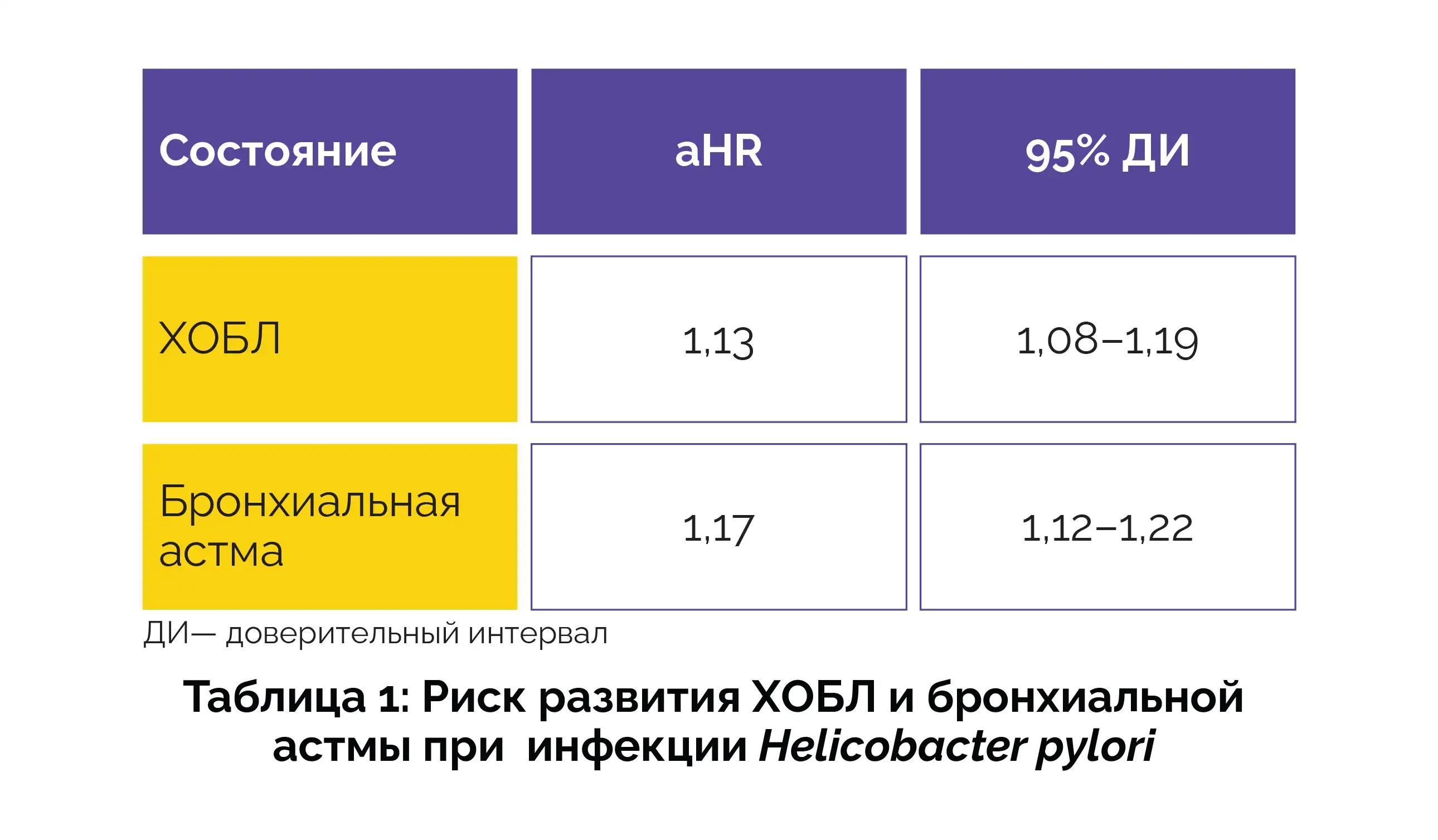
Риск развития ХОБЛ наиболее заметно возрастал среди взрослых в возрасте ≥65 лет и курящих, в то время как риск развития бронхиальной астмы оставался неизменно повышенным во всех демографических группах и среди курильщиков.
У людей, инфицированных H. pylori, чаще развивались ХОБЛ и астма. В то время как риск развития астмы оставался стабильным независимо от демографических факторов и образа жизни, риск развития ХОБЛ варьировал в зависимости от возраста и курения. Эти результаты указывают на потенциальную связь между воспалением, вызванным желудочной инфекцией H. pylori , и заболеваниями дыхательной системы.
Gut Pathogens
Helicobacter pylori infection is associated with an increased risk of chronic obstructive pulmonary disease and asthma
Chiwook Chung и соавт.














Комментарии (0)