

Категории
Сменить пароль!
Сброс пароля!



В данном исследовании изучалось, как время использования цифровых устройств (экранное время) детьми и соблюдение рекомендаций по их использованию связаны с поведенческими и эмоциональными трудностями, а также анализировалось опосредованное влияние на продолжительность сна.
Более длительное время, проведенное за экраном цифровых устройств, связано с более серьезными эмоциональными и поведенческими проблемами у детей, в то время как достаточный сон и соблюдение ограничений времени, проведенного за экраном, связаны с лучшими психосоциальными результатами.
В данном исследовании изучалось, как время использования цифровых устройств (экранное время) детьми и соблюдение рекомендаций по их использованию связаны с поведенческими и эмоциональными трудностями, а также анализировалось опосредованное влияние на продолжительность сна.
Был проведен одномоментный анализ с использованием данных многоцентрового проспективного долгосрочного исследования оценки риска детского ожирения (CORALS), в котором приняли участие 1420 детей в возрасте от 3 до 6 лет. Анализировались ежедневное время использования цифровых устройств (часов в сутки) и соблюдение рекомендации по использованию ≤2 часов/сутки. Поведенческие и эмоциональные трудности оценивались с помощью Опросника сильных сторон и трудностей (SDQ).
Для изучения связи между экранным временем (рассматриваемым как в качестве непрерывной, так и категориальной переменной) и показателями SDQ были применены модели многомерной линейной и логистической регрессии с поправкой на соответствующие сопутствующие факторы. Кроме того, была изучена модераторная роль сна, а также проведены анализы изовременной замены для оценки эффекта замещения экранного времени продолжительностью сна.
Более длительное время, проведенное за экраном, было связано с более серьезными поведенческими и эмоциональными проблемами, включая больше эмоциональных симптомов и проблем с поведением. Напротив, дети, которые соблюдали рекомендациям по экранному времени, в целом продемонстрировали меньше поведенческих и эмоциональных проблем (таблица 1).
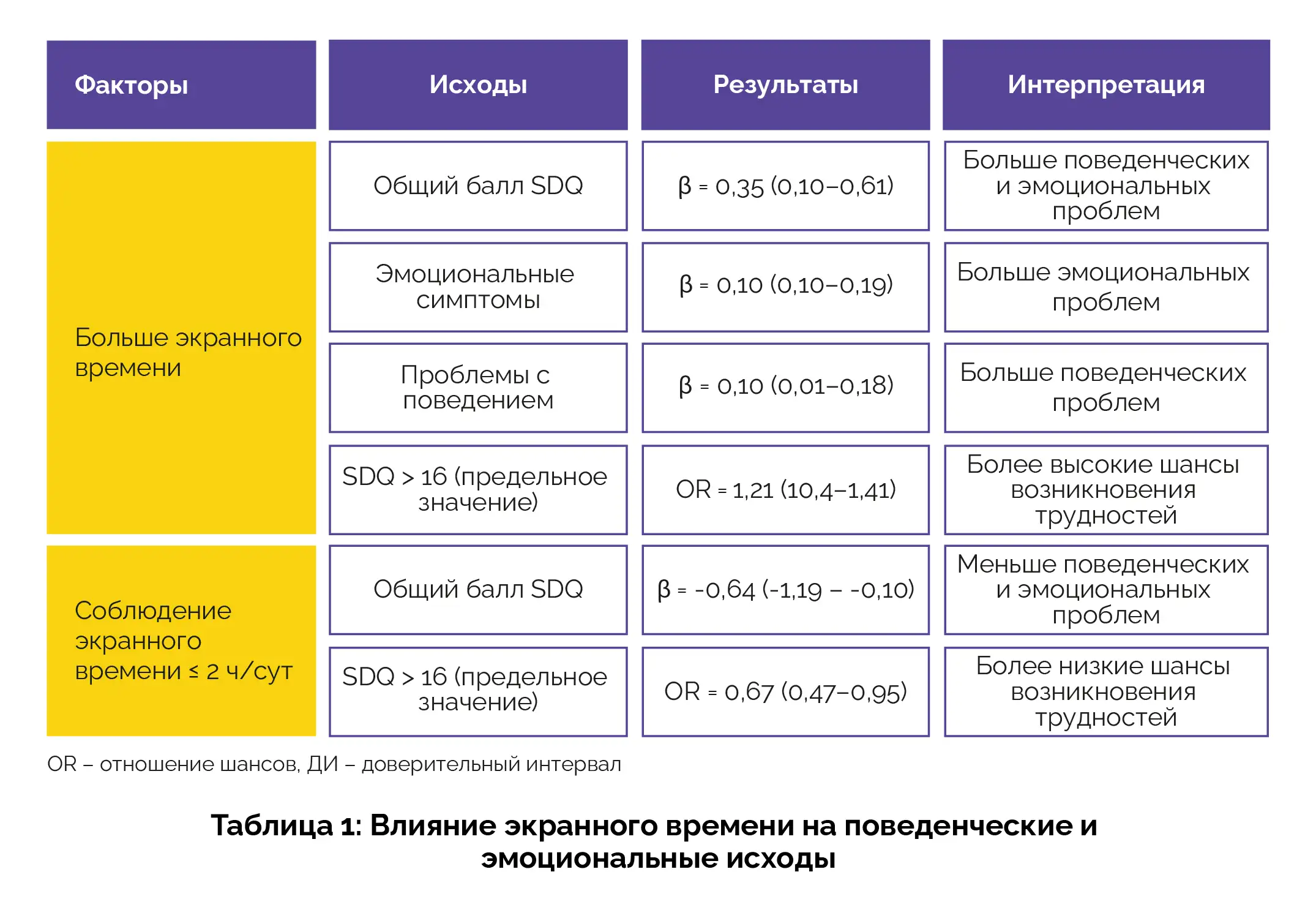
Продолжительность сна смягчала связь между временем, проведенным за экраном, и поведенческими проблемами (P = 0,020). Замещение экранного времени сном было связано с улучшением поведенческих показателей во всех сферах, кроме просоциального поведения.
Дети, проводившие больше времени перед экранами, демонстрировали больше эмоциональных и поведенческих проблем, в то время как дети, соблюдавшие ограничения экранного времени и поддерживавшие достаточный сон, демонстрировали меньшие трудности, что подчеркивает важность сбалансированного воздействия цифровых технологий и здорового режима сна.
World Journal of Pediatrics
Sleep duration moderates association between screen time and emotional and behavioural problems in young children
Lucía Iglesias-Vázquez и соавт.


















Комментарии (0)