

Категории
Сменить пароль!
Сброс пароля!


Комбинации наночастиц демонстрируют усиленную антибактериальную активность против грамположительных бактерий, ассоциированных с кариесом, причём наночастицы цинка и титана показывают большую эффективность, чем наночастицы серебра.
Растущая проблема антимикробной резистентности возобновила интерес к альтернативным стратегиям борьбы с бактериальными инфекциями полости рта. В ходе этого лабораторного исследования авторы изучали, могут ли искусственно созданные наночастицы усилить антибактериальную активность против грамположительных микроорганизмов, наиболее часто выделяемых у пациентов с кариесом, как в чистом виде, так и в сочетании с традиционными антибиотиками.
Образцы, взятые из полости рта у пациентов в возрасте 10–45 лет с кариесом, прошли микробиологическую идентификацию с использованием стандартных лабораторных методов. Бактериальные изоляты затем оценивались на чувствительность к метронидазолу, клиндамицину и амоксициллину, после чего проводилось тестирование с наночастицами цинка, титана и серебра в различных концентрациях. Авторы также исследовали, приводит ли сочетание наночастиц к более выраженному антибактериальному эффекту, чем использование отдельных наночастиц.
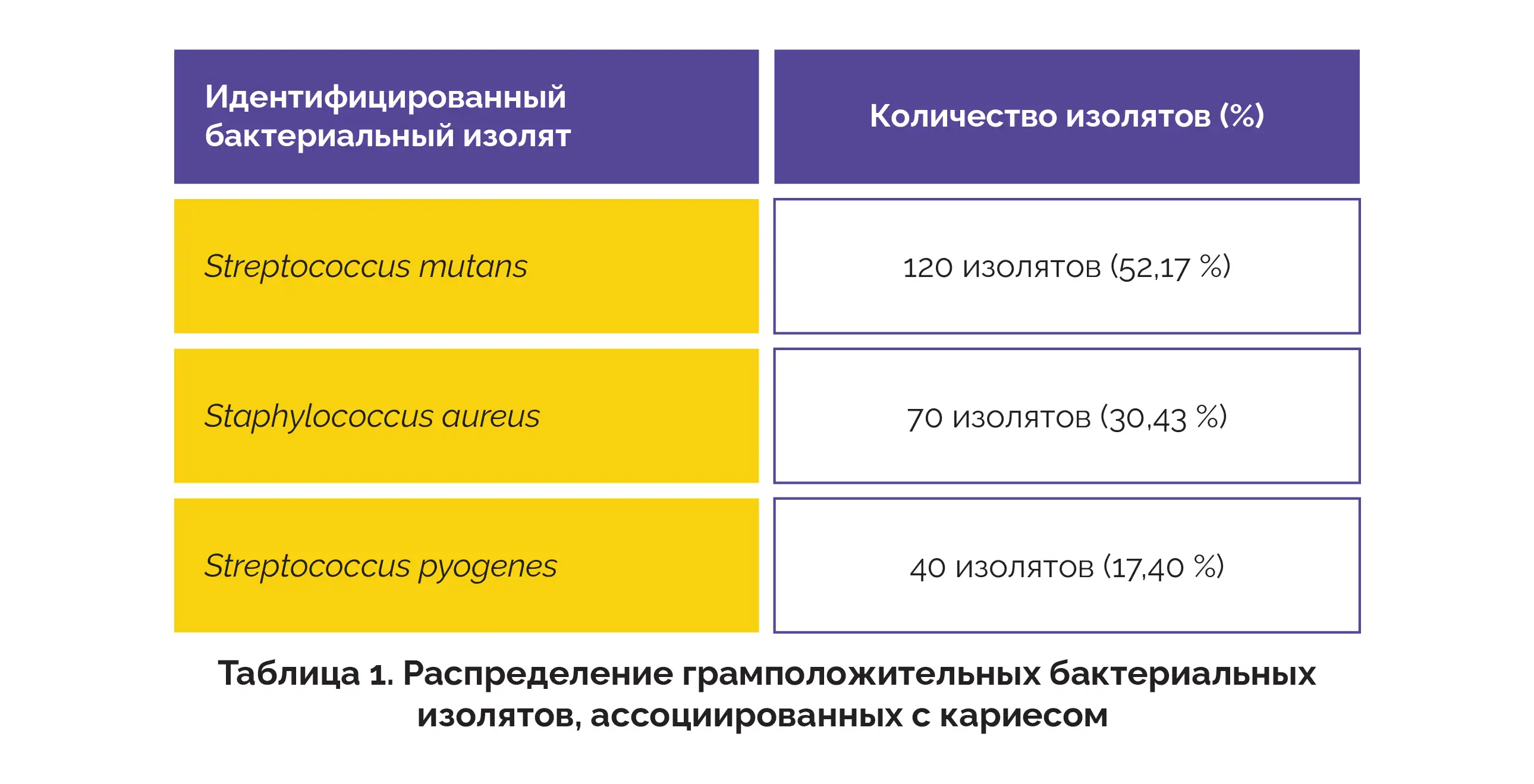
Среди проанализированных образцов 230 (92 %) продемонстрировали положительный бактериальный рост, при этом грамположительные бактериальные виды были идентифицированы у пациентов с кариесом. Streptococcus mutans оказался преобладающим изолятом, за ним следовали Staphylococcus aureus и Streptococcus pyogenes. Распределение выделенных бактериальных изолятов представлено ниже в таблице 1.
Staphylococcus aureus продемонстрировал резистентность ко всем трём оцениваемым антибиотикам. Среди видов Streptococcus антимикробные ответы различались в зависимости от бактериального вида. Streptococcus pyogenes реагировал на клиндамицин и амоксициллин образуя зоны ингибирования размером 22 мм и 28 мм соответственно. Метронидазол не оказывал заметного ингибирующего действия против Streptococcus pyogenes. Напротив, Streptococcus mutans продемонстрировал вариабельную чувствительность ко всем трём антибиотикам с относительно лучшими общими ответами.
Наиболее значимые результаты были получены в ходе тестирования наночастиц. Наночастицы цинка и титана неизменно ингибировали бактериальный рост, тогда как наночастицы серебра не показали измеримой антибактериальной активности в условиях исследования. Что еще более важно, сочетание различных наночастиц оказывало более выраженный антибактериальный эффект, чем отдельные препараты наночастиц, что указывает на потенциальное синергическое взаимодействие против кариогенных грамположительных бактерий.
В целом, полученные результаты подчеркнули разнообразие моделей антимикробного ответа среди бактерий, вызывающих кариес, и предположили, что комбинации наночастиц могут стать перспективным направлением для изучения альтернативных антибактериальных стратегий против устойчивых патогенов полости рта.
South Asian Research Journal of Biology and Applied Biosciences
Antimicrobial Activity and Synergistic Effect of Some Antibiotics and Nanoparticles Against Gram-Positive Bacterial Isolates Isolated from the Mouth of Dental Caries Patients
Haneen Faddil Abbas







Комментарии (0)