

Категории
Сменить пароль!
Сброс пароля!



Скрининг с помощью EPDS в третьем триместре становится более сильным предиктором послеродовых депрессивных симптомов, что указывает на критический период для дородового вмешательства в области психического здоровья.
Новое ретроспективное когортное исследование предполагает, что скрининг на депрессивные симптомы в третьем триместре беременности может дать наиболее надежное указание на риск послеродовой депрессии (ПРД). Результаты также выявили многочисленные акушерские, психологические и неонатальные факторы, связанные с повышенными показателями Эдинбургской шкалы послеродовой депрессии (EPDS) до и после родов.
В исследовании, проведенном И-Вэй Ляо и соавт. (Yi-Wei Liao et al.), были проанализированы данные 550 беременных женщин, получавших медицинскую помощь в период с января 2023 года по декабрь 2024 года. Участницы заполняли опросник EPDS (китайская версия) во втором триместре, третьем триместре и на 2-й день после родов. Показатель EPDS ≥10 считался указывающим на высокий риск депрессии.
Женщины с повышенными показателями EPDS во время беременности и после родов с большей вероятностью имели специфические психологические, акушерские и неонатальные факторы риска (таблица 1).
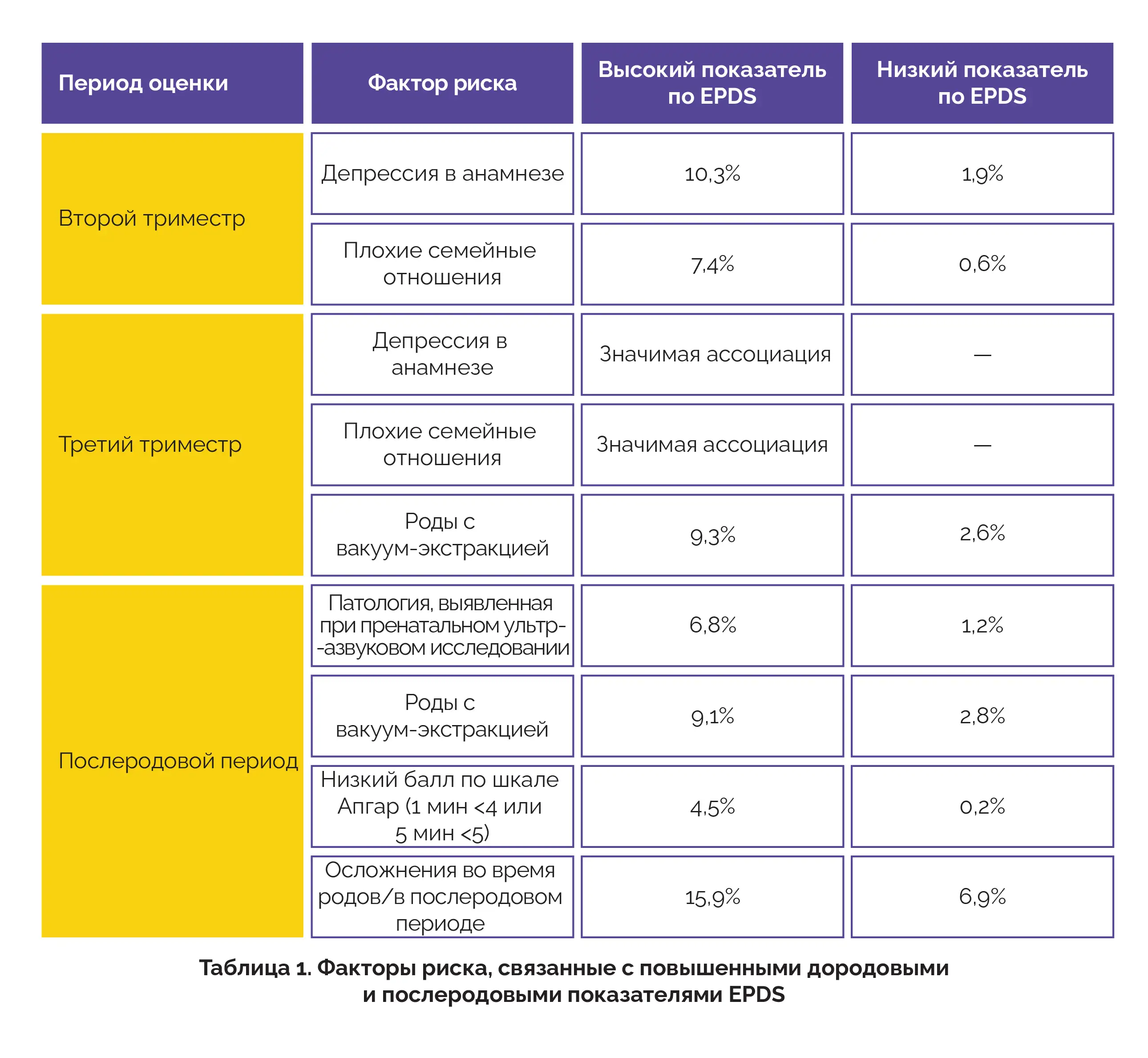
Важно отметить, что скрининг в третьем триместре превзошел оценку во втором триместре в прогнозировании ПРД. Результаты оценки по шкале EPDS, полученные в третьем триместре, показали 90,9% совпадения с оценками послеродового периода (коэффициент каппа Коэна = 0,440), по сравнению с 88,7% совпадения для скрининга во втором триместре ( коэффициент каппа Коэна = 0,387 ). Таким образом, рутинное дородовое обследование психического здоровья, особенно на поздних сроках беременности, может помочь выявить женщин с повышенным риском и обеспечить своевременное направление к специалистам и оказание помощи, что потенциально улучшит показатели психического здоровья матерей.
Taiwanese Journal of Obstetrics and Gynecology
Risk factors Associated with Elevated Antenatal and Postpartum Edinburgh Postnatal Depression Scale Scores: A Retrospective Cohort Study
Yi-Wei Liao и соавт.

















Комментарии (0)