

Categories
Change Password!
Reset Password!


Gastroesophageal reflux is connected with sleep disturbance, and proton pump inhibitor (PPI) therapy may improve insomnia related to gastroesophageal reflux disease (GERD).
Omeprazole improves insomnia and sleep quality in patients with gastroesophageal reflux symptoms but shows no additional benefit in those without reflux symptoms.
Gastroesophageal reflux is connected with sleep disturbance, and proton pump inhibitor (PPI) therapy may improve insomnia related to gastroesophageal reflux disease (GERD). However, many individuals with gastroesophageal reflux have no typical reflux symptoms, including some patients with erosive esophagitis. This study investigated whether omeprazole could improve insomnia in those with and without reflux symptoms.
Researchers conducted a randomized controlled trial involving 176 patients with insomnia, irrespective of reflux symptoms. Participants received either omeprazole 20 mg or placebo for 14 days. Sleep disturbance and GERD-related quality of life were evaluated via four patient-reported measures:
A total of 171 patients were included in the evaluation, of whom 69 had typical reflux symptoms. The sleep benefit of omeprazole was symptom-dependent. Patients with typical reflux symptoms experienced remarkable improvements in both reflux-related quality of life and insomnia, whereas patients without reflux symptoms did not derive a significant sleep benefit compared with placebo (Table 1).
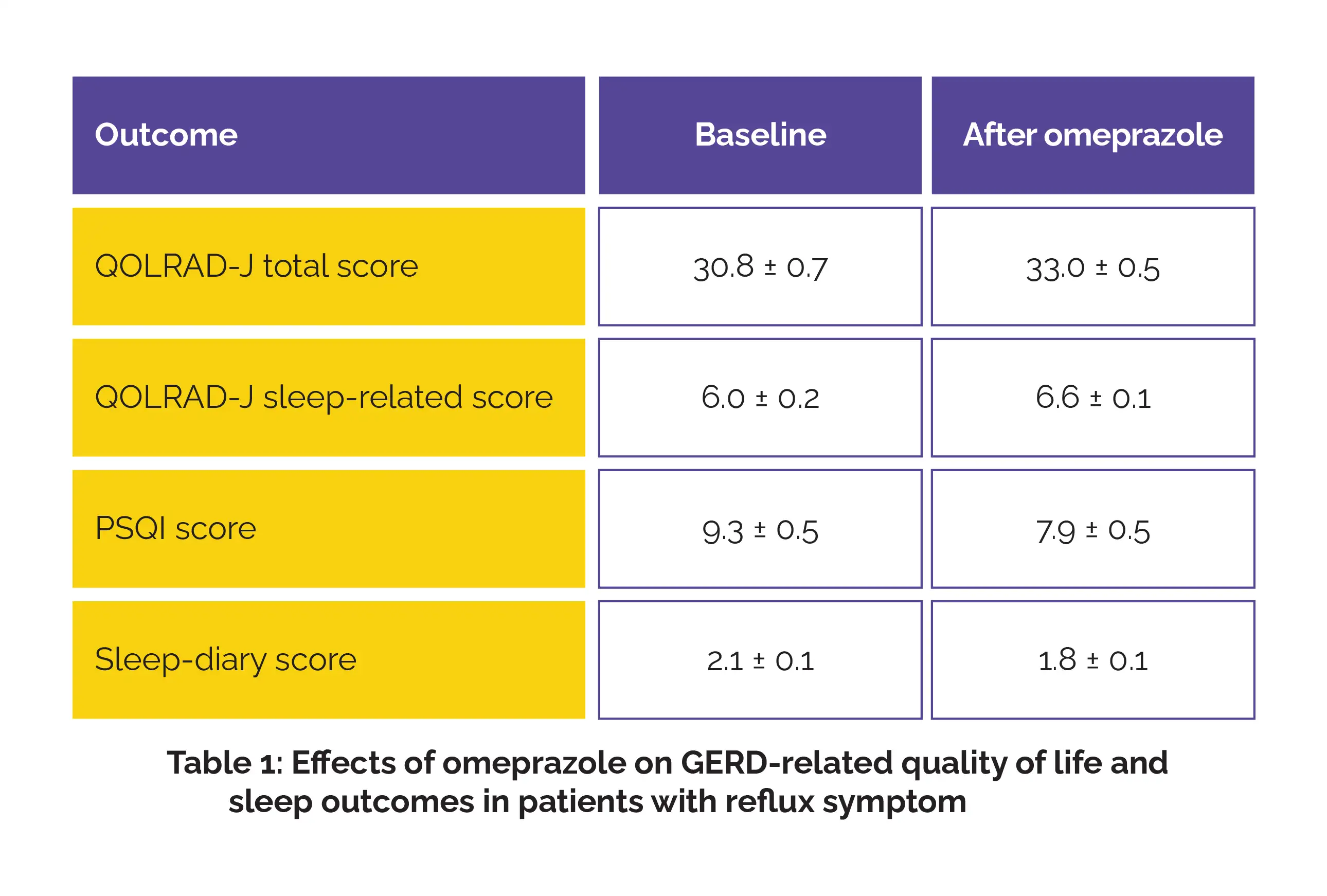
Omeprazole 20 mg administered for 14 days improved GERD-related quality of life and insomnia in patients with reflux symptoms. However, it did not yield a noticeable sleep-related benefit beyond placebo in patients without reflux symptoms, suggesting that the improvement in sleep disturbance is closely linked with the presence of gastroesophageal reflux symptoms.
Clinical and Translational Gastroenterology
Effects of omeprazole on sleep disturbance: randomized multicenter double-blind placebo-controlled trial
Masahito Aimi et al.












Comments (0)