

Categories
Change Password!
Reset Password!



Semaglutide and tirzepatide reshape the treatment landscape of MASLD by coupling histologic liver improvement with proven cardiometabolic protection.
Metabolic dysfunction-associated steatotic liver disease (MASLD) increasingly reshapes the global cardiometabolic landscape, with cardiovascular complications emerging as a greater threat than progressive liver injury in many patients. In response to this evolving paradigm, the review explored whether glucagon-like peptide-1 receptor agonists (GLP-1 RAs) could simultaneously alter hepatic disease progression and improve cardiovascular outcomes.
The authors synthesized translational, clinical, and cardiovascular evidence to explore the capacity of GLP-1 RAs to modify both hepatic pathology and systemic cardiometabolic risk in MASLD. Clinical evidence consistently demonstrated meaningful histologic improvements with GLP-1 RAs across the metabolic dysfunction-associated steatohepatitis (MASH) spectrum (Table 1).
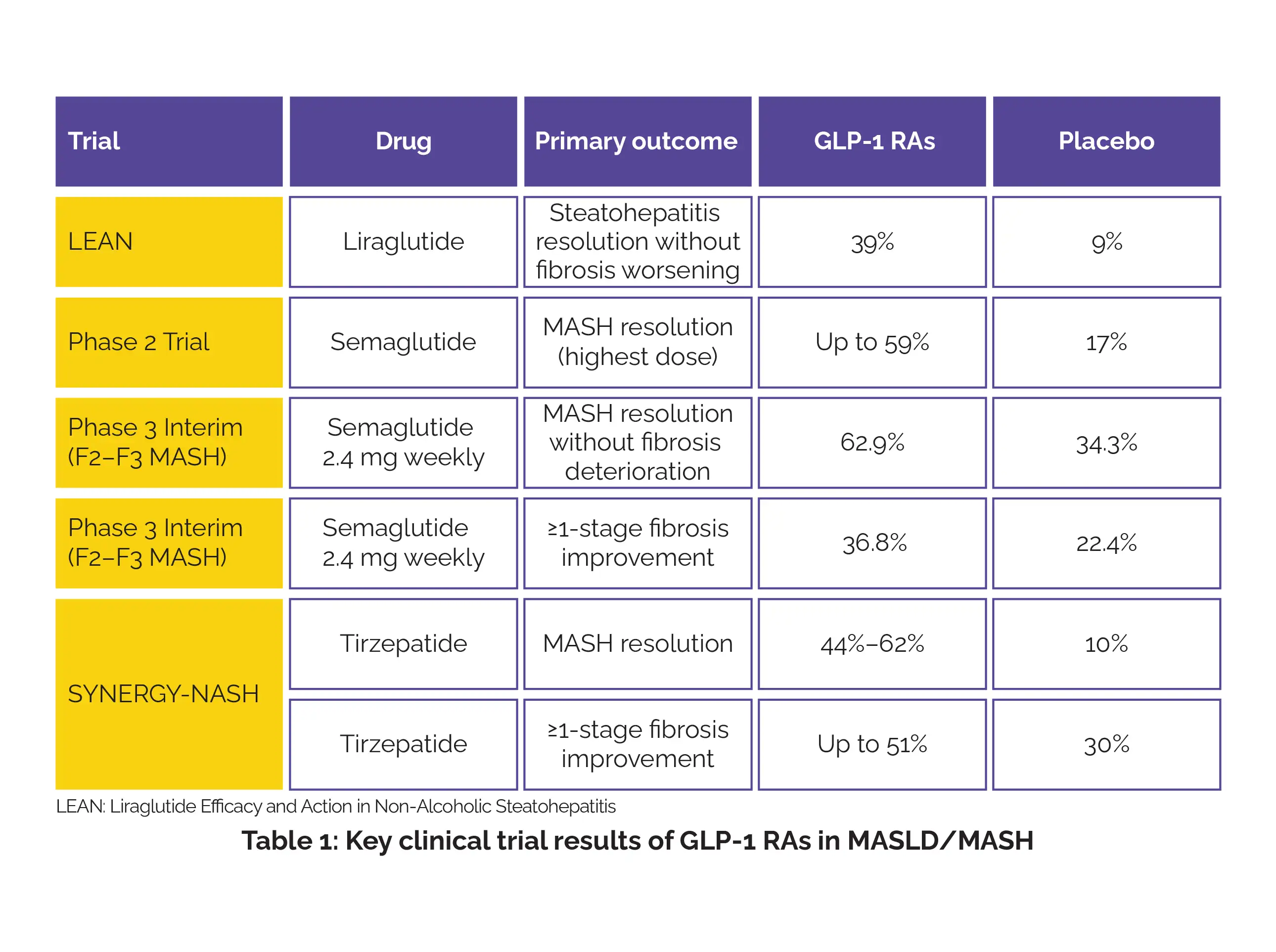
Beyond liver-specific outcomes, GLP-1RAs have consistently demonstrated cardiovascular protection. Large cardiovascular outcome trials, encompassing LEADER (liraglutide), SUSTAIN-6 and SELECT (semaglutide), and REWIND (dulaglutide), reported prominent reductions in major adverse cardiovascular events, supporting their role in reducing cardiovascular morbidity in patients with metabolic disease.
The accumulating evidence positioned GLP-1 RAs as therapies capable of reshaping MASLD management by addressing both hepatic injury and cardiovascular vulnerability within a single treatment strategy. Semaglutide and tirzepatide emerged as particularly promising candidates for patients with obesity, type 2 diabetes, advanced fibrosis, and high cardiometabolic risk.
Chronic Diseases and Translational Medicine
GLP-1 Receptor Agonists in Metabolic Dysfunction-Associated Steatotic Liver Disease: Bridging Hepatic and Cardiovascular Outcomes
Gabriel Amorim Moreira Alves et al.













Comments (0)