

Categories
Change Password!
Reset Password!



Chronic rhinosinusitis (CRS) is a persistent inflammatory disorder that frequently occurs alongside asthma and allergic rhinitis (AR), while depression can further hamper quality of life and overall disease burden.
Comorbid asthma and allergic rhinitis are associated with substantially higher odds of depression in patients with chronic rhinosinusitis, with low socioeconomic status further increasing the risk.
Chronic rhinosinusitis (CRS) is a persistent inflammatory disorder that frequently occurs alongside asthma and allergic rhinitis (AR), while depression can further hamper quality of life and overall disease burden. Although these ailments commonly coexist, the combined relationship between CRS, respiratory and allergic comorbidities, and depression remains incompletely characterized. The study therefore evaluated whether asthma and AR were associated with depression among patients with CRS using data from the "All of Us Research Database".
Researchers performed a cross-sectional study utilizing data from 27,077 patients with CRS and 244,101 individuals without CRS. CRS, asthma, AR, and depression were identified using Systematized Nomenclature of Medicine (SNOMED) codes. Generalized linear models were applied to determine adjusted odds ratios (aORs) for associations with depression. Additional stratified analyses examined differences according to age, gender, and income.
The prevalence of asthma, AR, and depression was substantially higher among patients with CRS than among those without CRS (Table 1).
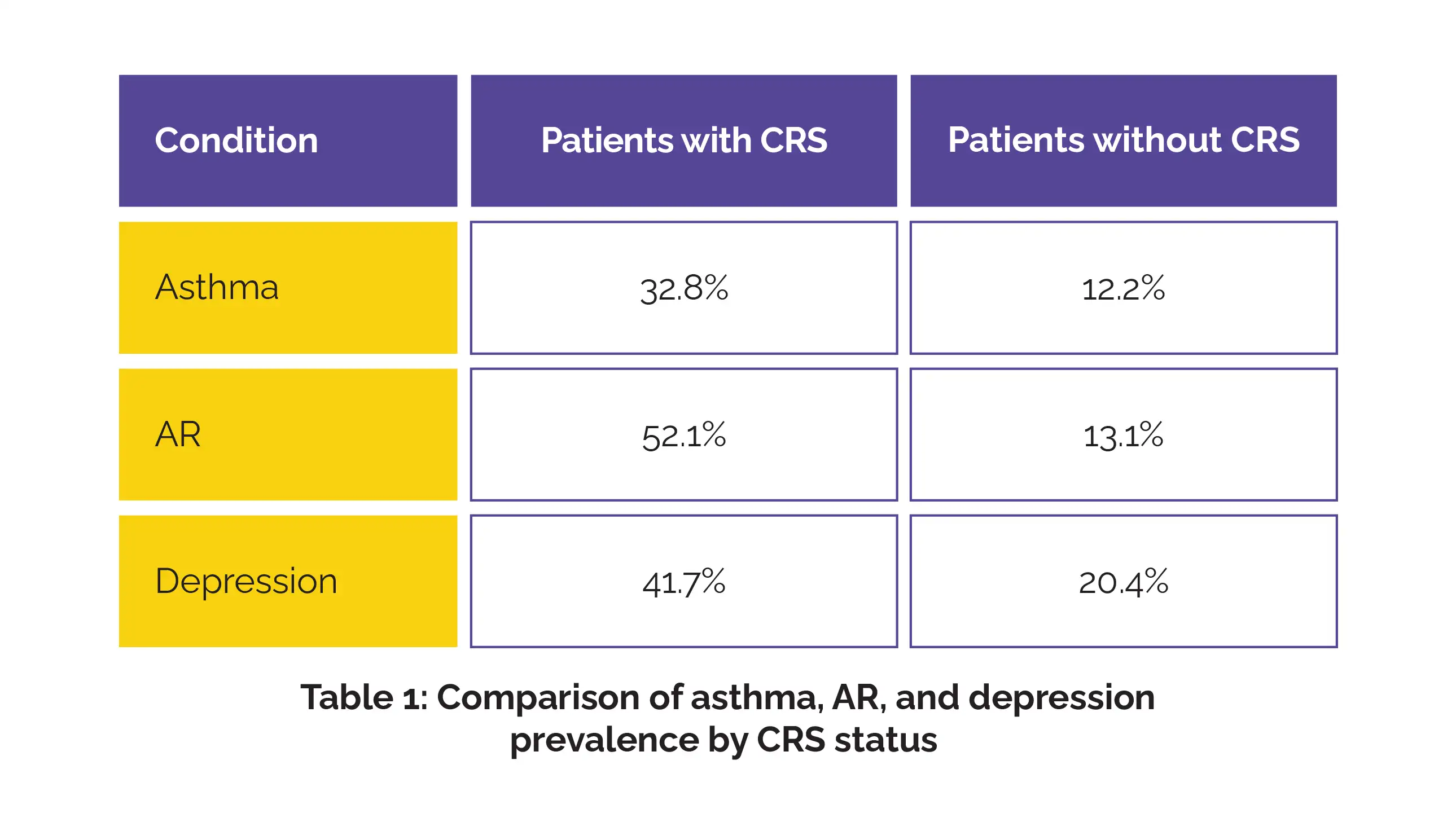
After adjustment, CRS itself was markedly associated with higher odds of depression (aOR, 2.54). Asthma demonstrated a strong independent association with depression (aOR, 2.93), while AR was also significantly associated with increased odds of depression (aOR, 2.67). The analysis further identified socioeconomic status as an important factor. Among those with CRS, low socioeconomic status was linked with higher odds of depression, with aORs ranging from 2.70 to 2.90.
Importantly, the burden increased when CRS coexisted with respiratory or allergic comorbidities. Those with both CRS and asthma had elevated odds of depression (aOR, 1.88), while those with both CRS and AR also had increased odds (aOR, 1.42). The combined presence of CRS, asthma and AR was associated with the highest reported odds of depression (aOR, 2.15), highlighting a potentially important connection between multimorbidity and mental health burden.
CRS was strongly associated with depression, with coexisting asthma and AR further escalating the mental health burden. The highest risk occurred with combined CRS, asthma, and AR, while low socioeconomic status was also linked to greater odds of depression. The findings support multidisciplinary CRS management addressing respiratory, allergic, and mental health comorbidities.
American Journal of Rhinology & Allergy
Association of Depression in Patients With Chronic Rhinosinusitis Comorbid Asthma and Allergic Rhinitis: A Cross-Sectional Study With the All of Us Research Database
Sherron Thomas et al.














Comments (0)