

Categories
Change Password!
Reset Password!



Levocetirizine, a second-generation antihistamine, is widely used for allergic conditions.
Levocetirizine shows a modest increase in sedation while its sedative profile remains comparable with other second-generation antihistamines.
Levocetirizine, a second-generation antihistamine, is widely used for allergic conditions. Its potential to cause sedation has been investigated because central nervous system effects may occur when antihistamines penetrate the blood–brain barrier. As a substrate of P-glycoprotein, levocetirizine is expected to have limited central nervous system penetration; however, evidence regarding its effects on alertness and psychomotor performance remains relevant.
This systematic review and meta-analysis assessed whether levocetirizine is linked with sedation or impaired psychomotor performance when compared with placebo, other second-generation antihistamines, and first-generation antihistamines.
Investigators searched MEDLINE and EMBASE for relevant studies. Eligible studies were randomized controlled trials (RCTs) involving patients with allergic conditions or healthy participants and comparing levocetirizine with placebo or another antihistamine. The key outcome ascertained was the risk ratio (RR) for sedative effects. The secondary outcome was the alteration in psychomotor speed. Pooled estimates were calculated via a fixed-effect model.
The analysis included 48 studies involving 18,014 volunteers. Compared with placebo, levocetirizine was linked with a modest but statistically significant increase in sedative effects (RR, 1.67). However, levocetirizine did not exhibit a noticeable difference in sedation when compared with other second-generation antihistamines (RR, 1.23). Individual subgroup comparisons similarly found no pivotal difference between levocetirizine and other agents, as depicted in Table 1:
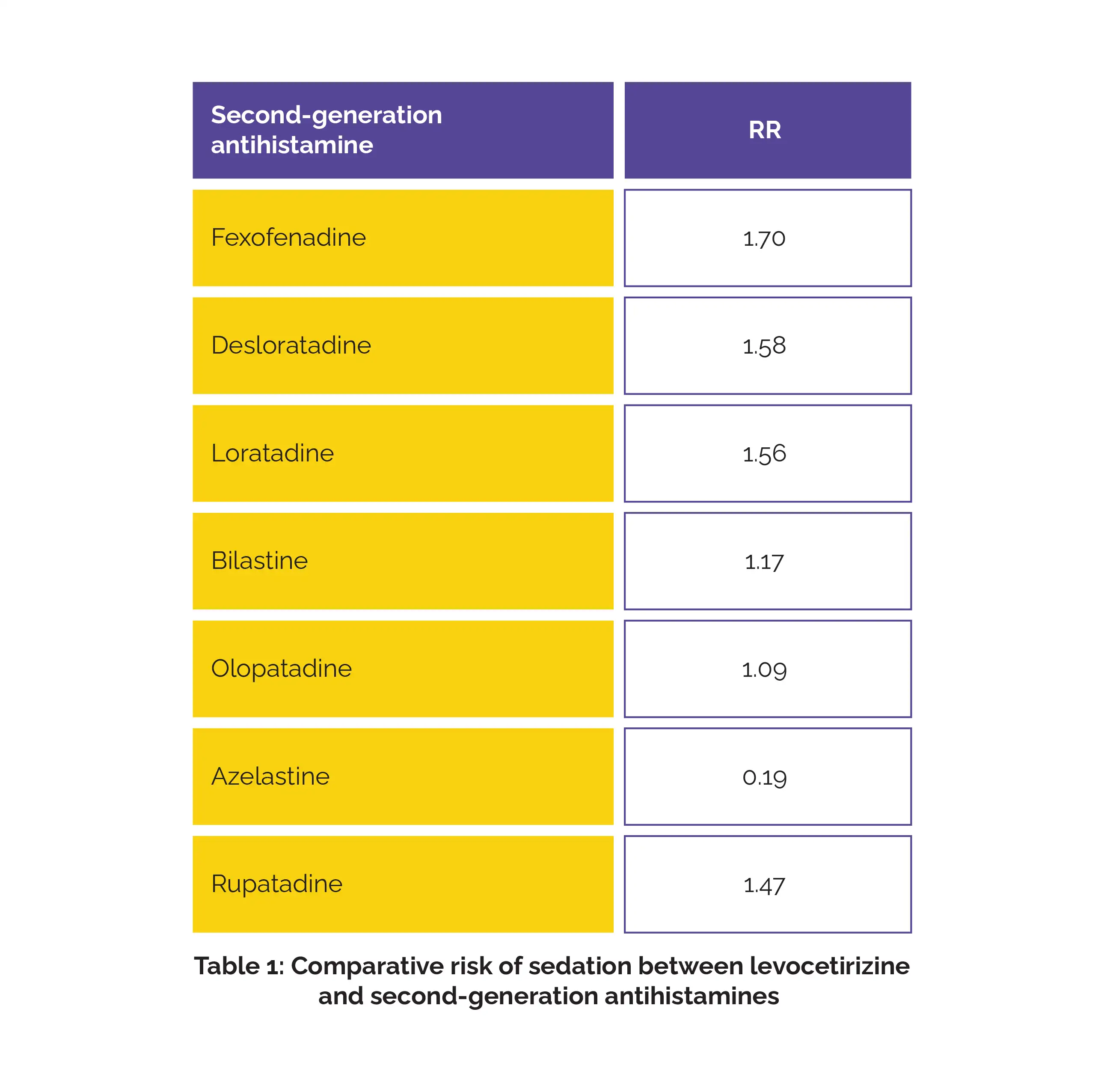
In contrast, levocetirizine produced less sedative effect than first-generation antihistamines and was linked with a smaller change in reaction time. The reported mean difference in reaction time was −250.76 seconds.
Levocetirizine was associated with modest sedation compared with placebo, while showing no significant difference from other second-generation antihistamines. Compared with first-generation agents, it produced less sedation and a smaller change in reaction time. Overall, the findings indicate a relatively limited sedative profile within its therapeutic class.
Drugs
Sedative Effects of Levocetirizine: A Systematic Review and Meta-Analysis of Randomized Controlled Studies
Kornkiat Snidvongs et al.















Comments (0)