

Категории
Сменить пароль!
Сброс пароля!



Хронический риносинусит (ХРС) — это персистирующее воспалительное заболевание, которое часто встречается наряду с бронхиальной астмой и аллергическим ринитом (АР), тогда как депрессия может дополнительно ухудшать качество жизни и общее бремя заболевания.
Коморбидные бронхиальная астма и аллергический ринит связаны со значительно более высокой вероятностью развития депрессии у пациентов с хроническим риносинуситом, при этом низкий социально-экономический статус еще больше увеличивает риск.
Хронический риносинусит (ХРС) — это персистирующее воспалительное заболевание, которое часто встречается наряду с бронхиальной астмой и аллергическим ринитом (АР), тогда как депрессия может дополнительно ухудшать качество жизни и общее бремя заболевания. Хотя эти заболевания часто сосуществуют, комбинированная связь между ХРС, респираторными и аллергическими коморбидностями и депрессией остаётся не полностью охарактеризованной. В исследовании оценивалось, связаны ли бронхиальная астма и АР с депрессией у пациентов с ХРС, с использованием базы данных проекта «All of Us Research Program».
Авторы провели одномоментное исследование с использованием данных 27 077 пациентов с ХРС и 244 101 человека без ХРС. ХРС, астма, АР и депрессия были идентифицированы с использованием кодов Systematized Nomenclature of Medicine (SNOMED). Обобщённые линейные модели применялись для определения скорректированных отношений шансов (aOR) для связей с депрессией. Дополнительные стратифицированные анализы изучали различия в зависимости от возраста, пола и уровня дохода.
Распространённость астмы, АР и депрессии была существенно выше среди пациентов с ХРС, чем среди тех, у кого ХРС не было (таблица 1).
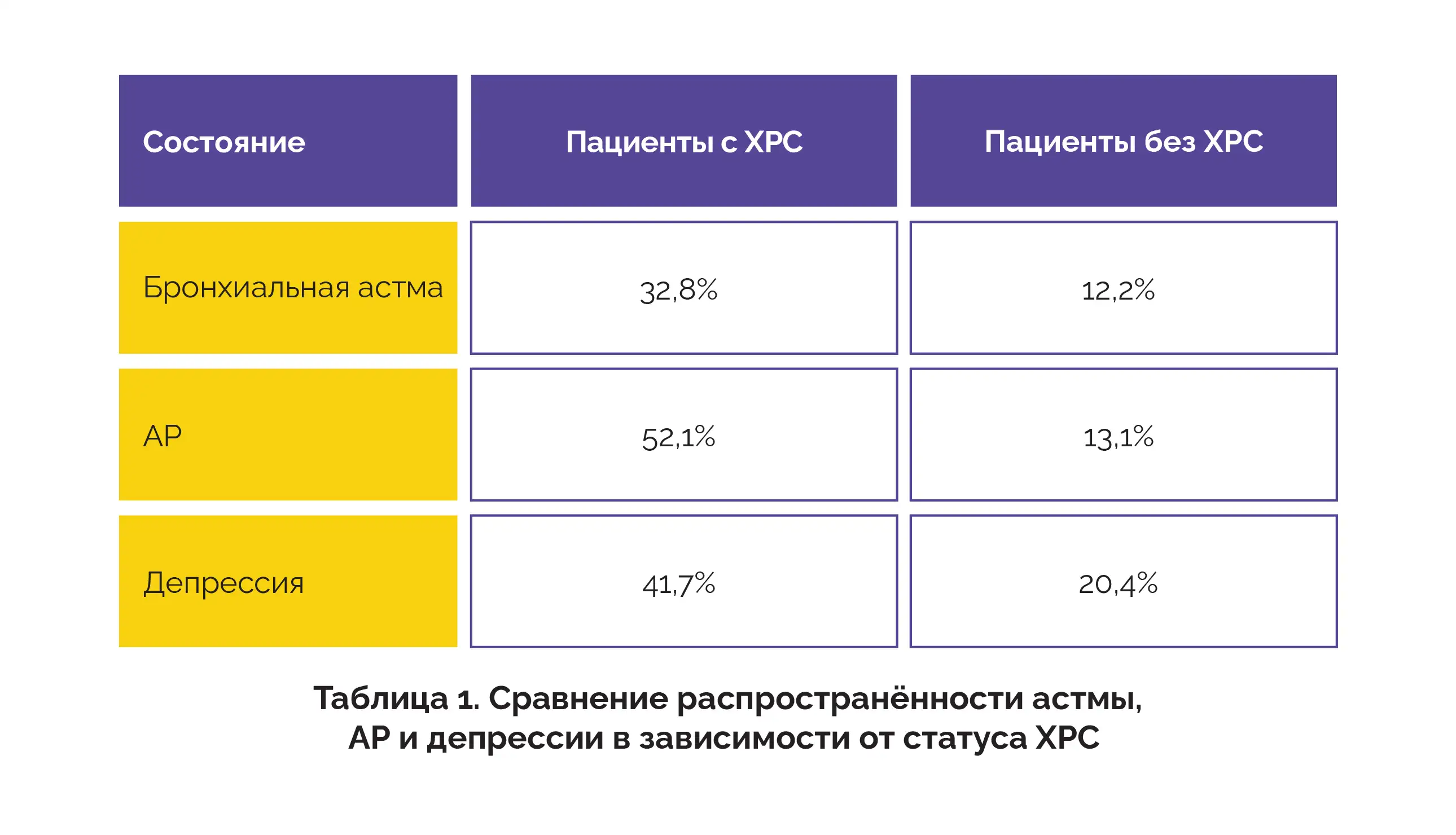
После корректировки было установлено, что сам ХРС значимо связан с более высокой вероятностью развития депрессии (aOR, 2,54). Бронхиальная астма продемонстрировала сильную независимую связь с депрессией (aOR 2,93), тогда как АР также был значимо связан с повышенным риском депрессии (aOR 2,67). Анализ дополнительно идентифицировал социально-экономический статус как важный фактор. Среди лиц с ХРС низкий социально-экономический статус был связан с более высокими шансами депрессии при aOR от 2,70 до 2,90.
Важно, что бремя увеличивалось, когда ХРС сосуществовал с респираторными или аллергическими коморбидностями. У лиц, страдающих одновременно ХРС и бронхиальной астмой, наблюдалась повышенная вероятность развития депрессии (aOR, 1,88), а у лиц, страдающих одновременно ХРС и АР, также отмечалась повышенная вероятность (aOR, 1,42). Сочетанное наличие ХРС, бронхиальной астмы и АР было связано с наиболее высокой вероятностью развития депрессии (aOR, 2,15), что подчеркивает потенциально важную связь между множественной патологией и бременем проблем с психическим здоровьем.
Была выявлена сильная ассоциация ХРС с депрессией, причём сочетание с астмой и АР дополнительно усиливало нагрузку на психическое здоровье. Наивысший риск возникал при комбинации ХРС, бронхиальной астмы и АР, тогда как низкий социально-экономический статус также был связан с большими шансами депрессии. Полученные результаты подтверждают целесообразность междисциплинарного подхода к лечению ХРС с учетом сопутствующих респираторных, аллергических и психических заболеваний.
American Journal of Rhinology & Allergy
Association of Depression in Patients With Chronic Rhinosinusitis Comorbid Asthma and Allergic Rhinitis: A Cross-Sectional Study With the All of Us Research Database
Sherron Thomas и соавт.















Комментарии (0)