

Категории
Сменить пароль!
Сброс пароля!



Осложнённая язвенная болезнь остаётся одной из основных причин заболеваемости и может проявляться жизнеугрожающими осложнениями, такими как перфорация и кровотечение.
Консервативное лечение сокращает пребывание в стационаре и частоту осложнений, связанных с процедурой, в то время как хирургическое лечение обеспечивает лучший контроль заболевания при тяжелых осложнениях язвенной болезни, особенно при перфорации.
Осложнённая язвенная болезнь остаётся одной из основных причин заболеваемости и может проявляться жизнеугрожающими осложнениями, такими как перфорация и кровотечение. Хотя многие пациенты хорошо отвечают на медикаментозное лечение и поддерживающую терапию, другим требуется хирургическое вмешательство для борьбы с тяжелым течением заболевания. Определение наиболее подходящей стратегии лечения в соответствии с клинической картиной имеет важное значение для оптимизации исходов пациентов и минимизации осложнений. В этом исследовании сравнивались клинические исходы консервативного и хирургического лечения.
В этом сравнительном наблюдательном исследовании 120 пациентов (средний возраст 46,8 ± 13,5 года) с осложненной язвенной болезнью были распределены либо в группу консервативного лечения, либо в группу хирургического лечения. Исследователи оценивали демографические характеристики, лабораторные данные, тип осложнения язвы, продолжительность пребывания в стационаре, госпитализацию в отделение интенсивной терапии (ОИТ), рецидив заболевания, послеоперационные осложнения и смертность. Статистический анализ проводился с помощью Пакета программ обработки статистических данных общественных наук (SPSS) версии 26. Были применены критерии хи-квадрат и t-критерий для независимых выборок, при этом значение p < 0,05 считалось статистически значимым.
Перфорированные язвы чаще встречались у пациентов, перенесших хирургическое вмешательство, тогда как кровоточащие язвы чаще лечились консервативными методами. Пациенты, получавшие консервативное лечение, имели значительно более короткую среднюю продолжительность пребывания в стационаре и реже госпитализировались в ОИТ по сравнению с пациентами, которым проводилось хирургическое лечение (таблица 1).
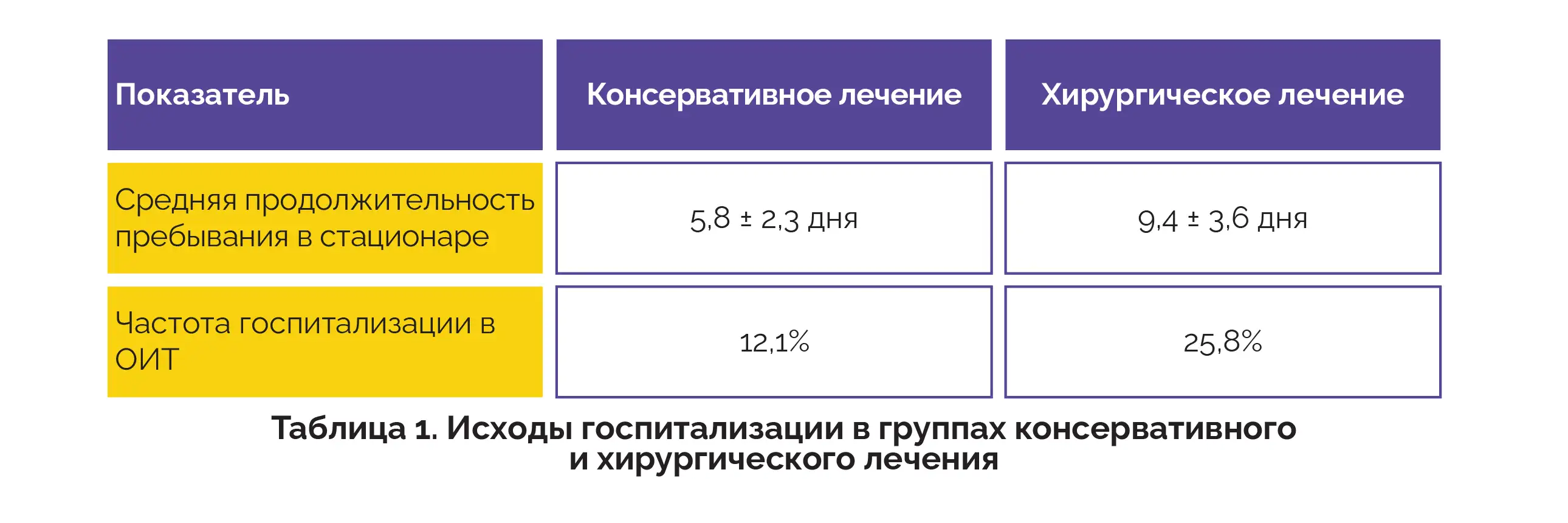
Рецидив заболевания отмечался чаще после консервативного лечения (22,4%), в то время как раневая инфекция возникала чаще после хирургического лечения (17,7%). Смертность существенно не различалась между двумя группами.
Консервативное лечение было связано с сокращением продолжительности госпитализации и уменьшением числа осложнений, связанных с процедурой, в то время как хирургическое лечение обеспечивало лучший контроль над заболеванием при тяжелой осложненной язвенной болезни, особенно при перфоративных язвах. Правильный выбор лечения в соответствии с тяжестью заболевания имеет решающее значение для оптимизации клинических исходов.
International Journal of Pharmacy Research & Technology
Clinical Outcomes of Conservative versus Surgical Treatment in Patients with Complicated Peptic Ulcer Disease
Syed Umar Faroo и соавт.


















Комментарии (0)