

Categories
Change Password!
Reset Password!



Implementing aromatherapy as a first-line treatment in pediatric recovery units reduces rescue antiemetic administration while driving down monthly operational costs.
Waking up from anesthesia can be uncomfortable for children, particularly when postoperative nausea and vomiting (PONV) persists despite preventive treatment. Now, an evidence-based quality-improvement initiative suggests that a simple, low-cost intervention—peppermint aromatherapy—may offer another option before reaching for rescue antiemetic medication.
Aromatherapy moves to the front line
The initiative was implemented in a pediatric post-anesthesia care unit (PACU), where aromatherapy was introduced as the first-line treatment for PONV before rescue antiemetics were offered. This strategy was prompted by evidence supporting aromatherapy for PONV in adults, alongside increasing use of the intervention in children. The initiative specifically sought to check whether aromatherapy could be feasibly incorporated into routine pediatric PACU care while minimizing antiemetic medication use.
PACU staff received education through multiple in-service sessions. Peppermint aromatherapy sticks removed from the automated dispensing cabinet were tracked monthly, while electronic medical records were used to identify patients who received antiemetic medications in the PACU. Data were collected over 18 months, with accuracy verified by the project investigator. Associations between aromatherapy use, antiemetic medication use, and costs were evaluated via Spearman correlation and linear regression.
More aromatherapy, fewer antiemetics
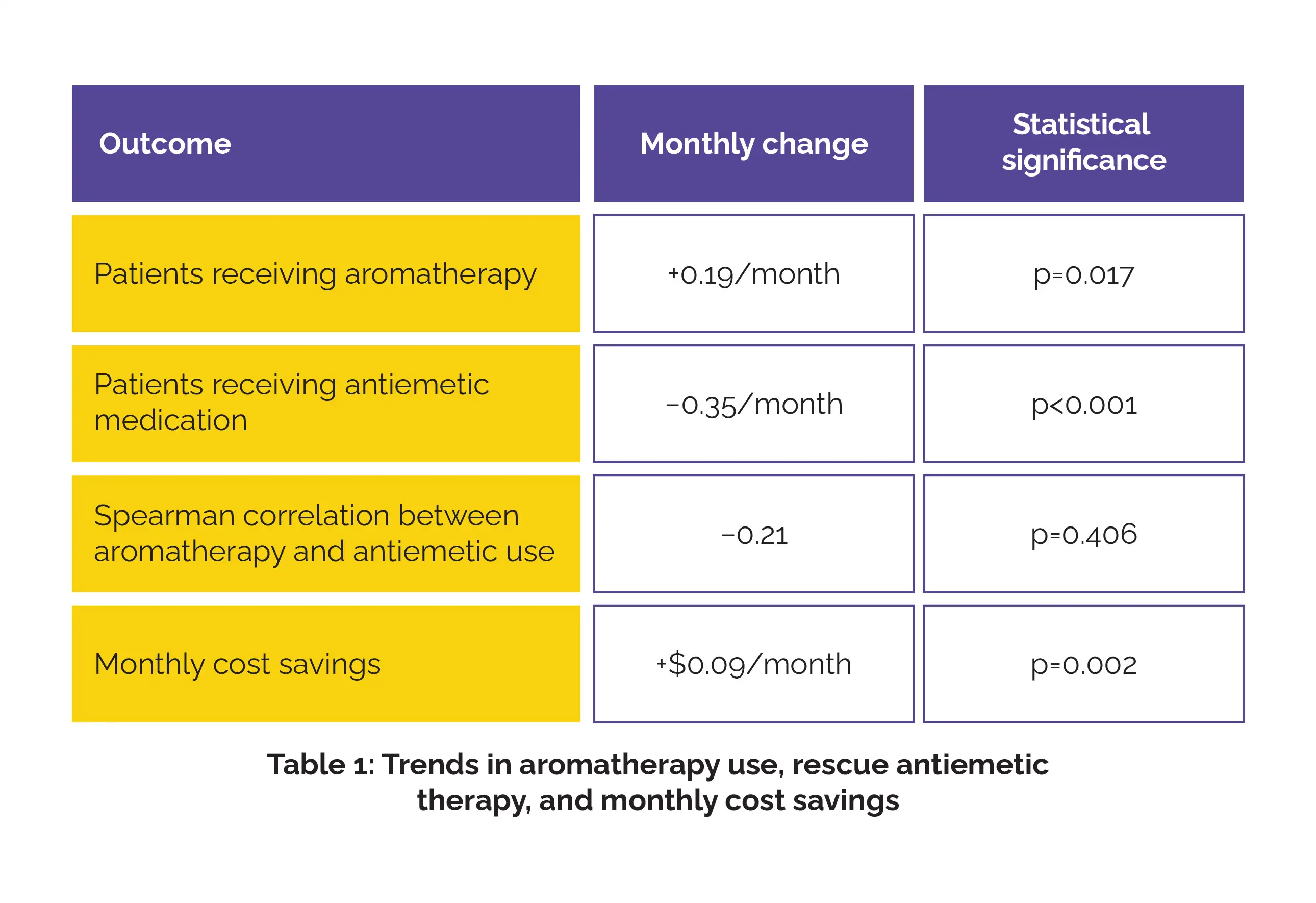
Over the study period, aromatherapy use increased substantially, while antiemetic medication use moved in the opposite direction. Although the Spearman correlation was negative, it was not statistically significant. The overall trend illustrated decreasing antiemetic medication use as aromatherapy utilization increased. Importantly, the initiative was also linked with significant monthly cost savings (Table 1).
A simple addition to pediatric PACU care
Overall, aromatherapy may yield a feasible, effective, and low-cost nonpharmacological option for those experiencing PONV after surgery. Incorporating peppermint aromatherapy before rescue antiemetic therapy may help minimize reliance on additional medication while providing another tool for postoperative symptom management. The authors conclude that aromatherapy must be offered as a first-line treatment for PONV in appropriate pediatric patients prior to rescue antiemetic therapy.
Journal of PeriAnesthesia Nursing
Utilization of Aromatherapy as First Line Treatment for Nausea and Vomiting in Post Anesthesia Recovery
Temima Oratz et al.











Comments (0)