

Категории
Сменить пароль!
Сброс пароля!


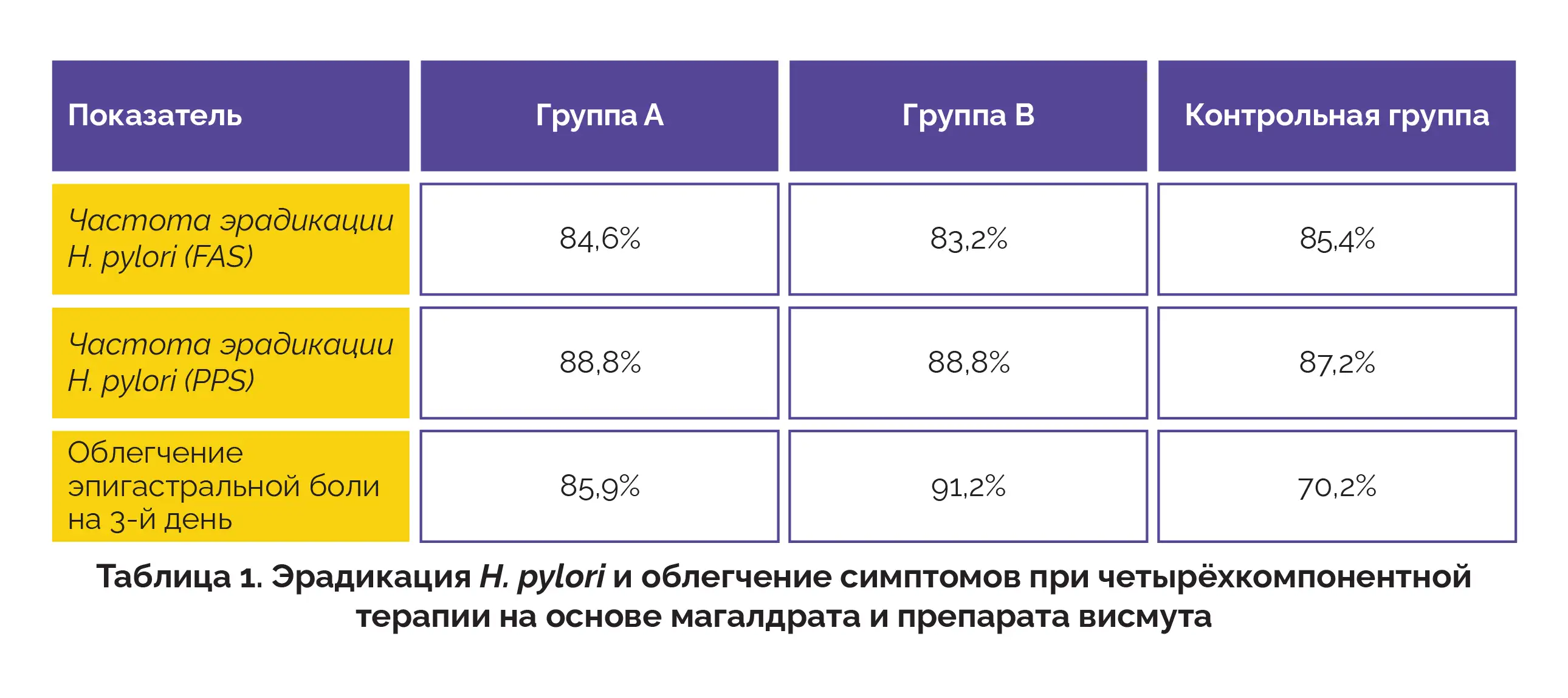
Прием гранул магалдрата в комбинации с рабепразолом, амоксициллином и кларитромицином позволяет достичь частоты эрадикации H. pylori, сопоставимой со стандартной четырёхкомпонентной терапией с препаратом висмута, обеспечивая при этом более выраженное раннее облегчение эпигастральной боли.
Многоцентровое проспективное исследование, проведенное в Китае, показывает, что четырёхкомпонентная терапия на основе гранул магалдрата обеспечивает эффективную и хорошо переносимую эрадикацию Helicobacter pylori (H. pylori) у пациентов с впервые диагностированной инфекцией и хроническим гастритом.
Применяемые в настоящее время стратегии эрадикации H. pylori первой линии высокоэффективны, но часто ассоциированы с желудочно-кишечным дискомфортом и нежелательными явлениями, связанными с лечением, что может влиять на восприятие терапии пациентом. Магалдрат, обладающий гастропротективными и кислотонейтрализующими свойствами, стал потенциальным альтернативным компонентом эрадикационной терапии, побудив исследователей оценить, может ли он поддерживать эффективность эрадикации при одновременном улучшении контроля симптомов.
Чтобы изучить эту возможность, они провели проспективное рандомизированное многоцентровое исследование с участием 557 пациентов с впервые диагностированным хроническим гастритом, ассоциированным с H. pylori. Пациенты были распределены с использованием таблицы случайных чисел на следующие группы:
Успех лечения оценивался с использованием как популяции полного анализа (FAS), так и популяции пациентов, закончивших исследование в соответствии с протоколом (per-protocol, PPS), наряду с оценками раннего облегчения симптомов и нежелательных явлений, возникших на фоне лечения. Согласно данным, представленным в таблице 1, оба режима на основе магалдрата соответствовали критериям неменьшей эффективности для эрадикации H. pylori по сравнению со стандартной висмутсодержащей терапией. Помимо эрадикации, у пациентов, получавших магалдрат, наблюдалось более быстрое облегчение эпигастральной боли в ранний период лечения, что указывает на дополнительный симптоматический эффект.
Важно, что нежелательные явления, возникшие на фоне лечения, включая головокружение, тошноту, рвоту, боль в животе, диарею и сыпь, возникали с сопоставимой частотой во всех трёх группах лечения, что указывает на то, что более выраженное облегчение симптомов не сопровождалось проблемами по безопасности.
Объединяя сопоставимую эффективность эрадикации, более раннее купирование симптомов и профиль безопасности, сходный с традиционной терапией с препаратом висмута, четырехкомпонентная терапия на основе магалдрата представляет собой перспективный вариант первой линии для пациентов с H. pylori-ассоциированным хроническим гастритом, особенно когда быстрое облегчение симптомов является клиническим приоритетом.
Zhonghua Yi Xue Za Zhi
[Analysis of the efficacy and safety of magaldrate granules quadruple therapy in the treatment of Helicobacter pylori infection]
X H Dong и соавт.















Комментарии (0)