

Категории
Сменить пароль!
Сброс пароля!


Высокие дозы омепразола улучшают результаты после эндоскопического гемостаза, снижая частоту повторных кровотечений без ущерба для безопасности.
Кровоточащие пептические язвы остаются одной из основных причин неварикозных кровотечений из верхних отделов желудочно-кишечного тракта и продолжают создавать значительную нагрузку на службы неотложной помощи. Хотя эндоскопический гемостаз успешно контролирует активное кровотечение, повторные кровотечения остаются серьезной проблемой, что делает оптимальную кислотосупрессивную терапию необходимой для поддержания стабильности тромба и улучшения исходов у пациентов.
В исследовании проводилось сравнение клинической эффективности внутривенного введения омепразола в высоких и низких дозах после достижения эндоскопического гемостаза с целью оценки их влияния на частоту повторных кровотечений, сроки восстановления и безопасность терапии. Пациенты с кровоточащими пептическими язвами, подвергшимися эндоскопическому лечению, были ретроспективно распределены в группы в зависимости от схемы внутривенного введения омепразола после достижения гемостаза.
Исходы в течение 30-дневного наблюдения включали повторное кровотечение, изменения гемоглобина и гематокрита, потребность в переливании крови, время восстановления, продолжительность госпитализации и безопасность лечения. Внутривенное введение омепразола в высоких дозах обеспечило у пациентов более эффективный контроль кровотечения и ускоренное клиническое восстановление после эндоскопического гемостаза. Основные результаты эффективности суммированы ниже в таблице 1.
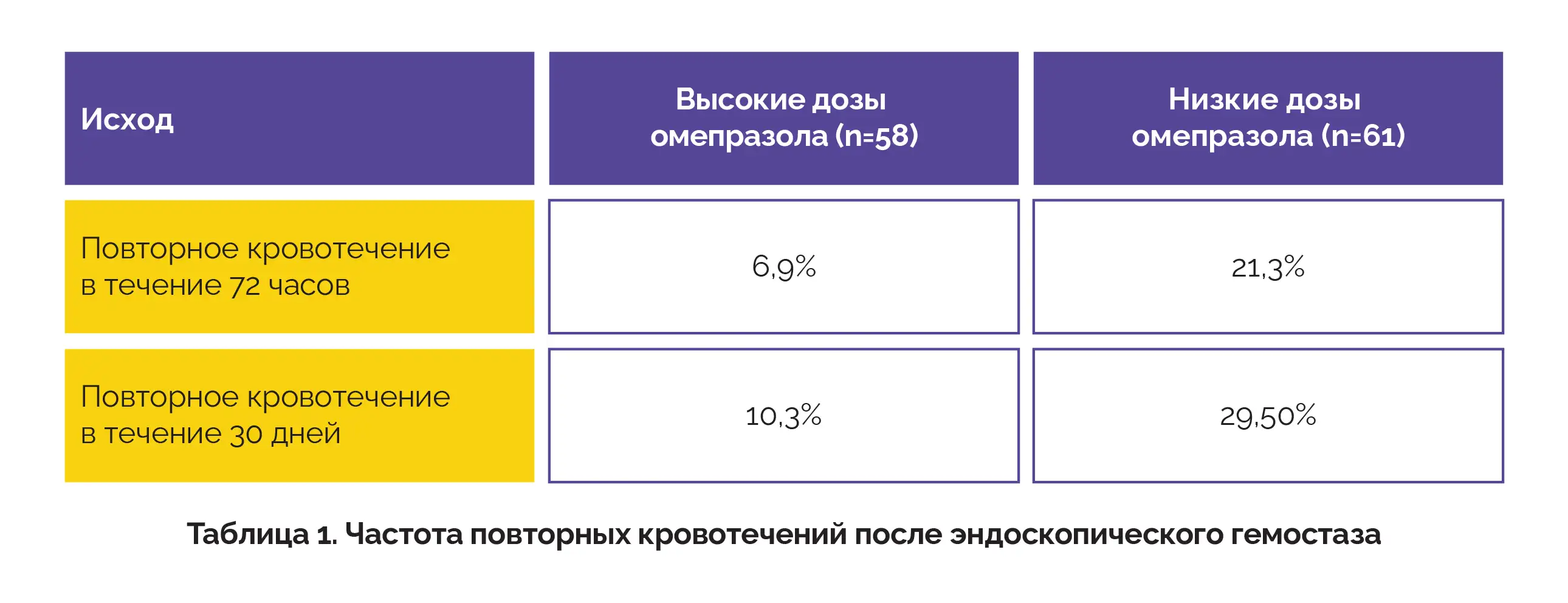
Помимо снижения частоты повторных кровотечений, режим с высокими дозами обеспечил более значительное улучшение показателей гемоглобина и гематокрита, снизил потребность в переливании крови, позволил быстрее остановить кровотечение и стабилизировать гемодинамику, а также сократил продолжительность пребывания в стационаре по сравнению с режимом с низкими дозами. Важно отметить, что связанные с лечением нежелательные явления возникали с одинаковой частотой в обеих группах.
Таким образом, высокие дозы омепразола в сочетании с эндоскопическим гемостазом обеспечивают превосходную гемостатическую стабильность, ускоряют клиническое выздоровление и существенно минимизируют повторные кровотечения в раннем периоде у пациентов с кровоточащими пептическими язвами без ущерба для безопасности.
Medicine (Baltimore)
Efficacy of omeprazole combined with endoscopic hemostasis in the treatment of patients with bleeding peptic ulcers
Xiaozhu Fan и соавт.














Комментарии (0)