

Категории
Сменить пароль!
Сброс пароля!



Значительная часть женщин в постменопаузе не обладает необходимыми знаниями о витамине D и остеопорозе, что подчеркивает необходимость целенаправленного просвещения в области здоровья костной ткани.
Оптимальный уровень витамина D имеет основополагающее значение для здоровья опорно-двигательного аппарата и играет решающую роль в сохранении плотности костной ткани и снижении риска переломов. Дефицит связан с неблагоприятными исходами для скелета, включая повышенную резорбцию костной ткани, нарушение прочности костей и более высокую частоту остеопоротических переломов. Учитывая растущую распространенность остеопороза среди женщин пожилого возраста, целью исследования было оценить знания, отношение и практику женщин в постменопаузе в отношении витамина D, а также оценить уровень их осведомленности и понимания остеопороза.
В одномоментное исследование были включены 260 женщин в постменопаузе, проходивших плановое наблюдение в университетской клинике по лечению менопаузы. Критериями отбора был возраст 50 лет и старше и постменопауза в течение как минимум 12 месяцев. Исследователи собрали демографическую информацию и данные о состоянии здоровья посредством структурированных интервью, а также оценили осведомленность о витамине D, поведении, связанном с солнечным облучением, и знания об остеопорозе с помощью анкеты «Факты об остеопорозе» (FOOQ), что позволило получить представление о потребностях в просвещении по вопросам здоровья костей среди пожилых женщин.
Анализ выявил существенные пробелы в осведомленности о витамине D и практике пребывания на солнце среди женщин в постменопаузе, как показано в таблице 1.
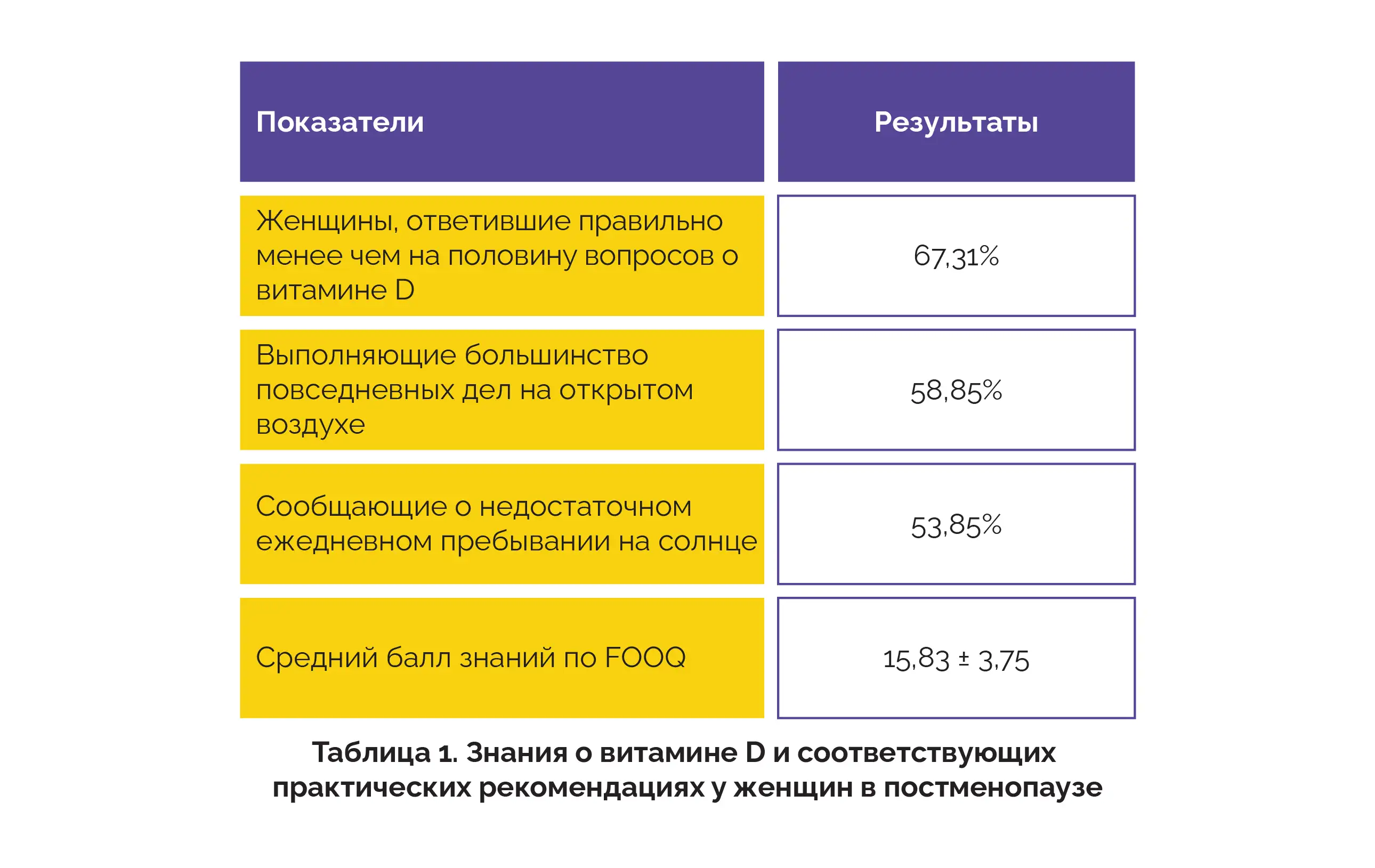
Кроме того, более высокий уровень образования, больший объем знаний об остеопорозе по шкале FOOQ и более активное поведение, связанное с заботой о себе, были значительно связаны с лучшими знаниями о витамине D среди участниц. В целом, результаты подчеркнули ограниченную осведомленность о витамине D в этой популяции и показали, что образование, информированность об остеопорозе и поведение, связанное с заботой о себе, играют важную роль в формировании знаний о здоровье костей.
Исследование выявило заметные пробелы в знаниях о витамине D и остеопорозе у женщин в постменопаузе. Участницы с более высоким уровнем образования, более активной заботой о себе и большим объемом знаний об остеопорозе с большей вероятностью демонстрировали более высокую осведомленность о витамине D. Эти результаты указывают на необходимость улучшения образовательных программ, направленных на улучшение долгосрочного здоровья костей.
Rev Bras Ginecol Obstet
Knowledge and practices of postmenopausal women regarding vitamin D and osteoporosis
Yasmin Bastos-Silva и соавт.






Комментарии (0)