

Категории
Сменить пароль!
Сброс пароля!



Пациенты с постпрандиальным дистресс-синдромом достигают лучшего контроля над симптомами при соблюдении диеты с низким содержанием FODMAP, чем при следовании стандартным диетическим рекомендациям.
Согласно результатам рандомизированного клинического исследования, диета с низким содержанием ферментируемых олиго-, ди-, моносахаридов и полиолов (FODMAP) обеспечивает лучший контроль симптомов и улучшение качества жизни по сравнению с традиционными диетическими рекомендациями (ТДР) у пациентов с постпрандиальным дистресс-синдромом (ПДС), наиболее распространенным подтипом функциональной диспепсии.
ПДС встречается примерно у 80% людей с функциональной диспепсией и характеризуется неприятным чувством переполнения после еды и ранним насыщением. Несмотря на высокую распространенность симптомов, связанных с приемом пищи, научно обоснованные варианты диетического лечения остаются ограниченными. В этом одноцентровом исследовании 60 взрослых пациентов с ПДС были рандомизированы для получения диетических рекомендаций либо по диете с низким содержанием FODMAP (n=31), либо ТДР (n=29).
Традиционные диетические рекомендации включали советы по дробному питанию небольшими порциями и снижению потребления кофеина, алкоголя, газированных напитков, а также жирной, обработанной и острой пищи. Участники заполняли опросники по оценке симптомов и качества жизни в течение 6-недельного периода. Первичной конечной точкой было клинически значимое снижение оценок по подшкале ПДС Лёвенской шкалы постпрандиального дистресса (LPDS), определяемое как улучшение минимум на 0,5 балла и на 0,7 балла.
Исходные характеристики групп были сопоставимы. Средний возраст участников составил 39,6 года, 78% составляли женщины, 78% были европеоидной расы, а 63% имели сопутствующий синдром раздраженного кишечника (СРК). Диета с низким содержанием FODMAP привела к значительно более высоким показателям клинически значимого облегчения симптомов, чем ТДР (таблица 1).
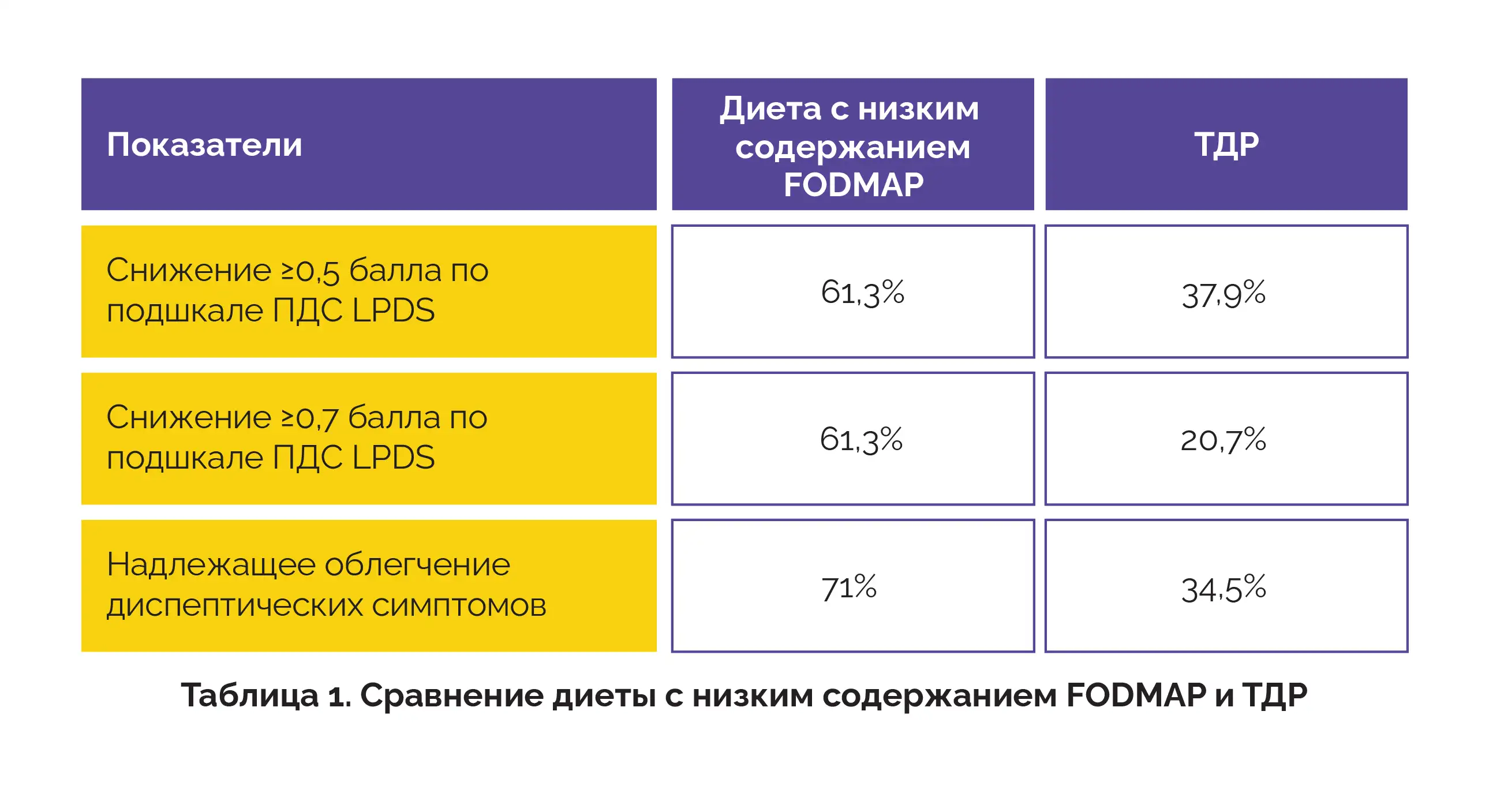
Помимо первичной конечной точки, диета с низким содержанием FODMAP также привела к более выраженному облегчению отдельных показателей симптомов ПДС по шкале LPDS, общих желудочно-кишечных симптомов, измеренных по шкале оценки желудочно-кишечных симптомов, и качества жизни, оцененного с использованием индекса оценки диспепсии Непина.
Исследователи пришли к выводу, что диета с низким содержанием FODMAP превосходит ТДР в достижении облегчения симптомов и улучшении качества жизни при ПДС, что подтверждает ее рассмотрение в качестве целенаправленного диетического вмешательства при этом распространенном желудочно-кишечном расстройстве.
Clinical Gastroenterology and Hepatology
Low FODMAP Diet versus Traditional Dietary Advice in Postprandial Functional Dyspepsia: A Randomized Clinical Trial
Mohamed G. Shiha и соавт.













Комментарии (0)