

Категории
Сменить пароль!
Сброс пароля!



Добавление тренировки мышц кора на основе биомеханики к тренировке мышц тазового дна улучшает удержание мочи, силу мышц тазового дна и качество жизни у женщин с послеродовым стрессовым недержанием мочи.
Стрессовое недержание мочи (СНМ) в послеродовом периоде остается частым осложнением со стороны мышц тазового дна, развивающимся после беременности и родов вследствие повреждения нервно-мышечной системы и опорных структур тазового дна. Это состояние часто влияет на повседневную активность, эмоциональное благополучие и общее качество жизни (КЖ) у женщин в послеродовом периоде. Широко используется обычная тренировка мышц тазового дна (ТМТД), однако для улучшения результатов лечения продолжают изучаться дополнительные стратегии реабилитации.
В ретроспективном исследовании оценивали, улучшает ли интеграция тренировки мышц кора (глубоких мышц туловища) на основе биомеханики со стандартной тренировкой мышц тазового дна удержание мочи, силу мышц тазового дна и качество жизни, оцениваемое пациентками, при СНМ в послеродовом периоде. Группа исследователей проанализировала данные 178 женщин с диагнозом послеродового СНМ. Пациентки были разделены на группы в соответствии со стратегией реабилитации:
В качестве основных критериев эффективности оценивались изменения часового прокладочного теста и баллы по краткой форме опросника по недержанию мочи (ICIQ-UI SF). Вторичные оценки были сосредоточены на оценке силе мышц тазового дна с использованием модифицированной Оксфордской шкалы, наряду с оценкой безопасности лечения. Статистический анализ проводился с помощью критерия хи-квадрат, парных и независимых t-тестов. Женщины, прошедшие тренировки мышц кора с использованием биомеханических методов, достигли лучших результатов в отношении удержания мочи, чем те, кто лечился только с использованием стандартной ТМТД (таблица 1).
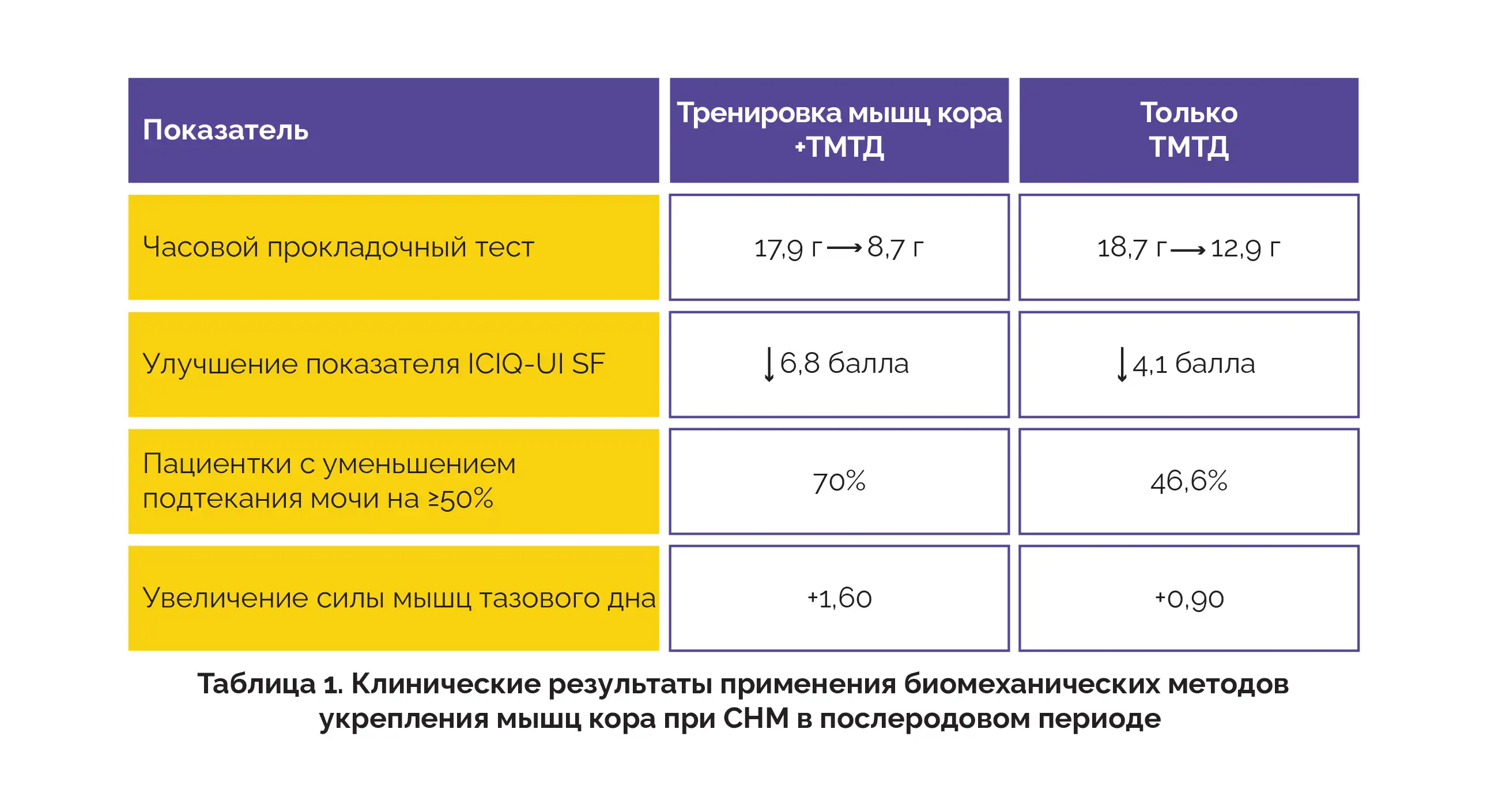
У пациенток, проходивших тренировки мышц кора на основе биомеханики, наблюдалось более выраженное улучшение в отношении удержания мочи, выраженности симптомов и силы мышц тазового дна по сравнению с теми, кто получал только традиционную ТМТД, при этом серьезных нежелательных явлений не наблюдалось.
Таким образом, укрепление мышц кора с использованием биомеханических принципов оказалось ценным дополнением к стандартной ТМТД при СНМ в послеродовом периоде. Комбинированный подход улучшил удержание мочи, укрепил мышцы тазового дна и улучшил качество жизни пациенток без ущерба для безопасности.
Medicine
Efficacy of biomechanics-based core muscle training in patients with postpartum stress urinary incontinence
Xiaodan Yang и соавт.












Комментарии (0)