

Categories
Change Password!
Reset Password!



A comparison of BGA and CPC revealed distinct effects on established supragingival plaque biofilms, with BGA promoting greater biofilm exfoliation and CPC producing stronger bacterial killing.A comparison of BGA and CPC revealed distinct effects on established supragingival plaque biofilms, with BGA promoting greater biofilm exfoliation and CPC producing stronger bacterial killing.
Plaque-induced gingivitis continues to be a major contributor to periodontal disease development, making effective biofilm management essential for long-term oral health. Although β-glycyrrhetinic acid (BGA) has previously demonstrated antibacterial and biofilm-inhibitory properties, its effect on established dental plaque remains insufficiently understood. With growing interest in non-traditional plaque-control strategies, researchers examined whether BGA could effectively detach established supragingival biofilms and outperform cetylpyridinium chloride (CPC) in biofilm removal.
Supragingival plaque samples obtained from healthy volunteers were collected for biofilm generation. All experiments were carried in vitro using biofilms established after 24 hours of incubation to assess the effects of BGA and CPC on mature plaque structures. Multiple assessments were performed to determine bacterial viability, biofilm biomass, exfoliation capacity, and structural stability following treatment.
BGA significantly reduced viable bacterial counts within established biofilms compared with untreated controls. While CPC demonstrated stronger bactericidal activity, BGA substantially decreased biofilm biomass and displayed a pronounced ability to detach plaque material from biofilm surfaces.
Biofilm biomass declined by approximately 27.6% following BGA exposure, while viable bacterial counts within the remaining biofilm were markedly reduced. In addition, supernatants collected after BGA treatment exhibited the highest turbidity levels, indicating enhanced release of biofilm material into the surrounding environment. These findings indicated that BGA promoted biofilm exfoliation rather than acting solely through direct bacterial killing.
Further analysis revealed that BGA-treated biofilms became more susceptible to physical disruption, supporting the hypothesis that the compound weakened biofilm integrity. Unlike CPC, which primarily acted through bactericidal activity, BGA appeared to alter biofilm stability and adherence, resulting in effective plaque detachment. Table 1. summarizes key outcomes observed following exposure of established supragingival plaque biofilms to BGA and CPC, including changes in viable bacterial counts, biofilm biomass, exfoliation activity, and primary antimicrobial characteristics.
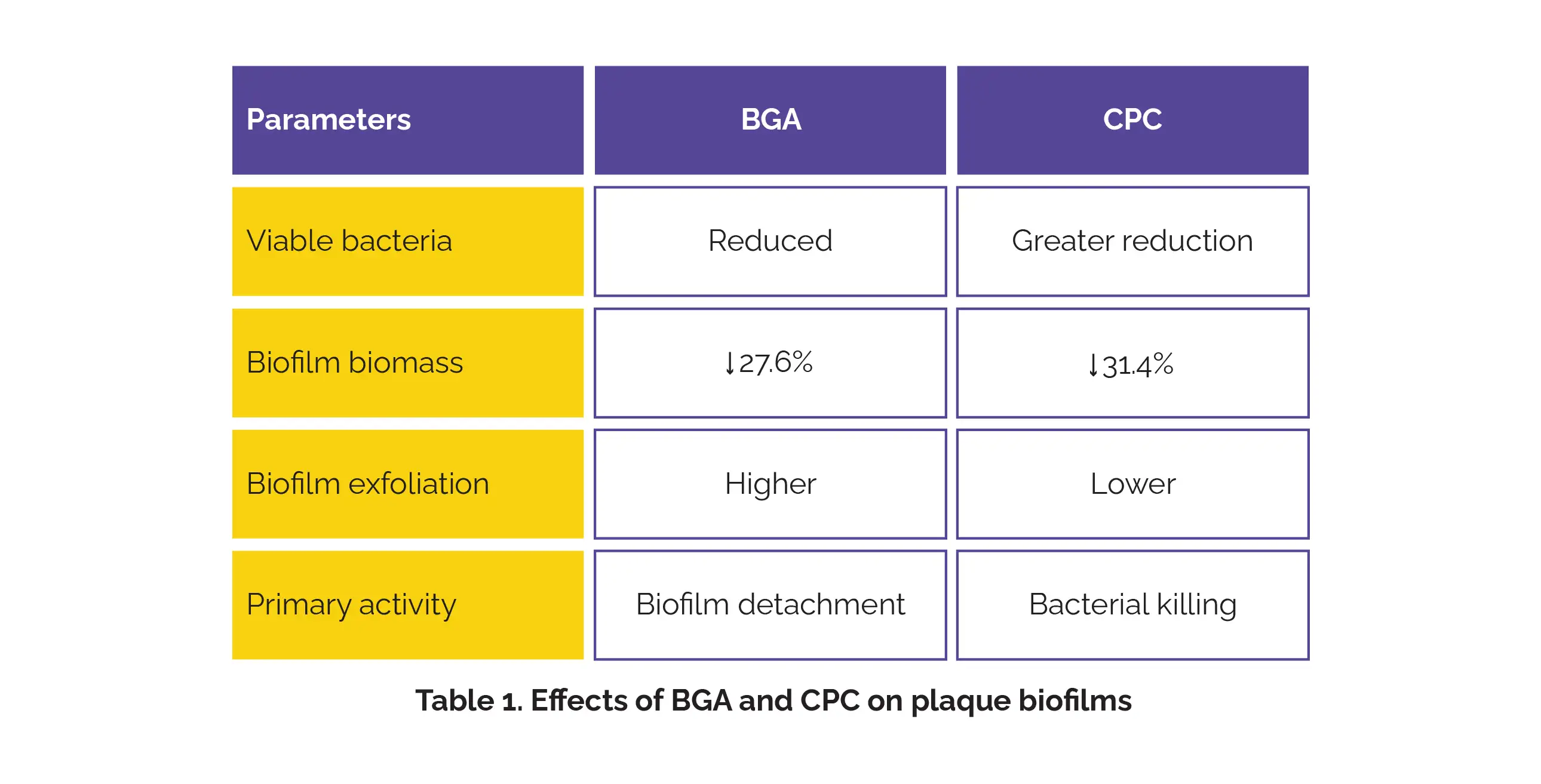
While CPC achieved greater bacterial killing, BGA demonstrated superior biofilm detachment, suggesting different mechanisms of plaque control. By weakening biofilm integrity and facilitating plaque detachment through a mechanism distinct from CPC, BGA emerged as a promising anti-plaque candidate that may support the prevention of gingivitis and periodontal disease.
PLOS One
Exfoliating effect of β-glycyrrhetinic acid on plaque inducing gingivitis: Comparison with cetylpyridinium chloride
Shinya Kato et al.














Comments (0)