

Categories
Change Password!
Reset Password!



Islet autoantibody (AAB) screening identifies individuals at increased risk of developing stage 3 type 1 diabetes (T1D) before symptoms appear.
Integrating presymptomatic T1D screening into routine clinical care is operationally feasible and effectively eliminates life-threatening diabetic ketoacidosis episodes. This proactive model enhances health equity across diverse populations and ensures at-risk individuals gain timely access to emerging disease-modifying therapies.
Islet autoantibody (AAB) screening identifies individuals at increased risk of developing stage 3 type 1 diabetes (T1D) before symptoms appear. Early detection with systematic monitoring enables timely education, reduces the psychological burden of diagnosis, prevents diabetic ketoacidosis (DKA), and provides an opportunity for early intervention with teplizumab to delay disease onset.
Although the American Diabetes Association (ADA) recommends AAB screening for at-risk individuals, integrating it into routine clinical practice remains challenging. Hence, the study assessed the feasibility of implementing presymptomatic T1D screening and monitoring at two pediatric T1D Exchange Quality Improvement Collaborative (T1DX-QI) centers while evaluating healthcare team readiness and identifying operational challenges.
Study design: This 18-month project included a 6-month development phase and 12 months of active screening at two pediatric centers: Rady Children’s Hospital and the University of Florida.
Quality improvement: Researchers utilized Plan-Do-Study-Act (PDSA) improvement cycles focused on four priority domains: education, workflow, technology, and equity.
Screening procedures: Testing for four biochemical islet AABs was conducted via local laboratories, commercial labs, and point-of-care (POC) kits. Metabolic staging involved HbA1c testing, glucose monitoring, and oral glucose tolerance tests.
Qualitative assessment: Two 60-minute focus groups were conducted via Zoom with care team members to discuss implementation barriers and facilitators.
Readiness survey: A cross-sectional survey was administered to 62 U.S. diabetes centers in the T1DX-QI collaborative to evaluate current screening and monitoring practices.
This pilot study successfully established standardized operating procedures for electronic health record integration, laboratory ordering, and insurance navigation. Table 1 highlights the study screening and monitoring status during the 12-month active phase.
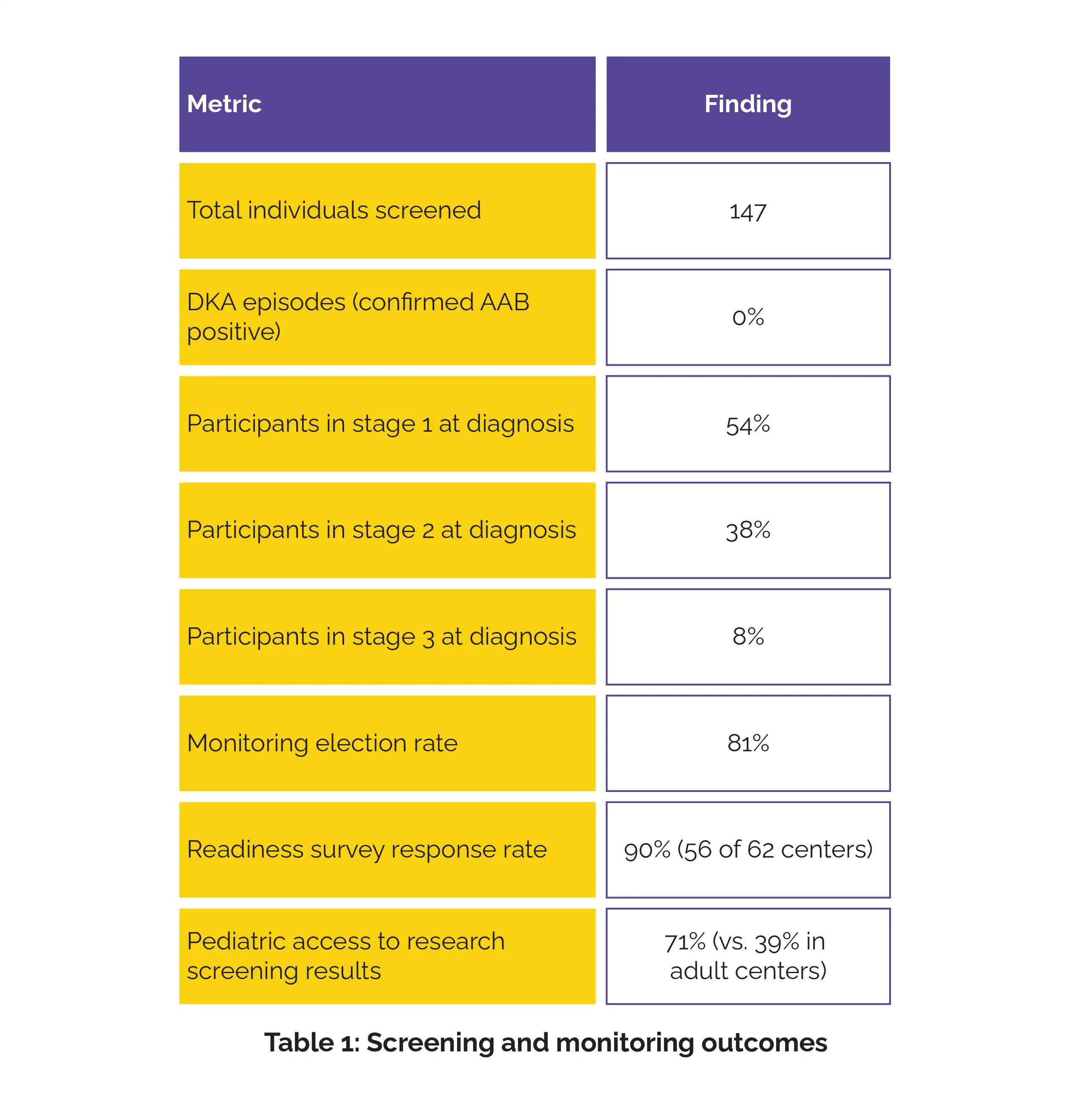
The qualitative analysis identified numerous key barriers and facilitators:
Real-world implementation of presymptomatic T1D screening is achievable and can facilitate early identification without reported DKA among individuals with confirmed positive results. Ongoing optimization of clinical workflows and health system infrastructure will be critical for scaling these programs across diverse care settings.
BMJ Open Diabetes Research & Care
Bringing early detection to life: real-world operationalization of a presymptomatic type 1 diabetes screening and monitoring pilot program
Carla Demeterco-Berggren et al.













Comments (0)