

Categories
Change Password!
Reset Password!



Lower maternal pleiotrophin levels strongly predict pre-eclampsia severity and adverse neonatal outcomes, highlighting a promising new biomarker for high-risk pregnancies.
A decline in maternal serum pleiotrophin (PTN)—a key regulator of angiogenesis—may offer an important clue to identifying women at risk of severe pre-eclampsia (PE) and poor pregnancy outcomes, according to a novel prospective case-control study.
Researchers performed this study to assess maternal serum PTN levels in pregnancies complicated by PE and to investigate their link with disease severity and adverse perinatal outcomes. The study involved 45 pregnant women suffering from mild or severe PE and 45 gestational-age-matched healthy pregnant controls. Maternal serum PTN concentrations were quantified using enzyme-linked immunosorbent assay.
Clinical, demographic, obstetric, and neonatal parameters were compared between study groups. Receiver operating characteristic (ROC) curve analyses were additionally carried out to evaluate the predictive accuracy of PTN for PE diagnosis, severe PE, and composite adverse perinatal outcomes (CAPO). Women with PE demonstrated markedly lower maternal serum PTN levels and experienced higher rates of adverse maternal and neonatal outcomes compared with healthy pregnancies (Table 1).
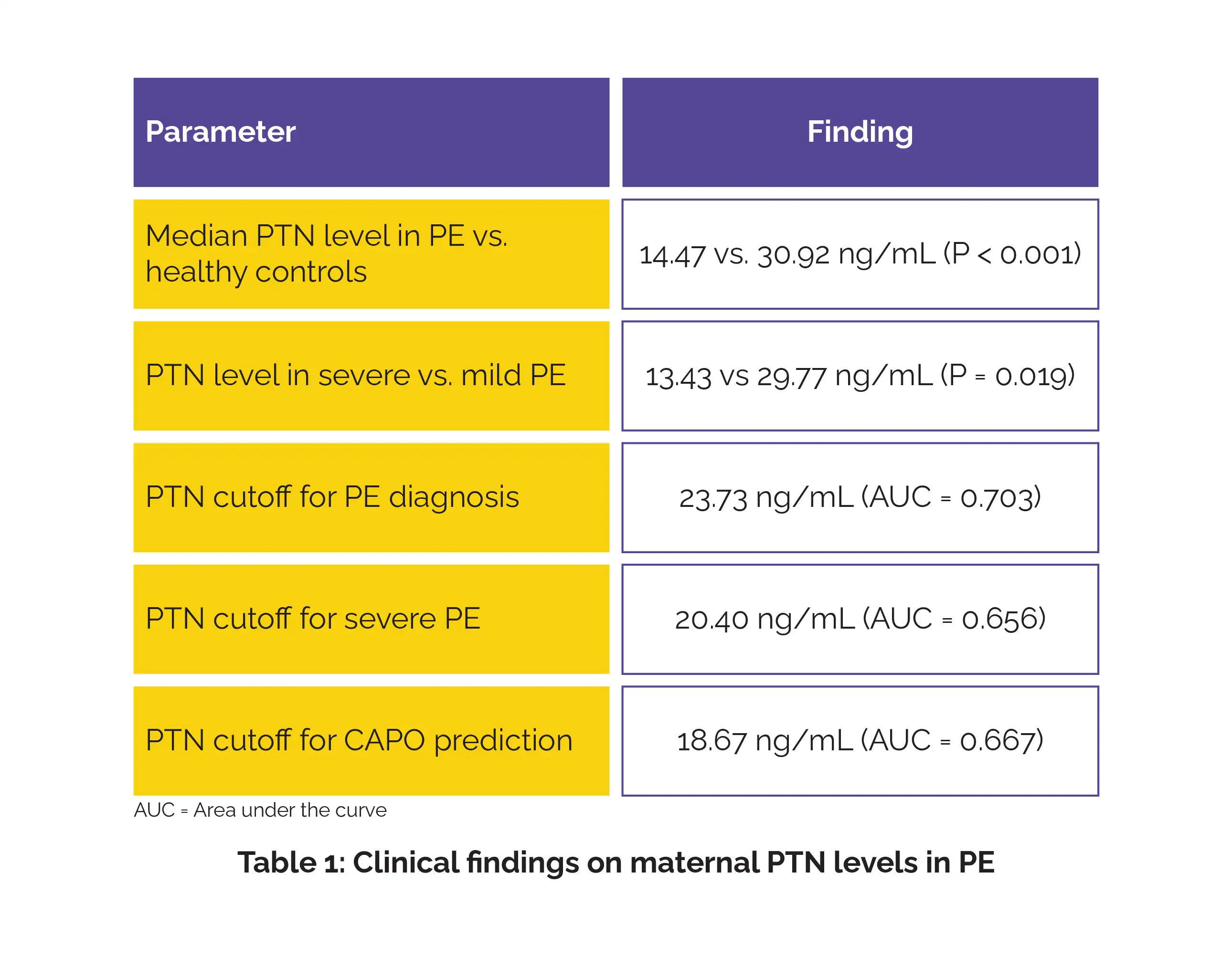
Pregnancies complicated by PE also illustrated higher incidences of preterm delivery, fetal growth restriction, neonatal intensive care unit admission, and adverse perinatal outcomes. The study concluded that diminished maternal serum PTN levels were closely linked to both the occurrence and severity of PE, as well as unfavorable neonatal outcomes. Overall, PTN emerged as a potential angiogenesis-related biomarker that may enhance diagnostic precision and support earlier identification of high-risk pregnancies when integrated with current clinical assessment strategies.
International Journal of Gynecology & Obstetrics
Diminished pleiotrophin as a new clue to pre-eclampsia: Linking impaired angiogenesis to adverse outcomes
Muradiye Yildirim et al.















Comments (0)