

Категории
Сменить пароль!
Сброс пароля!


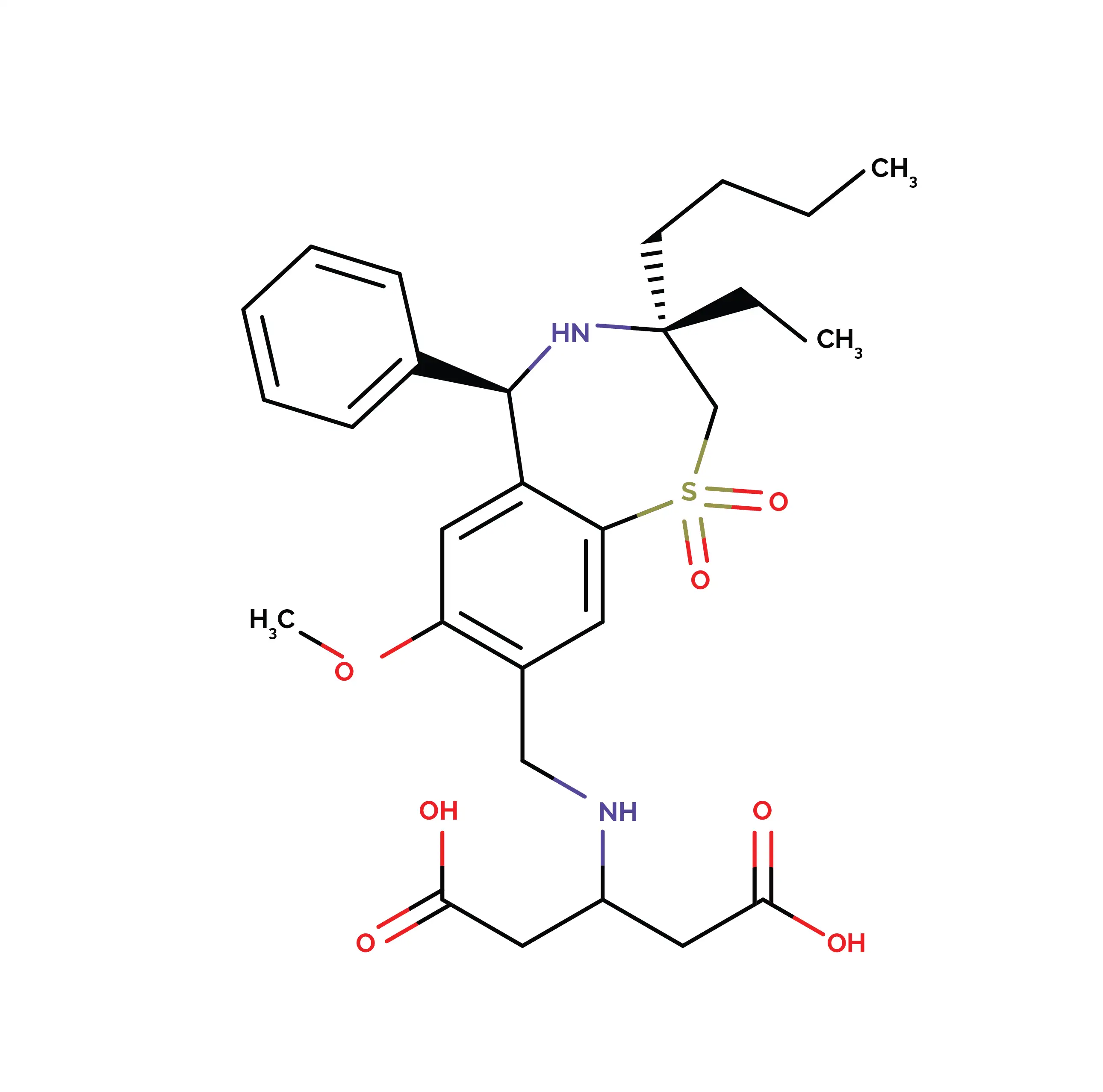
Линериксибат, ингибитор транспортера желчных кислот в подвздошной кишке (IBAT), был одобрен Управлением по санитарному надзору за качеством пищевых продуктов и медикаментов (FDA) в 2026 году для лечения холестатического зуда, связанного с первичным билиарным холангитом (ПБХ).
Линериксибат, ингибитор транспортера желчных кислот в подвздошной кишке (IBAT), был одобрен Управлением по санитарному надзору за качеством пищевых продуктов и медикаментов (FDA) в 2026 году для лечения холестатического зуда, связанного с первичным билиарным холангитом (ПБХ).[1,2]
Его основной механизм действия заключается в мощном и селективном подавлении апикального натрий-зависимого транспортера желчных кислот (ASBT/IBAT), что предотвращает реабсорбцию приблизительно 95% желчных кислот, которые в норме возвращались бы в печень.[3]
Фармакотерапевтическая группа: Ингибиторы IBAT
Препарат показан для лечения холестатического зуда, связанного с ПБХ, у взрослых пациентов.[1]
Желчные кислоты являются важными медиаторами холестатического зуда (прурита). Из холестерина синтезируются первичные желчные кислоты — преимущественно холевая и хенодезоксихолевая, — которые в кишечнике подвергаются биотрансформации под действием бактерий, после чего реабсорбируются и возвращаются в печень. При холестазе нарушение оттока желчи может привести к накоплению желчных кислот, что потенциально может способствовать возникновению постоянного зуда.[4]
Линериксибат селективно ингибирует ASBT на люминальной мембране энтероцитов подвздошной кишки, предотвращая реабсорбцию конъюгированных и неконъюгированных желчных кислот в портальный кровоток. Это увеличивает выведение желчных кислот с калом, истощает пул желчных кислот и снижает в системном кровотоке уровень желчных кислот и других потенциальных пруритогенов, накапливающихся при холестатических заболеваниях, таких как ПБХ. Считается, что возникающее в результате снижение уровня желчных кислот в системном кровотоке уменьшает активацию рецепторов TGR5 и других сенсорных нейронов, участвующих в передаче зуда.
Снижение возврата желчных кислот в печень также снимает ингибирование по механизму отрицательной обратной связи холестерин-7-альфа-гидроксилазы (кодируемой цитохромом P450 семейства 7 подсемейства A членом 1 [CYP7A1]), увеличивая превращение печеночного холестерина в новые желчные кислоты и дополнительно снижая уровень липидов в системном кровотоке.[3]
Взрослые пациенты: 40 мг два раза в сутки
Примечание: Препарат следует принимать не менее чем за 30 минут до приема пищи или напитков (кроме воды). Безопасность и эффективность применения у детей не установлены.[1]
Отсутствуют[1]
Взаимодействие с секвестрантами желчных кислот
Для минимизации потенциального лекарственного взаимодействия линериксибат следует принимать не менее чем за 4 часа до или после приема секвестрантов желчных кислот. Данные in vitro указывают на то, что эти препараты могут связывать линериксибат в кишечнике, потенциально ослабляя ингибирование IBAT.[1]
Наиболее частыми нежелательными реакциями являются:
a) Отклонение от нормы результатов функциональных печеночных проб
(b) Диарея
(c) Дефицит жирорастворимых витаминов
Кровотечение: При приеме линериксибата кровотечения могут развиваться чаще. При развитии кровотечения необходимо временно прекратить лечение и оценить наличие дефицита жирорастворимых витаминов. Лечение можно возобновить после коррекции дефицита, стабилизации уровня витаминов и остановки кровотечения.
Здоровье костей: Учитывая потенциальную связь между ингибиторами IBAT и переломами костей, рекомендуется регулярная оценка состояния костной ткани и поддержание адекватного уровня жирорастворимых витаминов.[1]
1. В исследовании, проведенном Хиршфилдом Г. и соавт. (Hirshfield G et al.), линериксибат обеспечил быстрое и длительное облегчение среднетяжелого и тяжелого холестатического зуда у пациентов с ПБХ. На 24-й неделе показатель цифровой оценочной шкалы наибольшей интенсивности зуда (WI-NRS) значительно уменьшился по сравнению с плацебо (изменение среднего, рассчитанного методом наименьших квадратов: −2,86 против −2,15; скорректированная разница средних: −0,72), причем эффект был заметен уже на 2-й неделе (−1,78 против −1,07; скорректированная разница средних: −0,71). Линериксибат также уменьшал связанное с зудом нарушение сна (−2,77 против −2,24; скорректированная разница средних: −0,53).
К 24-й неделе лечение ассоциировалось с более высокой частотой облегчения зуда при всех пороговых значениях: снижение на ≥2 балла (68% против 64%), на ≥3 балла (56% против 43%) и на ≥4 балла (41% против 29%). Доля сообщивших о значительном облегчении зуда также была выше (55% против 37%), как и доля пациентов с полным отсутствием зуда (21% против 9%). Диарея была основным предвиденным нежелательным эффектом, связанным с лечением.[5]
2. Согласно результатам исследования 3 фазы GLISTEN, линериксибат обеспечивает статистически значимое и клинически значимое снижение зуда, причем эффект появляется рано и сопровождается благоприятными изменениями нескольких биомаркеров, связанных с желчными кислотами и зудом.
В общей сложности в исследование было включено 238 пациентов с ПБХ и среднетяжелым и тяжелым зудом. Через 24 недели линериксибат заметно снизил выраженность зуда по сравнению с плацебо, со средним улучшением WI-NRS −2,86 против −2,15 соответственно, что представляет собой различие между группами терапии 0,72 балла.
Лечение также вызвало заметные изменения нескольких биомаркеров, связанных с метаболизмом желчных кислот и зудом, включая 7-альфа-гидрокси-4-холестен-3-он (C4), фактор роста фибробластов-19 (FGF-19), общие сывороточные желчные кислоты, аутотаксин и интерлейкин-31 (ИЛ-31). Эти эффекты появлялись уже на 4-й неделе и в целом сохранялись во время лечения. Снижение общих сывороточных желчных кислот и ИЛ-31 было связано с облегчением зуда, хотя индивидуальные корреляции были относительно слабыми.[4]
1. Linerixibat. FDA Label. Available from:
https://www.accessdata.fda.gov/drugsatfda_docs/label/2026/220295Orig1s000lbl.pdf
2. Hoofnagle JH. Linerixibat. [Updated 2026 May 1]. In: LiverTox: Clinical and Research Information on Drug-Induced Liver Injury [Internet]. Bethesda (MD): National Institute of Diabetes and Digestive and Kidney Diseases; 2012. Available from: https://www.ncbi.nlm.nih.gov/books/NBK622606/
3. Linerixibat. DrugBank [DB11729]. Available from:
https://go.drugbank.com/drugs/DB11729
4. Impact of Linerixibat on Pharmacodynamic Biomarkers and Mediators of Cholestatic Pruritus in PBC in the Phase 3 GLISTEN Study. Gastroenterol Hepatol (N Y). 2025 Dec;21(12 Suppl 10):6-7.
5. Hirschfield GM, Bowlus CL, Jones DJ, Kremer AE, Mayo MJ, Tanaka A, et al. Linerixibat significantly improves cholestatic pruritus in primary biliary cholangitis: Results of the pivotal phase 3 GLISTEN trial. Zeitschrift für Gastroenterologie. 2025 Sep;63(08):KV-106.













Комментарии (0)