

Категории
Сменить пароль!
Сброс пароля!


Исследователи сравнили механику походки, функциональные возможности и качество жизни (КЖ) у пациентов, перенесших латеральную однокомпонентную артропластику коленного сустава (UKA-L), тотальное эндопротезирование коленного сустава (ТКА) и у здоровых лиц контрольной группы.
У пациентов после латеральной однокомпонентной артропластики коленного сустава параметры походки приближаются к показателям здоровых людей, а уровень удовлетворенности и качества жизни оказываются выше.
Исследователи сравнили механику походки, функциональные возможности и качество жизни (КЖ) у пациентов, перенесших латеральную однокомпонентную артропластику коленного сустава (UKA-L), тотальное эндопротезирование коленного сустава (ТКА) и у здоровых лиц контрольной группы.
Был проведен сравнительный анализ походки с участием 20 пациентов, перенесших UKA-L, 28 пациентов с односторонней TKA и 22 подобранных по параметрам здоровых контрольных лиц. Участники исследования прошли инструментальный анализ походки на беговой дорожке с измерением скорости ходьбы, параметров шага, пространственно-временных показателей движений и вертикальной опорной реакции. Функциональные исходы и качество жизни, связанное со здоровьем, оценивались с использованием Оксфордской шкалы оценки функции коленного сустава (OKS) и Европейского опросника для оценки качества жизни по 5 доменам EuroQol (EQ-5D).
У пациентов, перенесших UKA-L, наблюдалась более высокая скорость ходьбы, более близкая к нормальной походка и лучшие исходы по оценке самих пациентов, чем у тех, кто перенес TKA (таблица 1). В группе пациентов, перенесших операцию UKA-L, также наблюдалось увеличение длины шага и длины цикла шага на 12% и 10% соответственно по сравнению с пациентами, перенесшими операцию TKA.
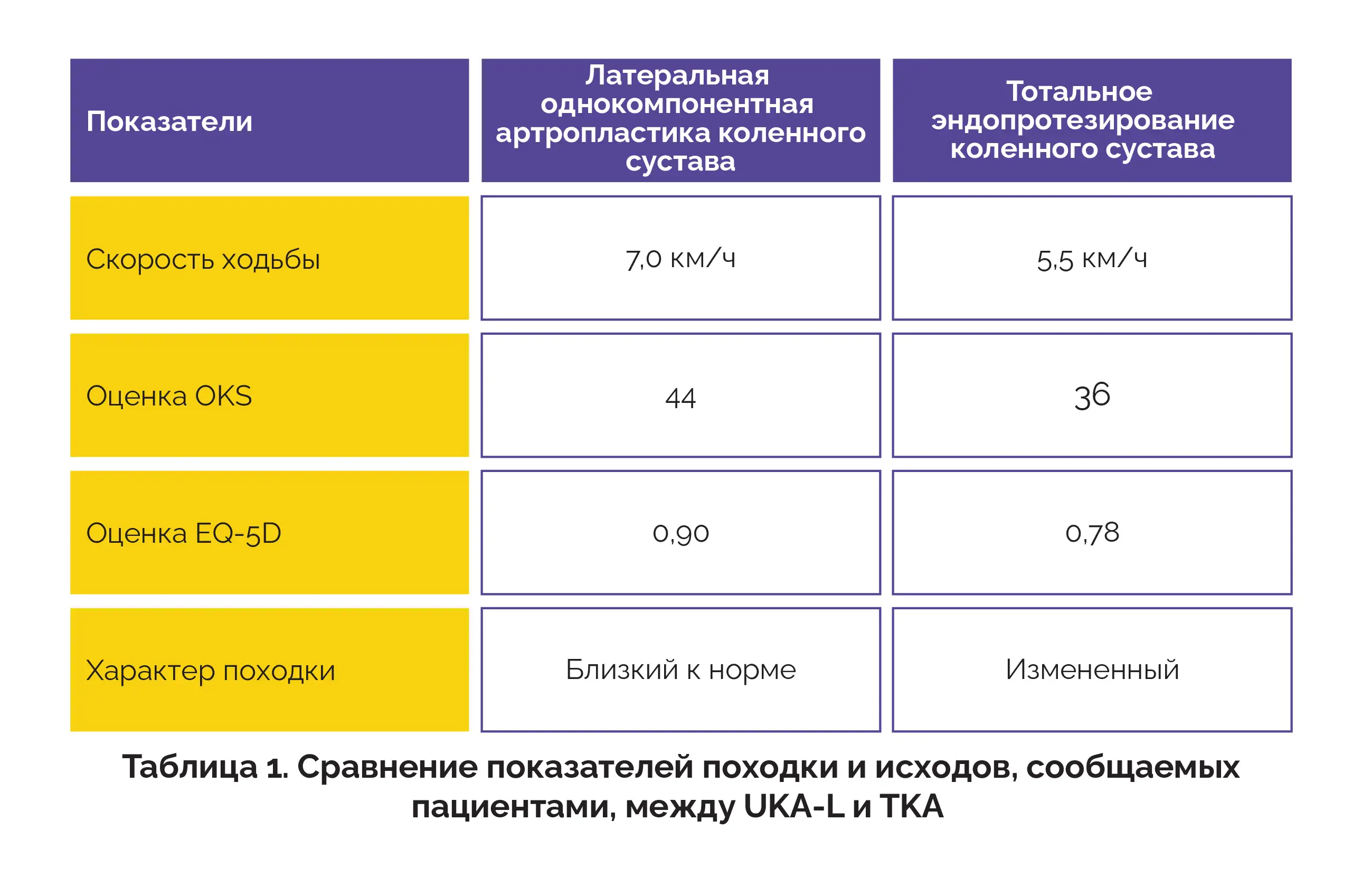
В целом, UKA-L обеспечила более быструю ходьбу, более длинные шаги, лучшую функцию коленного сустава и более высокое качество жизни по сравнению с TKA.
В заключение, операция UKA-L ассоциировалась с сочетанием практически нормальной механики походки, улучшенной мобильностью и улучшенными исходами, о которых сообщали сами пациенты.
Bone & Joint Research
Lateral unicompartmental knee arthroplasty is associated with nearer-normal gait characteristics and higher patient satisfaction compared to total knee arthroplasty
Amy J. Garner и соавт.











Комментарии (0)