

Категории
Сменить пароль!
Сброс пароля!


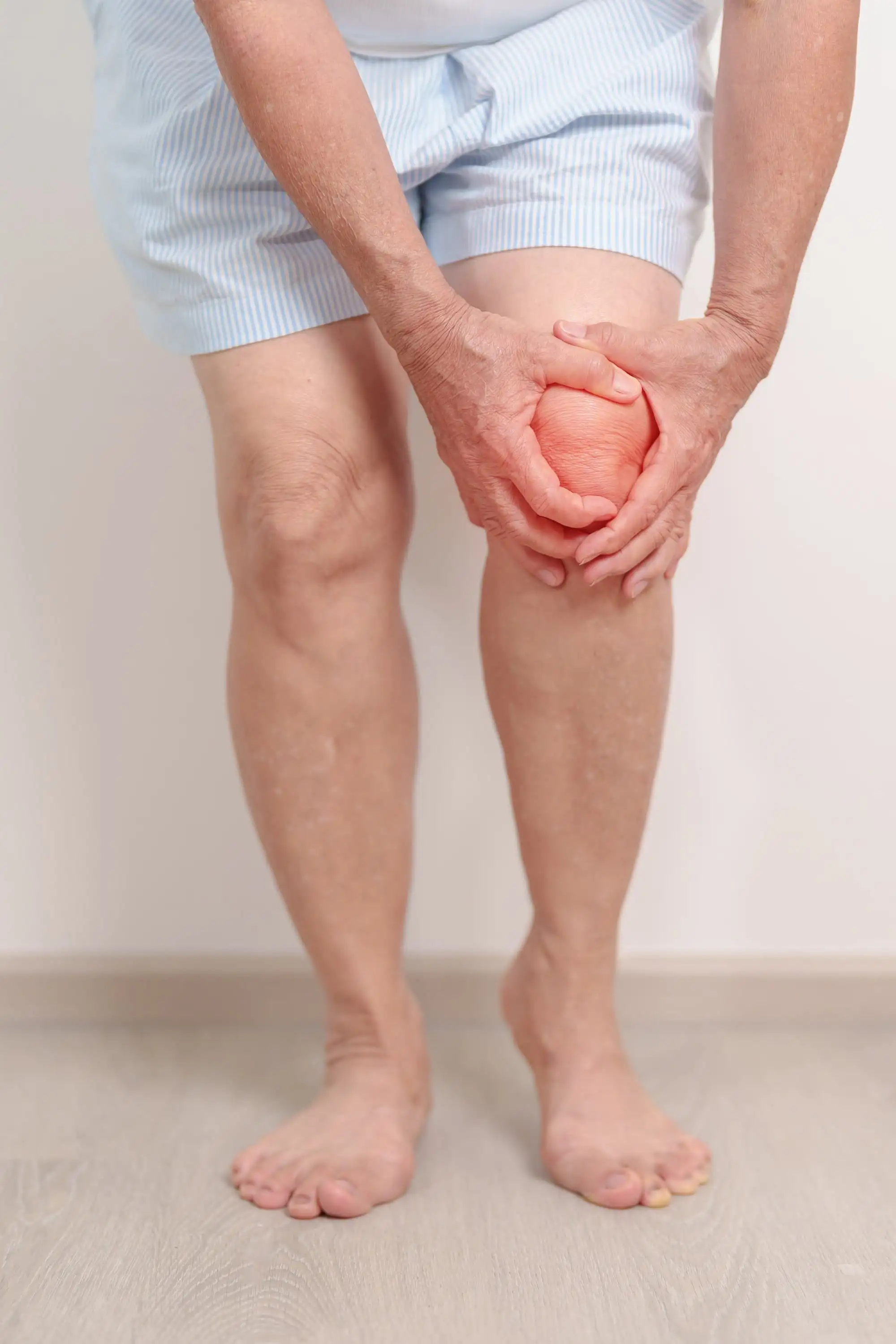
Остеоартрит (ОА) является наиболее распространенным заболеванием суставов в мире, а коленный сустав поражается чаще всего, составляя подавляющее большинство случаев ОА.
У взрослых пациентов с остеоартритом коленного сустава (ОАКС) четырехнедельный курс местного нанесения геля куркумина дает умеренное, но статистически значимое снижение боли в коленном суставе, сохраняя при этом благоприятный профиль безопасности.
Остеоартрит (ОА) является наиболее распространенным заболеванием суставов в мире, а коленный сустав поражается чаще всего, составляя подавляющее большинство случаев ОА. Он приводит к разрушению хрящевой ткани, ремоделированию костной ткани и воспалению суставов, вызывая хроническую боль, снижение подвижности и ухудшение качества жизни. Стандартные методы лечения — ацетаминофен, пероральные или местные нестероидные противовоспалительные препараты (НПВП) и инъекции кортикостероидов — обеспечивают лишь умеренное облегчение, и многие пациенты не переносят их или имеют сопутствующие заболевания, исключающие их применение.
Куркумин, природное полифенольное соединение, получаемое из куркумы (Curcuma longa), обладает противовоспалительными, антиоксидантными и анальгетическими свойствами. Многочисленные клинические исследования и метаанализы показали, что пероральный прием куркумина может облегчать боль у пациентов с ОАКС. Однако его клиническая полезность ограничена низкой биодоступностью при пероральном приеме, а высокие дозы могут быть связаны с желудочно-кишечным дискомфортом или потенциальной гепатотоксичностью.
Местное или трансдермальное применение позволило бы избежать этих проблем, однако клинические исследования этого метода применения практически не проводились. VAS-101 — это исследуемый лекарственный препарат - гель с куркумином для местного применения, использующий запатентованную трансдермальную платформу доставки, предназначенную для обхода метаболизма в печени и улучшения абсорбции. Доклинические работы показали измеримые уровни куркумина в крови и снижение болевой чувствительности при трансдермальном пути введения, что послужило обоснованием для его тестирования у людей с ОАКС.
Цель исследования
Целью данного исследования была оценка клинической эффективности, переносимости и безопасности четырехнедельного курса местного применения геля VAS-101 по сравнению с плацебо-гелем для лечения боли в коленном суставе и связанных с ней симптомов у взрослых с ОАКС.
(а) Дизайн исследования
Было проведено 4-недельное рандомизированное двойное слепое плацебо-контролируемое исследование с двумя параллельными группами. Рандомизация проводилась в соотношении 1:1 с помощью компьютеризированного калькулятора рандомизации.
(b) Включение пациентов и место проведения исследования
Набор участников проводился с февраля по июнь 2025 года. Исследование проводилось в Clinical Research Australia, Перт, Западная Австралия.
(c) Критерии включения
(d) Критерии исключения
(e) Размер выборки
В общей сложности было рандомизировано 60 участников (по 30 человек в каждой группе). Размер выборки был определен на основе расчета мощности, обеспечивающего 80% мощность для обнаружения разницы в 15 баллов по 100-балльной шкале исходов (стандартное отклонение 19) с учетом 10% отсева.
(f) Вмешательство и последующее наблюдение
(h) Конечные точки
(i) Статистический анализ
Генерализованные линейные смешанные модели (GLMM) сравнивали группы на основе популяции всех рандомизированных пациентов (FAS) и популяции участников, завершивших исследование в соответствии с протоколом (PPS), с поправкой на исходный балл, возраст, пол, ИМТ и оценку ожиданий от лечения, с последовательной поправкой Бонферрони для множественных сравнений и иерархическим порядком тестирования для вторичных конечных точек. Минимальное клинически значимое различие (MCID, порог 15,4 балла) анализировалось с помощью критерия хи-квадрат. Данные об использовании лекарственных препаратов с ненормальным распределением анализировались с помощью U критерия Манна-Уитни; данные о безопасности анализировались с помощью дисперсионного анализа с повторными измерениями. Статистическая значимость определялась как p ≤ 0,05 (двусторонний тест).
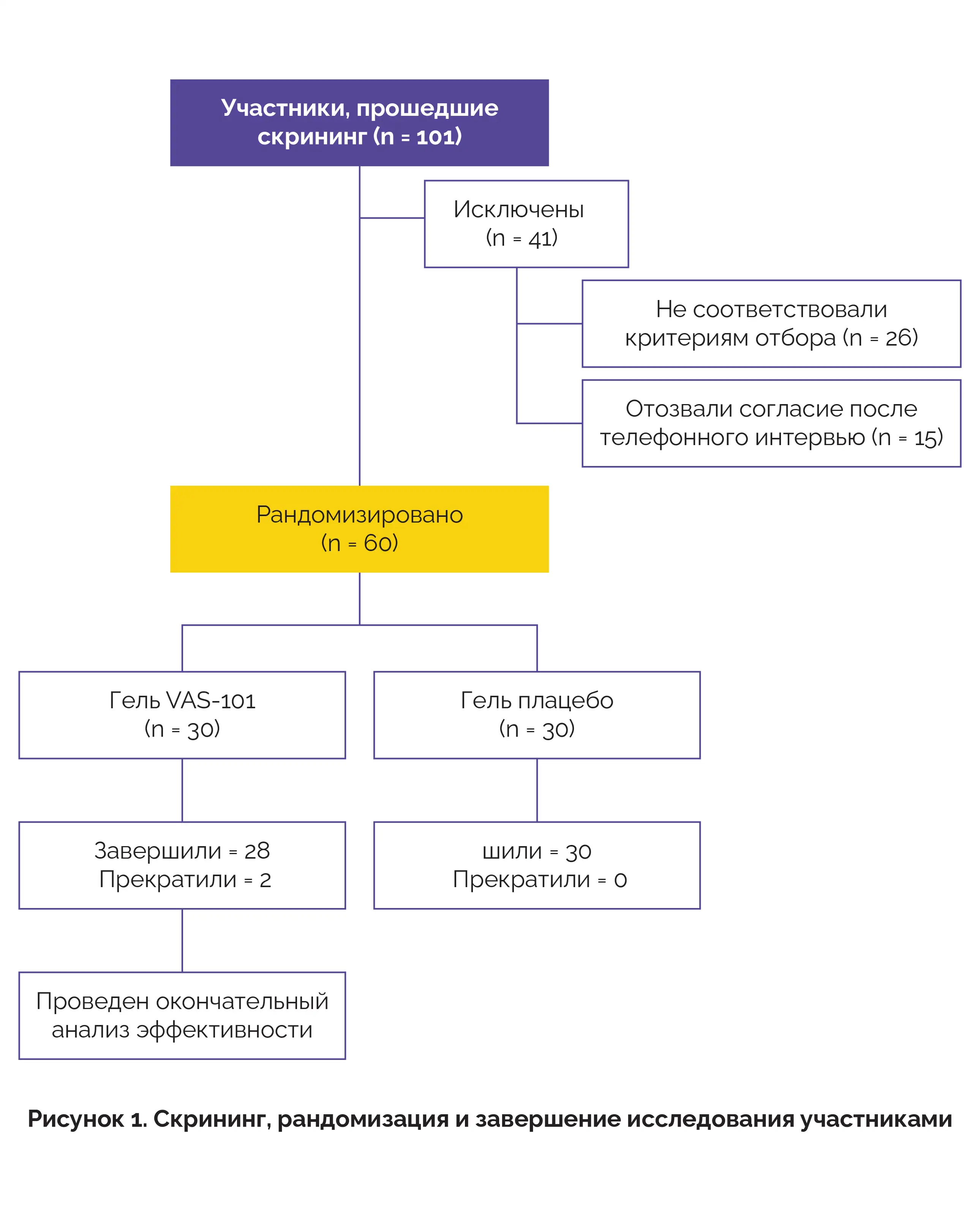
В общей сложности был обследован 101 человек, из которых 60 участников соответствовали критериям отбора и были случайным образом распределены в группы. Тридцать участников были распределены в группу местного применения куркумина VAS-101 и тридцать — в группу плацебо. Два участника из группы VAS-101 прекратили участие в исследовании по причинам, не связанным с лечением (рисунок 1).
(a) Показатели боли
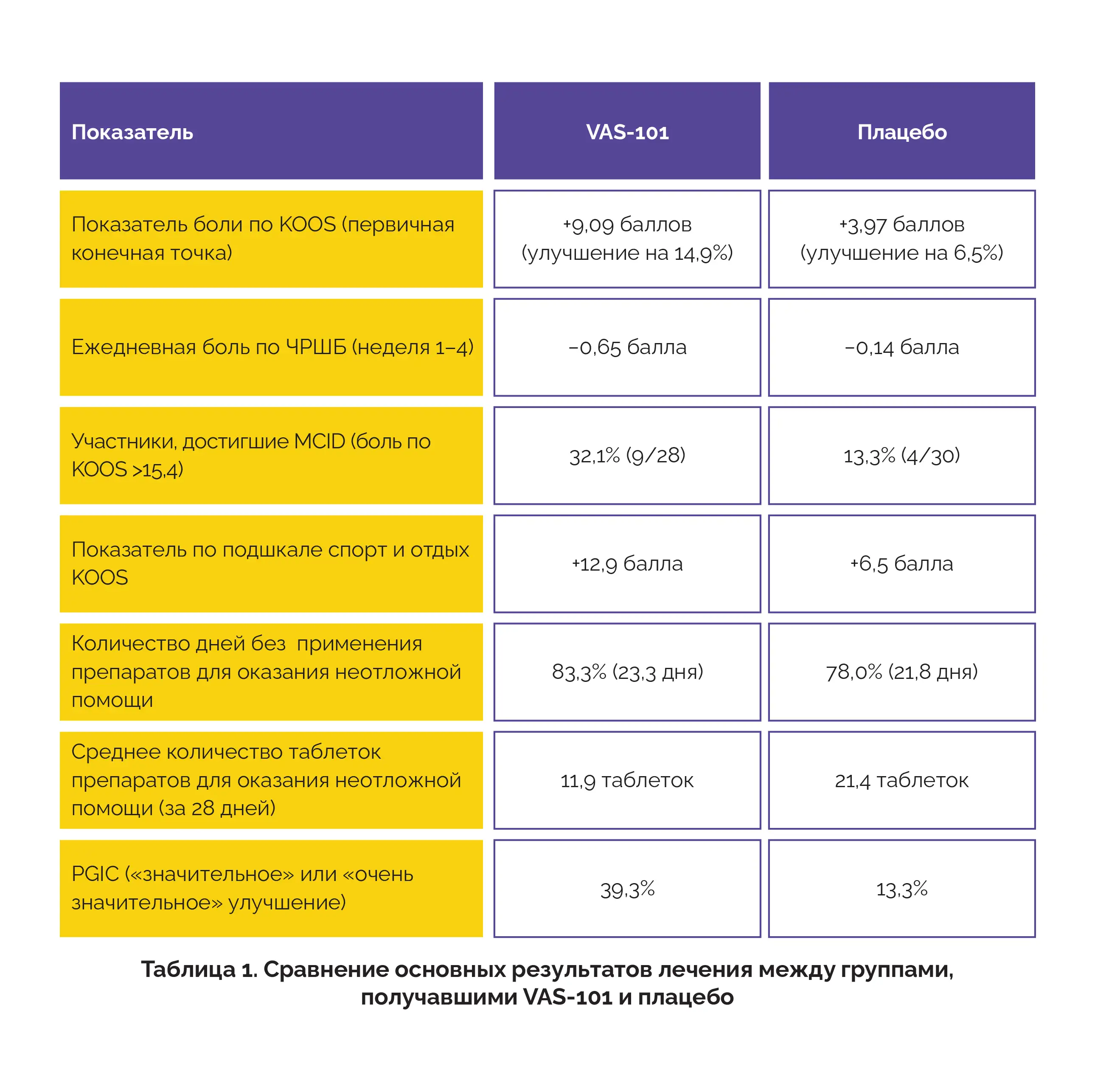
Участники, получавшие VAS-101, показали более выраженное улучшение по подшкале спорт и отдых KOOS, чем плацебо (12,9 против 6,5 баллов; β=6,41; d=0,57; p=0,046). Однако этот результат не соответствовал заранее определенным иерархическим критериям статистической значимости. Не было выявлено существенных различий по подшкалам симптомы/скованность, повседневная активность или качество жизни.
(c) Тесты, основанные на оценке функциональных характеристик
Не было обнаружено значительных групповых различий в тестах на подъем со стула, быструю ходьбу, тесте «встань и иди» на время или тесте с шестиминутной ходьбой.
(d) Препараты для оказания неотложной помощи
(e) PGIC
На 28-й день значительно больше участников VAS-101 сообщили о чувстве «значительного» или «очень значительного» улучшения (39,3% против 13,3%, p = 0,019).
Основные результаты суммированы в таблице 1:
(f) Оценка методом слепого исследования
Удалось успешно обеспечить слепое исследование для участников, поскольку большинство из них либо неправильно определили, к какому лечению они относятся, либо остались в неведении (57,1% в группе VAS-101 и 60% в группе плацебо). Только один участник правильно определил распределение между группами лечения на основе цвета геля.
(g) Безопасность и переносимость
Полученные данные свидетельствуют о том, что консервативная низкая доза геля куркумина, наносимого местно через день в течение четырёх недель, обеспечивает измеримое облегчение боли при ОА коленного сустава по данным самоотчётов пациентов — причём результаты согласуются по двум независимым шкалам боли (подшкала боли KOOS и ежедневная ЧРШБ). Величина эффекта (d = 0,62) по первичной конечной точке сопоставима с суммарными величинами эффекта, сообщенными для местных НПВП (около 0,37) в предыдущих метаанализах. Это позволяет предположить, что местное применение куркумина может обеспечить сопоставимый кратковременный обезболивающий эффект, хотя прямое сравнение ограничено различиями в продолжительности исследований и схемах дозирования в разных исследованиях.
Только в одном другом исследовании изучалось местное применение куркумина при ОА коленного сустава, при этом использовалась более высокая доза (1,5 мл дважды в день в течение 6 недель) и плацебо, не соответствующее по цвету, что вызывает опасения по поводу слепого метода исследования; настоящее исследование укрепляет эту доказательную базу, подтверждая слепой метод исследования и используя несколько валидированных критериев эффективности. Сравнивая эту лекарственную форму для местного применения с более ранним исследованием перорального применения куркумина, проведенным той же исследовательской группой, можно отметить, что оба препарата показали значительное облегчение болевых ощущений по шкале KOOS, при этом величина эффекта была количественно больше при местном применении (0,62 против 0,39), хотя различия в исследуемых популяциях затрудняют прямое сравнение.
Несмотря на значимое облегчение показателей боли, лишь примерно у одной трети пациентов, применявших VAS-101, было достигнуто клинически значимое снижение (MCID), при этом улучшений функциональных или физических показателей не наблюдалось, что позволяет предположить, что терапия даёт скромный, но не универсальный эффект. Предварительные результаты, такие как корреляция между негативными ожиданиями от лечения и более частым использованием препаратов для оказания неотложной помощи, указывают на психологические факторы, которые могут влиять на результаты лечения и заслуживают дальнейшего изучения.
Местное применение геля VAS-101 через день в течение 28 дней привело к умеренному, но статистически значимому снижению боли в коленном суставе. Лечение хорошо переносилось, единственным заметным нежелательным эффектом было временное окрашивание кожи. Однако лишь около трети участников достигли клинически значимого облегчения боли, а каких-либо улучшений в физической функции не наблюдалось. Для подтверждения клинической ценности и последующего широкого применения этого препарата в клинической практике необходимы более масштабные и долгосрочные исследования.
Frontiers in Pain Research
The effect of a topical curcumin formulation (VAS-101) on knee pain in adults with knee osteoarthritis: a randomised, double-blind, placebo-controlled study
Adrian L Lopresti и соавт.











Комментарии (0)