

Категории
Сменить пароль!
Сброс пароля!


Мигрень — распространенное и инвалидизирующее неврологическое расстройство, характеризующееся повторяющимися приступами головной боли средней или сильной степени тяжести, сопровождающимися такими симптомами, как звукобоязнь, светобоязнь, тошнота и рвота.
Ласмидитан обеспечивает клинически значимое облегчение симптомов острого приступа мигрени в условиях реальной клинической практики, сохраняя при этом благоприятный профиль безопасности. Большинство нежелательных явлений (НЯ) представляют собой легкие, преходящие эффекты со стороны центральной нервной системы (ЦНС), при этом в ходе пострегистрационного наблюдения не выявлено серьезных сигналов по безопасности.
Мигрень — распространенное и инвалидизирующее неврологическое расстройство, характеризующееся повторяющимися приступами головной боли средней или сильной степени тяжести, сопровождающимися такими симптомами, как звукобоязнь, светобоязнь, тошнота и рвота. Она представляет собой серьезное бремя для общественного здравоохранения во всем мире и поражает примерно 6–9% населения Японии, при этом значительно более высокая распространенность наблюдается среди женщин, а пик заболеваемости приходится на наиболее продуктивные годы взрослой жизни.
Хотя при остром приступе мигрени обычно используют триптаны, ацетаминофен и нестероидные противовоспалительные препараты (НПВП), у значительной части пациентов отмечается недостаточный контроль над симптомами. Кроме того, вазоконстрикторные свойства триптанов ограничивают их применение у лиц с сердечно-сосудистыми коморбидностями, что подчеркивает необходимость альтернативных вариантов лечения. Ласмидитан, селективный агонист рецепторов 5-гидрокситриптамина 1F (5-HT1F), предлагает новый подход к лечению острого приступа мигрени, не связанный с сужением сосудов, поскольку воздействует на болевые пути тройничного нерва и уменьшает высвобождение кальцитонин-ген-родственного пептида (CGRP).
Клинические исследования, включая глобальные исследования 3 фазы и японское исследование MONONOFU, продемонстрировали его эффективность и безопасность при лечении острого приступа мигрени. Однако данные, полученные в рутинной клинической практике, остаются ограниченными, особенно среди групп пациентов, которые часто недостаточно представлены в контролируемых исследованиях. Поэтому пострегистрационная оценка в условиях реальной клинической практики необходима для дальнейшей характеристики его безопасности и эффективности.
Цель исследования
В этом исследовании изучались безопасность и эффективность ласмидитана в условиях реальной клинической практики у японских пациентов, страдающих мигренью, в рамках обязательного пострегистрационного фармаконадзора в Японии.
а) Дизайн исследования
Это было многоцентровое проспективное неинтервенционное одногрупповое пострегистрационное исследование, проведенное в 53 медицинских учреждениях в Японии.
(b) Продолжительность исследования
Пациенты были включены в исследование в период с июня 2022 года по сентябрь 2024 года, и за ними наблюдали в течение 12 недель после первого назначения ласмидитана. Исходные характеристики оценивались в течение 3 месяцев, предшествовавших дате начала исследования.
(c) Исследуемая популяция
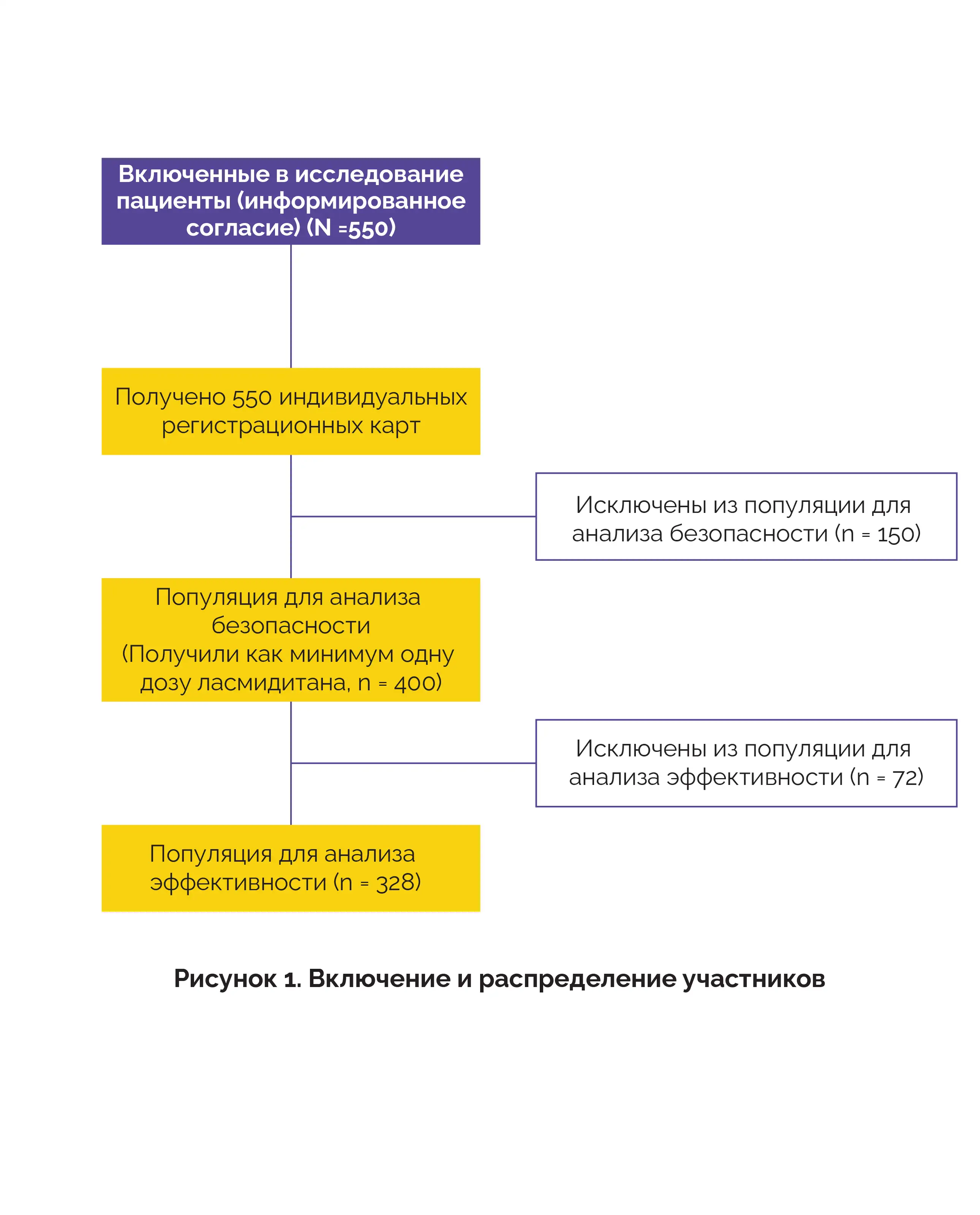
В общей сложности в исследование было включено 550 пациентов. Популяция для анализа безопасности включала 400 пациентов. Популяция для анализа эффективности включала 328 пациентов.
(d) Критерии включения
(e) Критерии невключения
(f) Лечение
Пациенты получали ласмидитан (50 мг, 100 мг или 200 мг) перорально для лечения острого приступа мигрени в соответствии с рутинной клинической практикой и усмотрением врача.
(g) Показатели исходов
1. Конечные точки эффективности
2. Конечные точки безопасности
(h) Сбор данных
Клинические данные собирались с помощью электронных индивидуальных регистрационных карт, электронных дневников, заполняемых пациентами, и бумажных анкет. Информация включала демографические характеристики, историю мигрени, сердечно-сосудистые факторы риска, коморбидности, предшествующее лечение, результаты лечения и НЯ. Врачи проверяли и подтверждали записи в электронных дневниках, сделанные пациентами.
(i) Статистический анализ
Все анализы были описательными. Непрерывные переменные были обобщены с использованием среднего значения ± стандартное отклонение или медианы (диапазон), в то время как категориальные переменные были представлены в виде частот и процентов. Для анализа времени до наступления событий использовались методы Каплана-Мейера, а для категориальных сравнений применялись точный критерий Фишера или критерий хи-квадрат. Анализы выполнялись с использованием SAS версии 9.4, без подстановки недостающих данных.
(a) Распределение пациентов
В общей сложности в исследование были включены 550 пациентов из 53 медицинских учреждений Японии. Из них 400 пациентов, получивших как минимум одну дозу ласмидитана, составили популяцию для анализа безопасности, в то время как 328 пациентов соответствовали заранее определенным критериям для включения в анализ эффективности. В целом, популяция для оценки безопасности получила 1 759 доз ласмидитана, тогда как анализ эффективности включил 1 345 пролеченных приступов мигрени (рисунок 1).
(b) Демографические данные пациентов
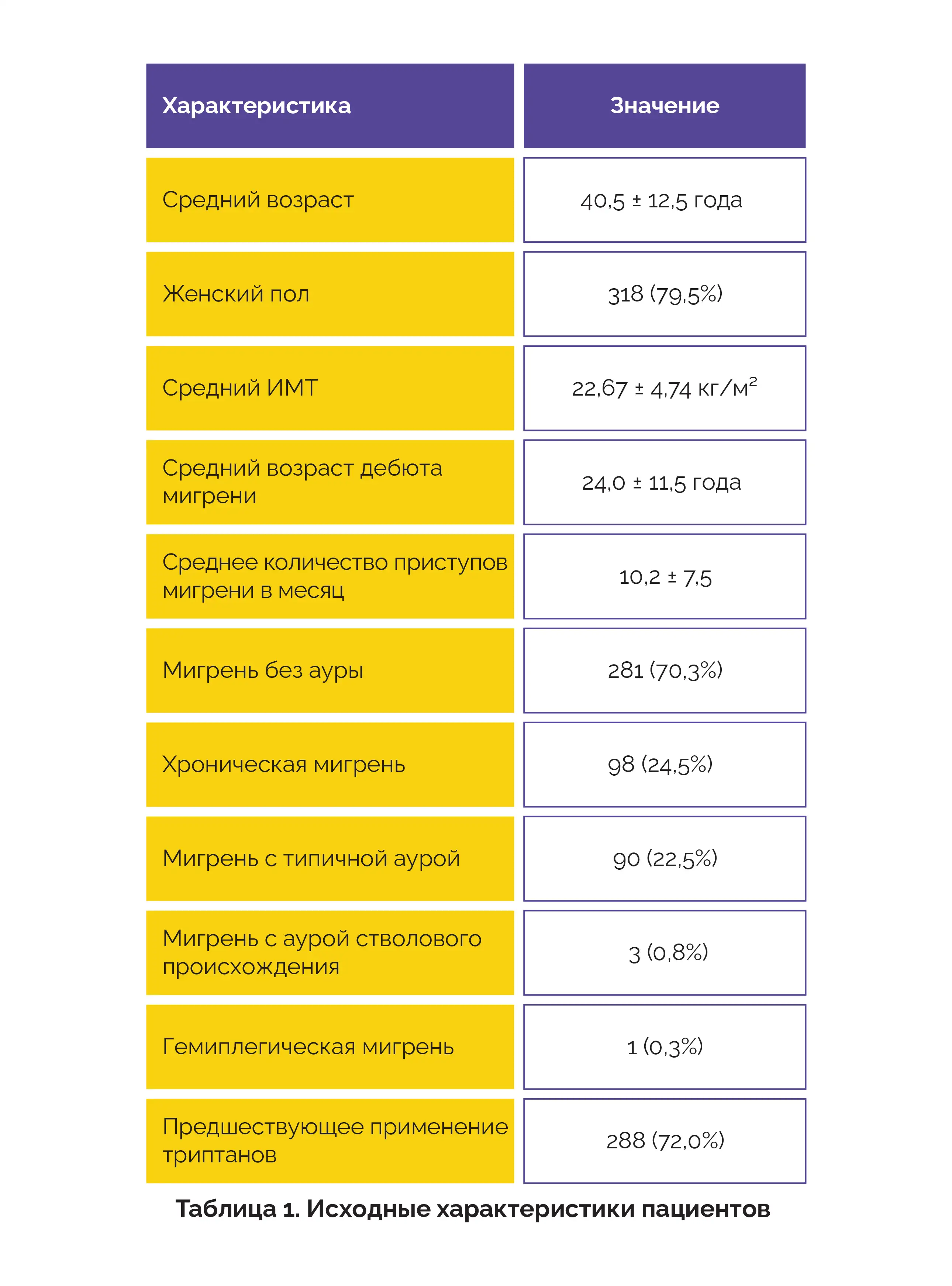
Исходные демографические и клинические характеристики отражали преимущественно женскую когорту с различными подтипами мигрени. У большинства наблюдалась мигрень без ауры и в анамнезе имелся опыт применения триптанов (таблица 1).
(c) Режимы дозирования
(d) Конечные точки безопасности
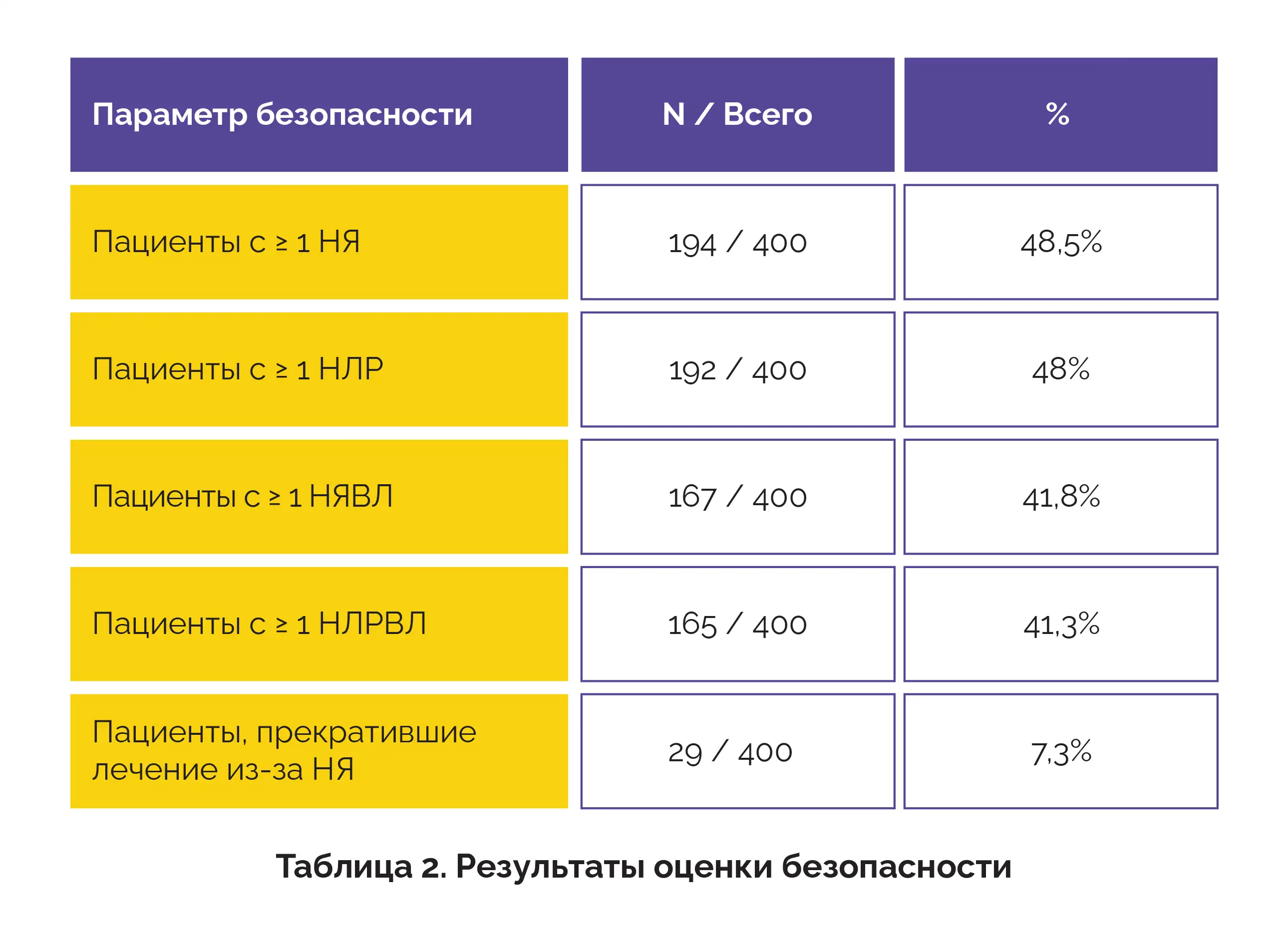
Анализ безопасности показал, что НЯ и НЛР регистрировались часто, причем большинство из них возникали во время лечения. Важно отметить, что на протяжении всего исследования не наблюдалось серьезных НЯ, серьезных НЯВЛ или смертельных исходов (таблица 2).
(e) Наиболее частые НЯВЛ
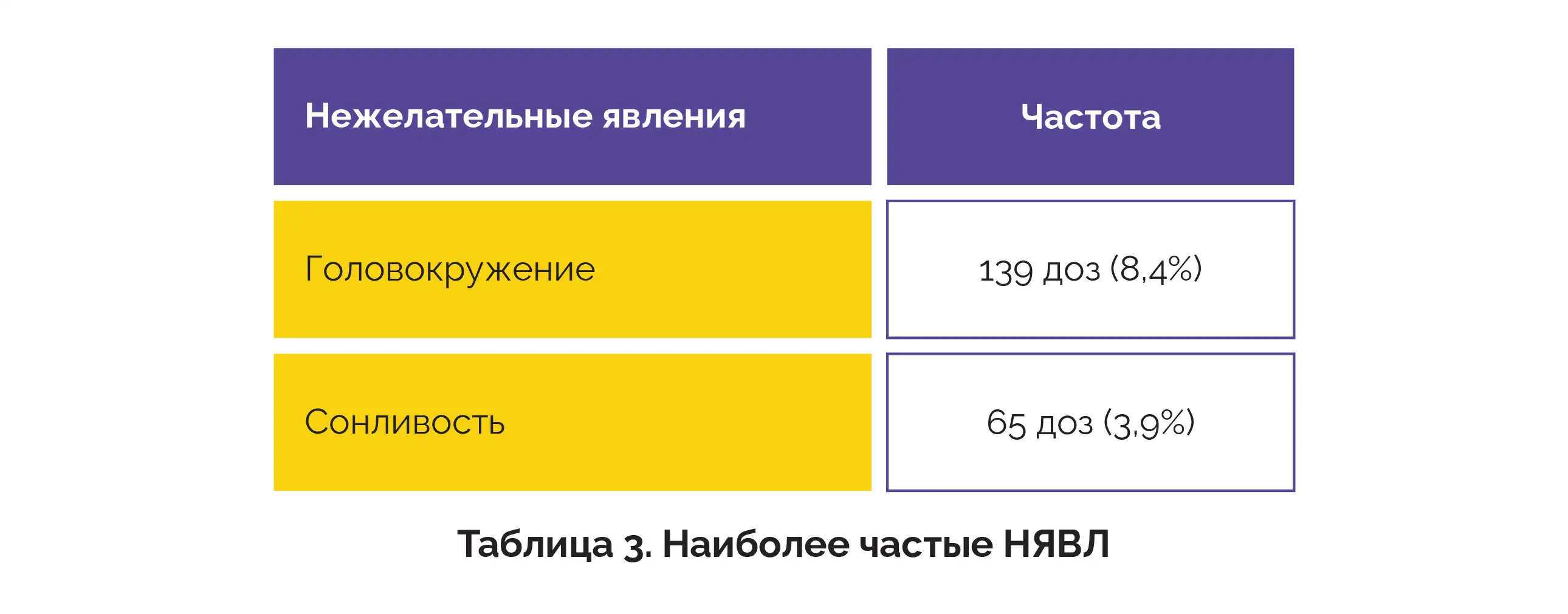
Среди 1 662 оцениваемых доз ласмидитана головокружение и сонливость были наиболее часто регистрируемыми НЯВЛ (таблица 3).
Их частота снижалась при повторном применении, что указывает на улучшение переносимости с течением времени. Медиана времени до начала головокружения составила 0,6 часа после приема, и оно разрешалось в течение 2,2 часа, тогда как сонливость развивалась через 1,0 час и разрешалась в течение 3,5 часа. Медианная продолжительность составила 3 часа для головокружения и 4 часа для сонливости.
(f) Конечные точки эффективности
1. Избавление от боли и облегчение боли
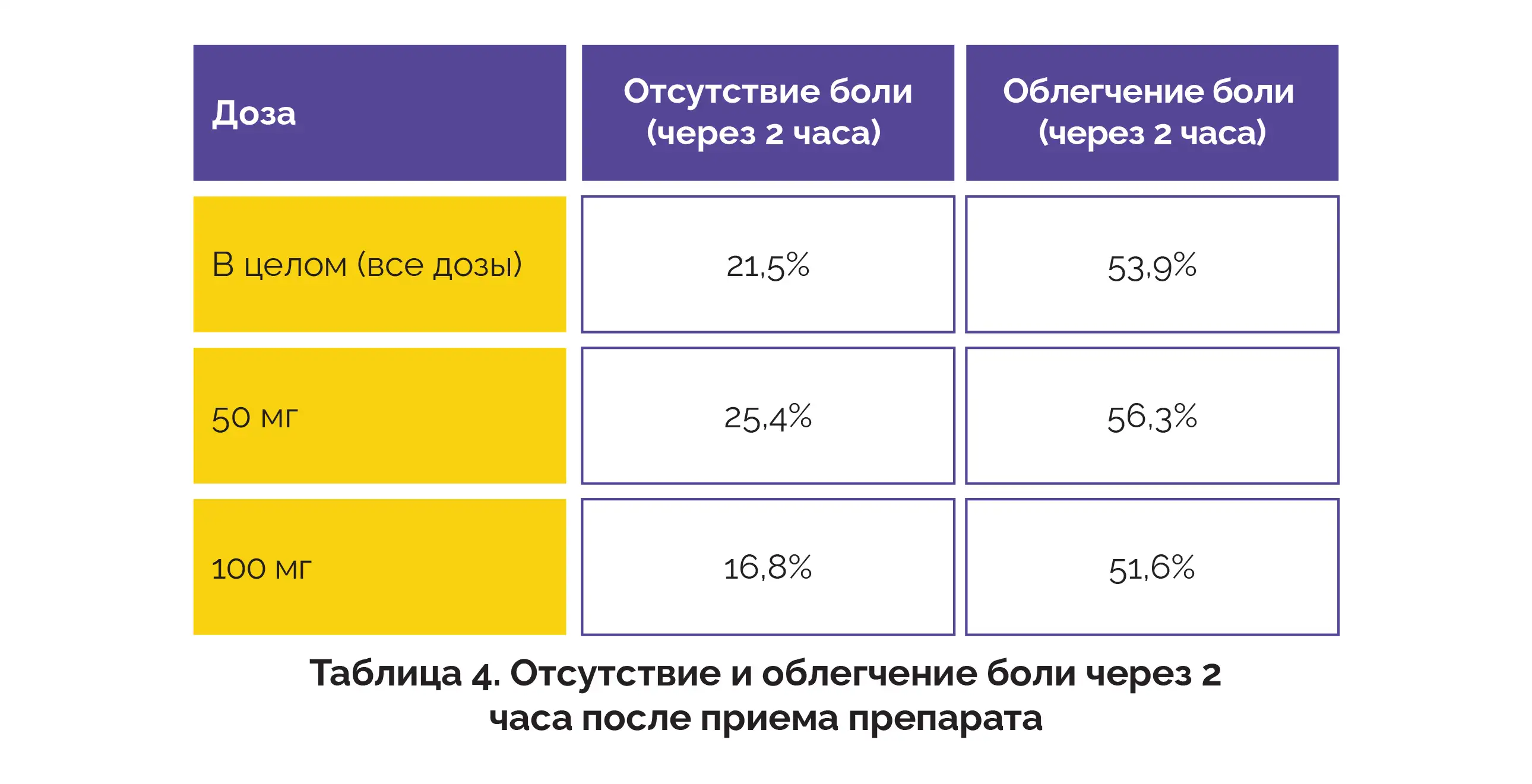
Первичный анализ эффективности оценивал приступы мигрени с головной болью средней или сильной степени, пролеченные в течение 4 часов после начала симптомов. Через 2 часа после приема оценивались как отсутствие боли, так и ее облегчение в целом, в зависимости от дозы ласмидитана (50 мг и 100 мг), а также для первых пролеченных приступов мигрени (таблица 4).
2. Время до клинического улучшения
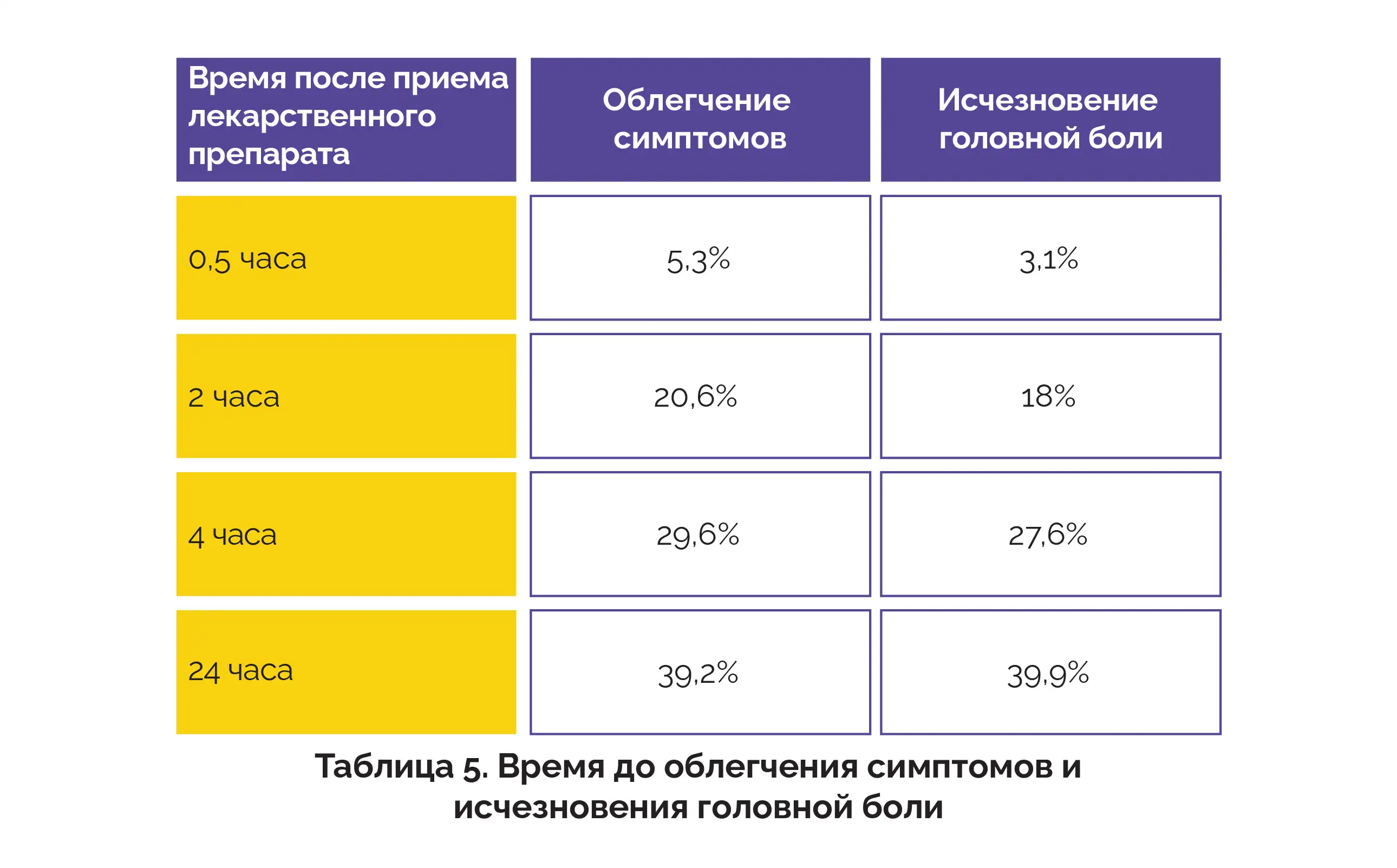
После лечения наблюдалось постепенное облегчение симптомов. Через 24 часа почти в 40% случаев приступов мигрени наблюдалось клинически значимое улучшение, а полное исчезновение головной боли произошло примерно в той же доле случаев (таблица 5).
3. Функциональное восстановление
Применение ласмидитана привело к значимому улучшению повседневной активности. Среди пациентов со значительными ограничениями активности до лечения наибольшая доля пациентов, у которых через 2 часа ограничения отсутствовали или были незначительными, отмечалась в сфере работы или учебы (таблица 6).
4. Возвращение к нормальной повседневной активности
Пациенты также оценивали, позволило ли им применение ласмидитана вернуться к своей обычной повседневной активности. В целом, восстановление нормальной повседневной активности прогрессивно увеличивалось в течение периода наблюдения, что подтверждает устойчивое функциональное восстановление после лечения острого приступа мигрени.
5. Удовлетворенность пациентов
Это пострегистрационное исследование предоставляет надежные данные реальной клинической практики, подтверждающие безопасность и эффективность ласмидитана для лечения острого приступа мигрени в клинической практике в Японии. Новых проблем по безопасности не выявлено, и общий профиль нежелательных явлений остался неизменным по сравнению с предыдущими клиническими исследованиями. Исследуемая популяция в значительной степени отражала пациентов, встречающихся в рамках обычной клинической практики, и включала лиц с хронической мигренью и редкими подтипами мигрени, которые часто недостаточно представлены в рандомизированных исследованиях, что повышает клиническую значимость полученных результатов.
Наблюдаемая частота НЯВЛ была ниже, чем сообщалось в предыдущих японских клинических исследованиях, в то время как головокружение и сонливость оставались наиболее часто регистрируемыми явлениями, что согласуется с известными эффектами ласмидитана на ЦНС. Снижение частоты этих явлений при повторном применении препарата предполагает улучшение переносимости с течением времени. Хотя показатели исчезновения боли и облегчения боли были ниже, чем сообщалось в контролируемых клинических исследованиях, результаты оценки эффективности оставались клинически значимыми.
Различия, вероятно, отражают включение более сложных и резистентных к лечению пациентов, более широкую практику лечения и сопутствующее применение лекарственных препаратов, типичное для реальных условий. Важно отметить, что ласмидитан продемонстрировал заметные преимущества в восстановлении повседневной активности и повышении удовлетворенности пациентов, подчеркивая его ценность не только в плане облегчения головной боли.
Тенденции в назначении указывали на предпочтение более низких начальных доз, что позволяет предположить, что клиницисты уделяли первоочередное внимание переносимости при начале терапии. В целом, эти результаты подтверждают эффективность ласмидитана как мощного не обладающего сосудосуживающим действием средства для лечения острого приступа мигрени с предсказуемым профилем безопасности и значимыми преимуществами в реальной клинической практике.
Ласмидитан обеспечил благоприятный баланс между эффективностью и переносимостью, предлагая клинически значимое облегчение мигрени без возникновения новых проблем безопасности. Его механизм действия, не связанный с сужением сосудов, дополнительно поддерживает его полезность у пациентов, для которых традиционная терапия острого приступа может быть неподходящей.
Neurology and Therapy
Real-World Safety and Effectiveness of Lasmiditan in Patients with Migraine: A Post-Marketing Observational Study in Japan
Naoko Sanno и соавт.














Комментарии (0)