

Categories
Change Password!
Reset Password!


Four out of five geriatric outpatients experience polytherapy, which accounts for nearly all potential drug–drug interactions and fuels high rates of inappropriate medication use.
A retrospective cross-sectional study of geriatric outpatients at a tertiary-care hospital in India highlights significant pharmacological risks linked to polypharmacy—defined as the concomitant use of five or more medications. Nearly 80% of geriatric patients were receiving five or more medicines, while the analysis identified a substantial burden of potential drug–drug interactions (PDDIs) and potentially inappropriate medications (PIMs).
The study included 100 patients attending a geriatric outpatient department and examined their prescriptions for potential interactions using Medscape. PIMs were assessed using the 2023 American Geriatrics Society Beers Criteria, while prescribed fixed-dose combinations (FDCs) were compared with the World Health Organization (WHO) Essential Medicines List (EML) 2025 and India's National List of Essential Medicines (NEML) 2022.
The findings highlighted the scale of the medication-safety challenge (Table 1):
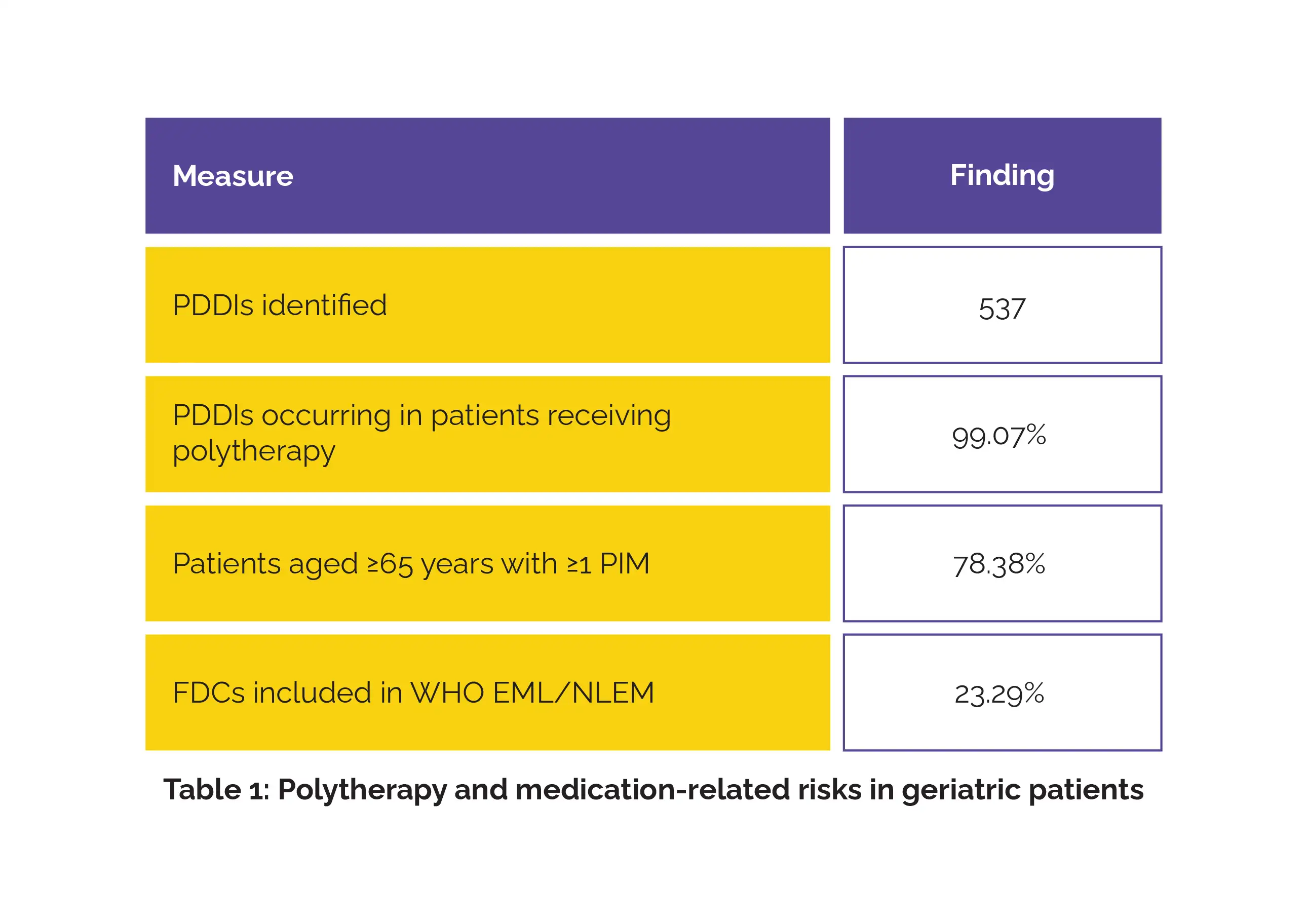
Cardiovascular medications were the most frequently prescribed drug group. Among patients aged 65 years or older, proton-pump inhibitors and benzodiazepines/z-drugs were the most commonly identified PIMs. The FDC analysis also showed that only a limited proportion of the different combinations prescribed were included in either the WHO or national essential-medicine lists.
Taken together, the findings drew attention to an important aspect of geriatric prescribing: the challenge was not simply how many medicines an older patient took, but whether every medicine and combination remained appropriate within the overall regimen. Regular medication reviews, careful assessment of potential interactions, and rational selection of FDCs could therefore play an important role in making complex treatment regimens safer and more evidence-based.
Apollo Medicine
Polytherapy and Potential Drug–Drug Interactions in Geriatric Patients of a Tertiary-care Hospital
Shivangi Shukla et al.






Comments (0)