

Categories
Change Password!
Reset Password!



Primary dysmenorrhea is characterized by menstrual pain without underlying pelvic abnormalities and is primarily associated with increased uterine prostaglandin synthesis, often necessitating medication for symptom relief.
Pelubiprofen at 45 mg offers rapid, superior short-term pain relief with favorable tolerability in women suffering from primary dysmenorrhea.
Primary dysmenorrhea is characterized by menstrual pain without underlying pelvic abnormalities and is primarily associated with increased uterine prostaglandin synthesis, often necessitating medication for symptom relief. Conventional nonsteroidal anti-inflammatory drugs (NSAIDs) remain first-line therapy, but their use can be limited by gastrointestinal and cardiovascular risks, prompting the evaluation of safer alternatives.
In this randomized, controlled, phase 3 crossover trial, 120 women (aged 19–44 years) were randomly allocated to one of two treatment sequences across two menstrual cycles. Upon experiencing menstrual cramps, volunteers were given either a 45-mg dose of pelubiprofen or a corresponding placebo. The co-primary efficacy endpoints were assessed during the first 8 hours after dosing:
Additional efficacy assessments included TOTPAR and SPID over 12 hours. Safety was examined by checking treatment-emergent adverse events (TEAEs).
Of the 120 randomized women, 115 were included in the modified intention-to-treat (mITT) population and 116 in the safety population. Pelubiprofen 45 mg illustrated markedly greater pain relief than placebo across both co-primary endpoints (Table 1).
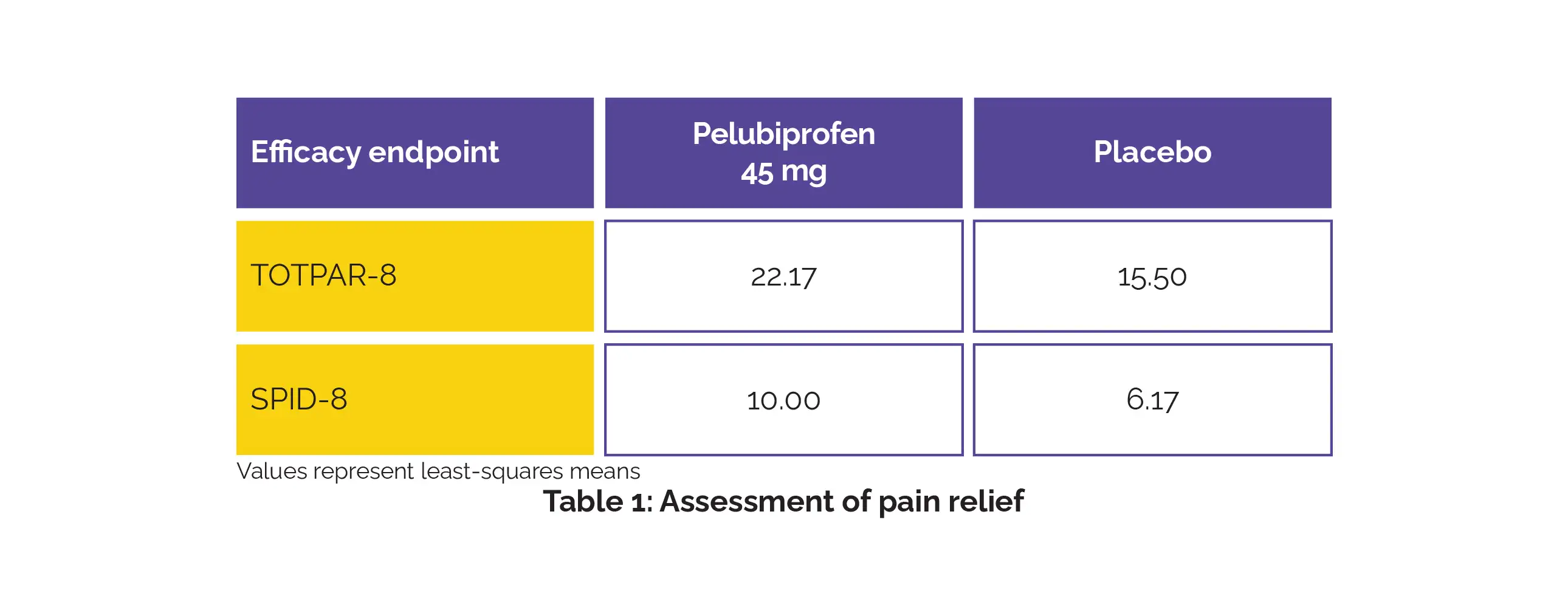
The between-treatment differences remained statistically significant at 12 hours for both TOTPAR-12 and SPID-12, supporting the persistence of the analgesic benefit beyond the primary 8-hour assessment period. TEAEs occurred at similar frequencies during both treatment periods (Table 2).
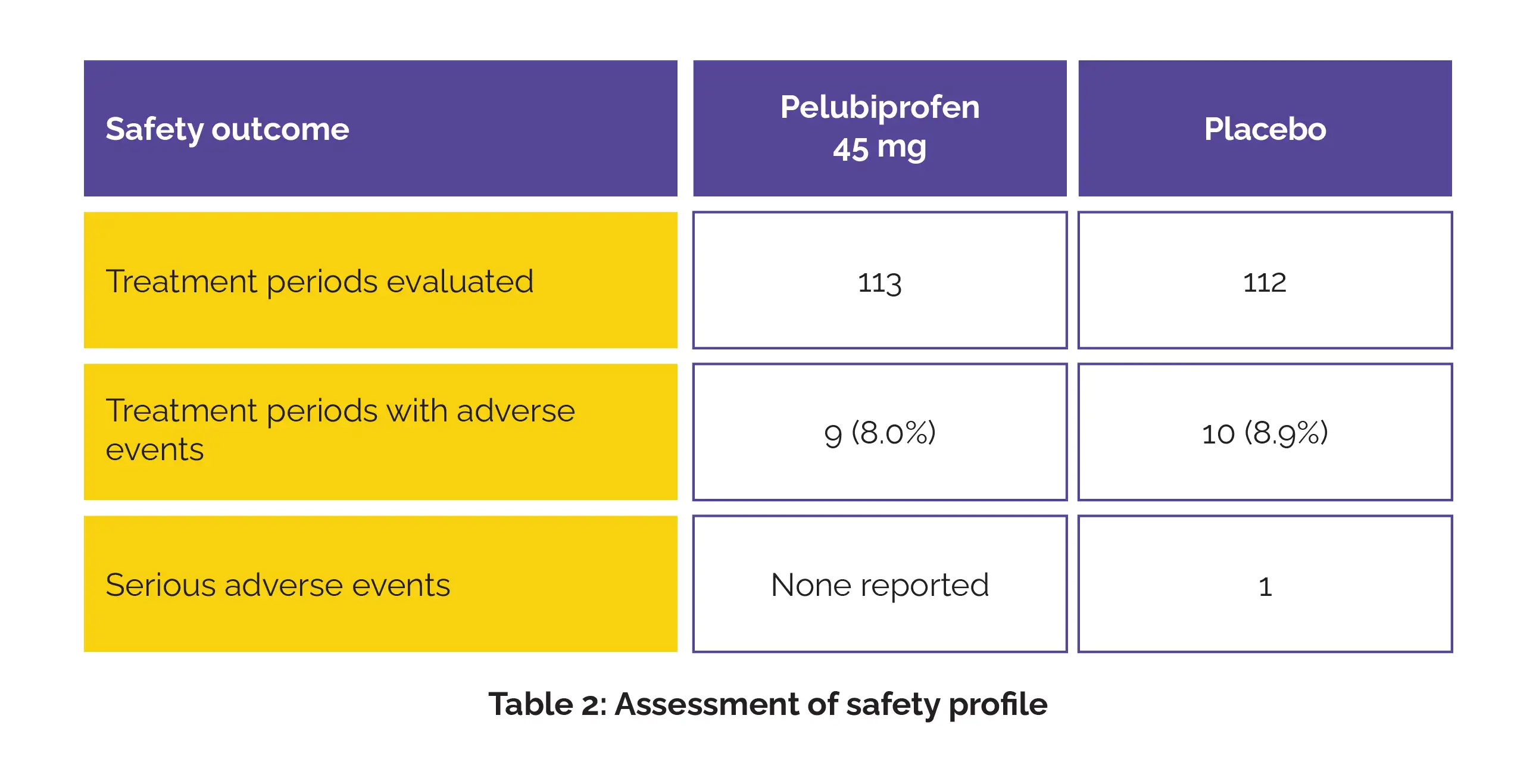
All reported adverse events were mild to moderate in severity. The single serious adverse event occurred during a placebo treatment period and was considered unrelated to study treatment.
For primary dysmenorrhea, pelubiprofen 45 mg use yielded greater short-term analgesic efficacy than placebo in improving cumulative pain relief and mitigating pain intensity over 8 hours, with significant benefits also observed at 12 hours.
Journal of Clinical Medicine
Efficacy and Safety of Pelubiprofen for Primary Dysmenorrhea: A Multicenter, Randomized, Double-Blind, Placebo-Controlled, Two-Period Crossover Trial
Joo Hyun Park et al.














Comments (0)