

Категории
Сменить пароль!
Сброс пароля!



Псориаз, хроническое воспалительное заболевание, связывают с повышенным риском остеопороза.
Валидированная номограмма использует шесть клинических факторов для идентификации пациентов с псориазом с более высоким риском остеопороза и может служить основой для целенаправленного скрининга плотности костной ткани.
Псориаз, хроническое воспалительное заболевание, связывают с повышенным риском остеопороза. Однако у врачей имеется ограниченный набор практических инструментов для выявления пациентов с псориазом, у которых наиболее вероятно снижение минеральной плотности костной ткани. Целью данного исследования являлась разработка и валидация прогностической номограммы для оценки риска остеопороза при псориазе.
В это ретроспективное когортное исследование были включены 639 пациентов с псориазом. Остеопороз был идентифицирован на основе T-показателя двухэнергетической рентгеновской абсорбциометрии (ДЭРА) ≤−2,5. Пациенты были случайным образом распределены в соотношении 7:3 в обучающую когорту (n=447) и в валидационную когорту (n=192). Потенциальные предикторы остеопороза первоначально оценивались с использованием одномерного анализа, а затем оценивались с использованием многомерной логистической регрессии. Эти переменные были включены в номограмму, которая оценивалась с помощью индекса согласованности (C-индекса), анализа кривых принятия решений и калибровочных кривых.
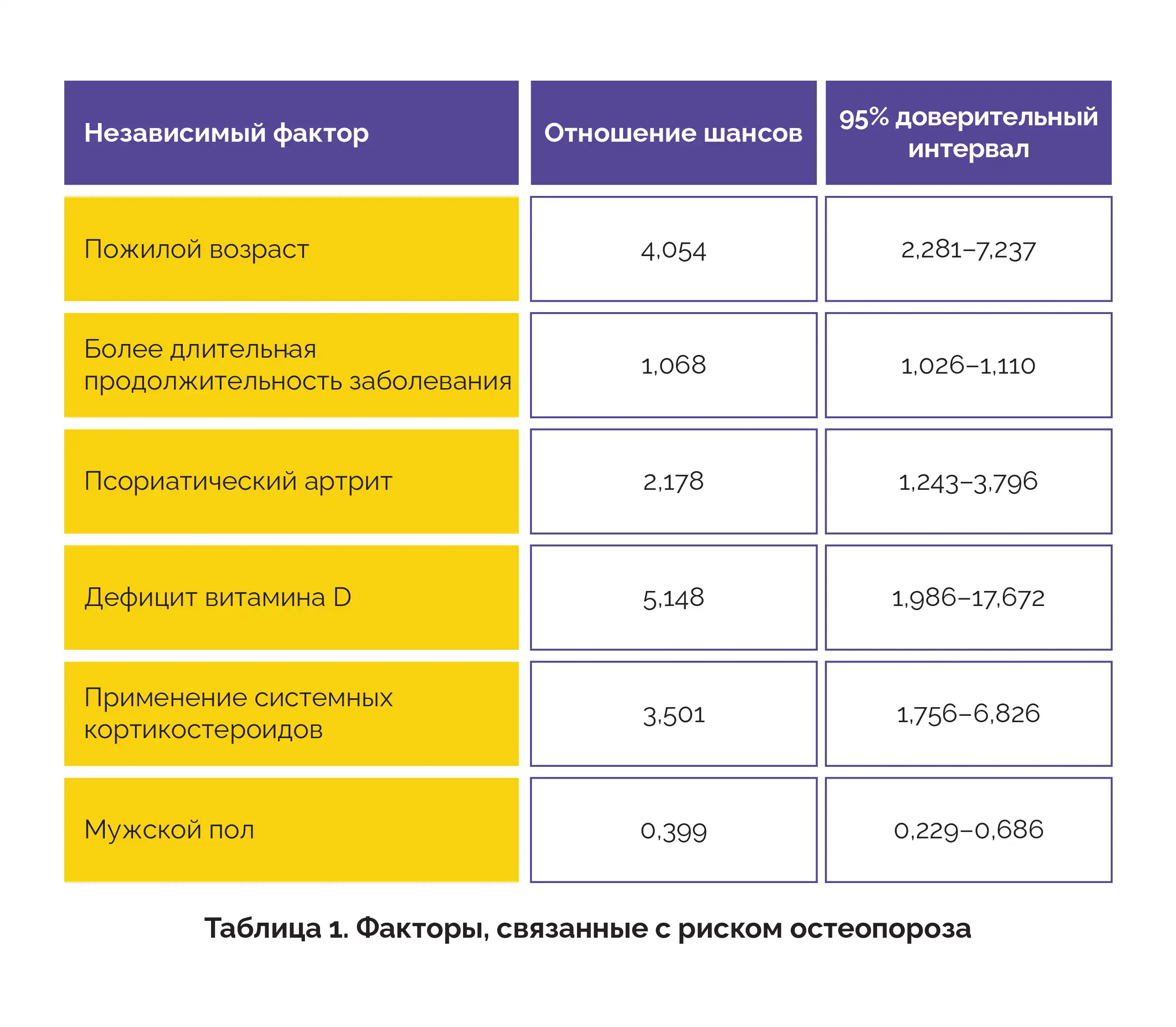
Остеопороз был выявлен у 75 из 639 пациентов (11,7%). Многомерный логистический регрессионный анализ идентифицировал шесть независимых факторов, связанных с остеопорозом у пациентов с псориазом. Пожилой возраст, более длительная продолжительность заболевания, псориатический артрит, дефицит витамина D и применение системных кортикостероидов были связаны с более высоким риском остеопороза, тогда как мужской пол был связан с более низкой вероятностью остеопороза. Среди оцененных факторов дефицит витамина D показал наиболее сильную связь с остеопорозом (таблица 1).
Полученная номограмма продемонстрировала хорошую дискриминирующую способность: площадь под кривой составила 0,824 в обучающей когорте и 0,771 в валидационной когорте. Калибровочные кривые продемонстрировали хорошее соответствие между прогнозируемой и наблюдаемой вероятностью остеопороза. Анализ кривых принятия решений дополнительно продемонстрировал потенциальную клиническую полезность номограммы, поддерживая ее использование для идентификации тех, кто может получить пользу от ДЭРА-скрининга и профилактических вмешательств.
Прогностическая номограмма, включающая возраст, пол, продолжительность псориаза, наличие псориатического артрита, дефицит витамина D и применение системных кортикостероидов, продемонстрировала хорошую прогностическую способность для оценки риска остеопороза у пациентов с псориазом. Модель может помочь клиницистам выявлять пациентов, которым показана более тщательная оценка состояния костной ткани, и способствовать более целенаправленному проведению ДЭРА-скрининга и профилактических вмешательств.
Frontiers in Medicine
Development and validation of a predictive nomogram for osteoporosis in patients with psoriasis
Zhilong Wang и соавт.

















Комментарии (0)