

Категории
Сменить пароль!
Сброс пароля!



Послеродовая депрессия (ПРД) остается одним из наиболее распространенных психических осложнений после родов и может отрицательно влиять на благополучие матери, развитие ребенка и здоровье семьи.
Простой вопрос о менструальных болях, задаваемый во время беременности, позволяет выявить женщин с повышенным риском развития послеродовой депрессии.
Послеродовая депрессия (ПРД) остается одним из наиболее распространенных психических осложнений после родов и может отрицательно влиять на благополучие матери, развитие ребенка и здоровье семьи. Раннее выявление женщин с повышенным риском является приоритетной клинической задачей; однако комплексный скрининг на предмет предменструальных расстройств настроения и проблем с менструальным здоровьем не всегда возможен в рамках рутинного дородового наблюдения.
Поэтому простые, масштабируемые подходы к скринингу могут улучшить стратификацию риска во время беременности. Исследователи оценили, может ли один вопрос с ответом "да/нет" о менструальной боли выявить беременных женщин с повышенным риском развития послеродовых депрессивных симптомов.
Было проведено ретроспективное когортное исследование в специализированном перинатальном центре. Информация о менструальных болях регулярно регистрировалась во время дородовых осмотров и классифицировалась как бинарный показатель (наличие или отсутствие менструальных болей). Первичной конечной точкой были симптомы ПРД, определяемые как оценка по Эдинбургской шкале послеродовой депрессии (EPDS) 9 баллов или выше через один месяц после родов.
Для оценки скорректированных отношений шансов был проведен многофакторный логистический регрессионный анализ с контролем возраста матери, индекса массы тела, лечения бесплодия, паритета, многоплодной беременности, курения во время беременности и предшествующего психиатрического анамнеза. С целью проверки устойчивости выводов также был проведен анализ чувствительности с использованием множественной подстановки отсутствующих значений.
Анализ включил 5 096 женщин и продемонстрировал значительную связь между наличием менструальной боли в анамнезе и повышенным риском ПРД через один месяц после родов. Женщины, сообщавшие о менструальной боли, имели более высокий риск симптомов ПРД по сравнению с женщинами без менструальной боли (таблица 1).
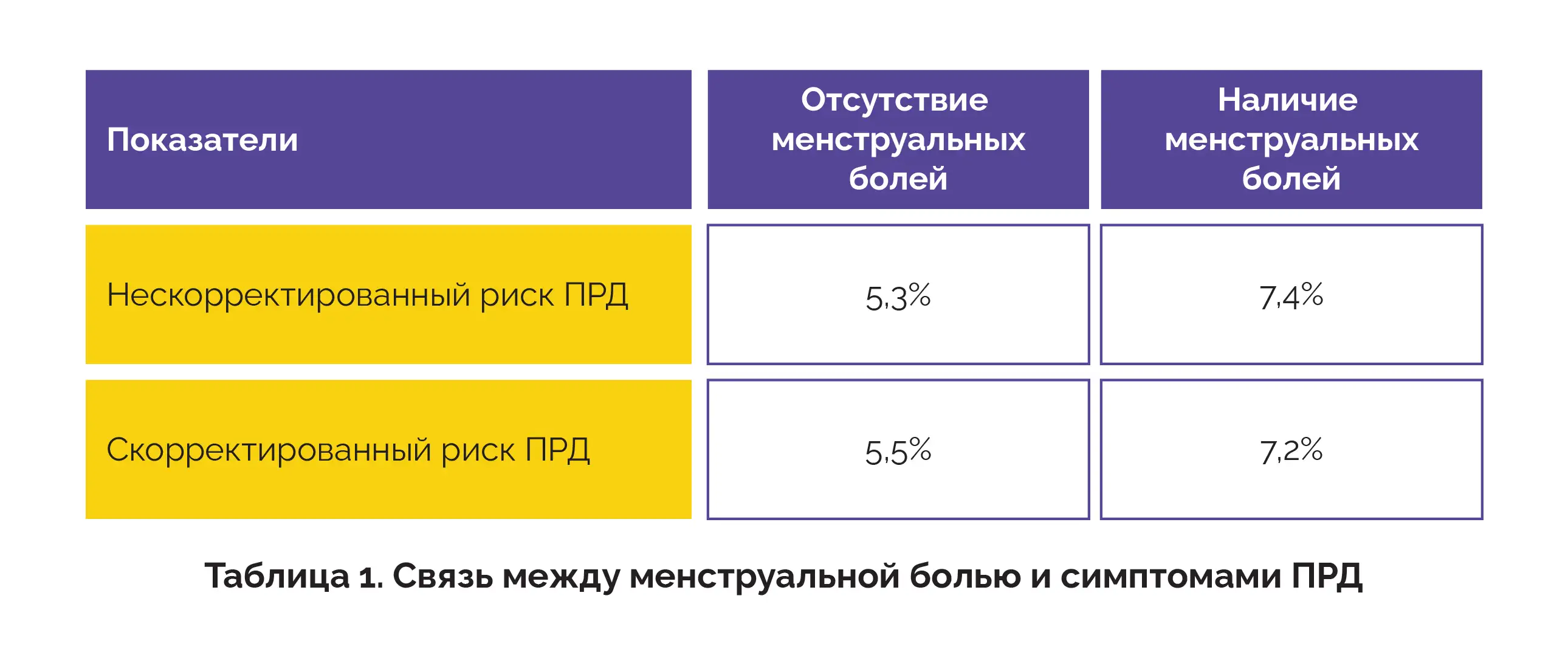
Эти результаты подтвердили полезность простого вопроса о менструальной боли как потенциального индикатора повышенного риска развития ПРД. У женщин с менструальной болью скорректированная вероятность симптомов ПРД была на 39% выше (скорректированное отношение шансов: 1,39; 95% доверительный интервал: 1,09–1,77), скорректированный риск — на 30% выше (относительный риск: 1,3), а абсолютное повышение риска составило 1,7 процентного пункта.
Полученные результаты показали, что регулярное документирование истории менструальных болей может помочь выявить беременных женщин, которые могут быть более подвержены риску развития симптомов ПРД. Сбор этой легко получаемой информации во время стандартного дородового наблюдения может улучшить прогнозирование риска, расширить возможности раннего вмешательства и способствовать улучшению психического здоровья матери после родов.
Journal of Midwifery & Women's Health
A Single Menstrual Pain Question at Routine Antenatal Visits Flags Risk of Postpartum Depressive Symptoms: A Retrospective Cohort Study
Takuma Yamada и соавт.

















Комментарии (0)