

Категории
Сменить пароль!
Сброс пароля!



Созданный с помощью ИИ лиганд, производное цетиризина, демонстрирует более сильное прогнозируемое связывание как с гистаминовыми рецепторами H1, так и с H2, чем сам цетиризин, а также благоприятные фармакокинетические и токсикологические профили.
Что если знакомый антигистаминный препарат можно было бы перепроектировать так, чтобы он действовал на два гистаминовых рецептора вместо одного? Новое компьютерное исследование по дизайну лекарственных препаратов предполагает, что искусственный интеллект (ИИ) может помочь сделать это возможным.
Цетиризин — широко используемый антигистаминный препарат второго поколения, который в первую очередь блокирует гистаминовый H1 рецептор (HRH1) и обычно применяется для лечения аллергических состояний, таких как аллергический ринит, крапивница и другие аллергические проявления. Однако гистамин также оказывает действие через гистаминовый H2 рецептор (HRH2), что вызывает интерес к соединениям, способным взаимодействовать с обоими подтипами рецепторов.
Исследователи разработали и оценили производные цетиризина с использованием вычислительного конвейера, включающего поиск и валидацию рецепторов, молекулярный докинг, анализ абсорбции, распределения, метаболизма, выведения и токсичности (ADMET) и моделирование молекулярной динамики. Главным кандидатом стал созданный ИИ лиганд 2, который показал существенно более сильное прогнозируемое связывание с обоими рецепторами, чем цетиризин (таблица 1).
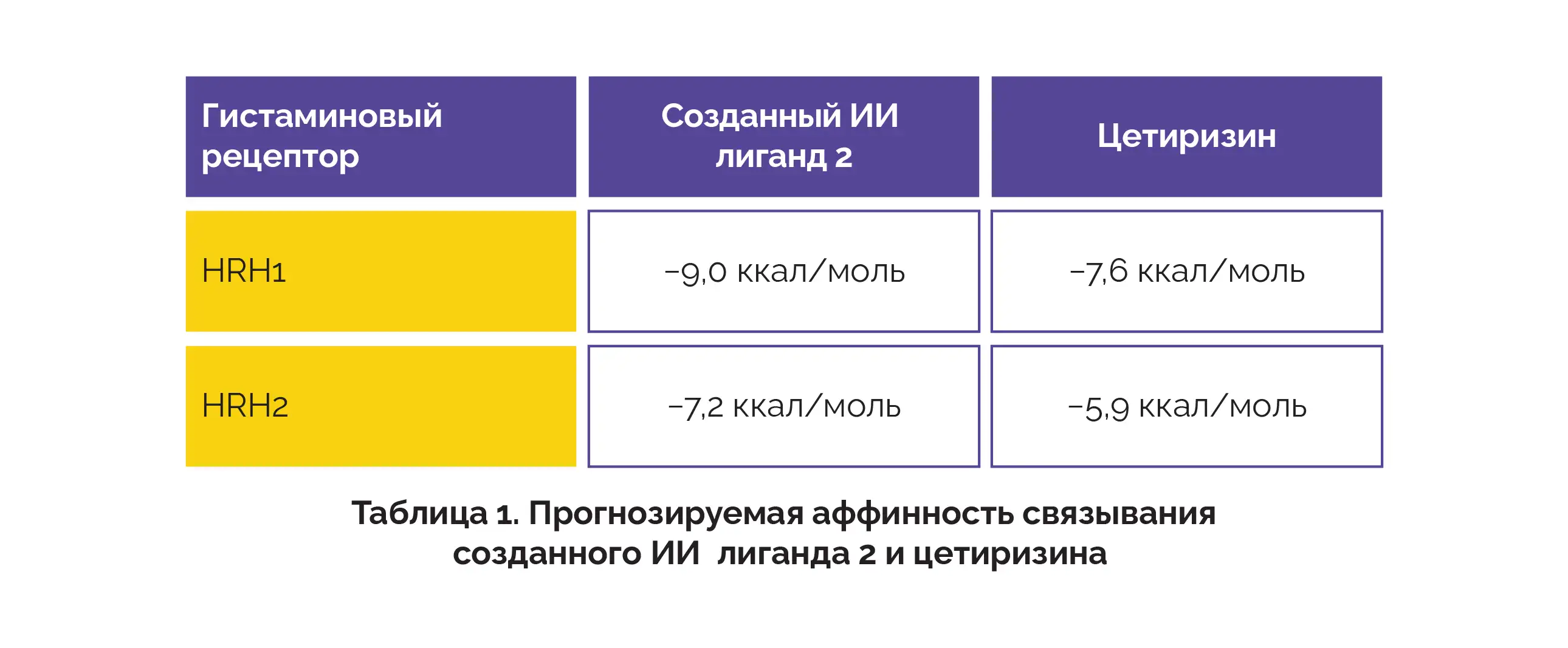
Эти более отрицательные значения параметров докинга указывали на более высокую прогнозируемую аффинность связывания лиганда 2 с обоими целевыми рецепторами. Вычислительная оценка также дала обнадеживающие фармакокинетические сигналы. Созданные ИИ лиганды показали хорошую липофильность и абсорбцию в желудочно-кишечном тракте, при этом не нарушая правило пяти Липинского. Важно, что прогнозы ADMET указывали на более низкую токсичность, чем у цетиризина, добавляя еще одну благоприятную характеристику к вычислительному профилю ведущих соединений.
Моделирование молекулярной динамики дало дополнительное подтверждение, показав стабильное связывание и благоприятные взаимодействия между созданным ИИ ведущим соединением и обоими рецепторами HRH1 и HRH2. Эти результаты показывают, как оптимизация молекулярных структур с помощью ИИ может быть использована для модификации существующих лекарственных скаффолдов и выявления кандидатов с более широким спектром воздействия на рецепторы. Молекула — производное цетиризина, — способная взаимодействовать как с гистаминовыми рецепторами H1, так и H2, потенциально может предложить новую стратегию для исследования аллергических заболеваний, в которых важна передача сигналов через множественные гистаминовые рецепторы.
ChemistrySelect
AI-Driven Optimization of Cetirizine-Derived Ligands Targeting Histamine H1 and H2 Receptors: A Computational Drug Design Study
Muhammad Naveed и соавт.
















Комментарии (0)