

Categories
Change Password!
Reset Password!


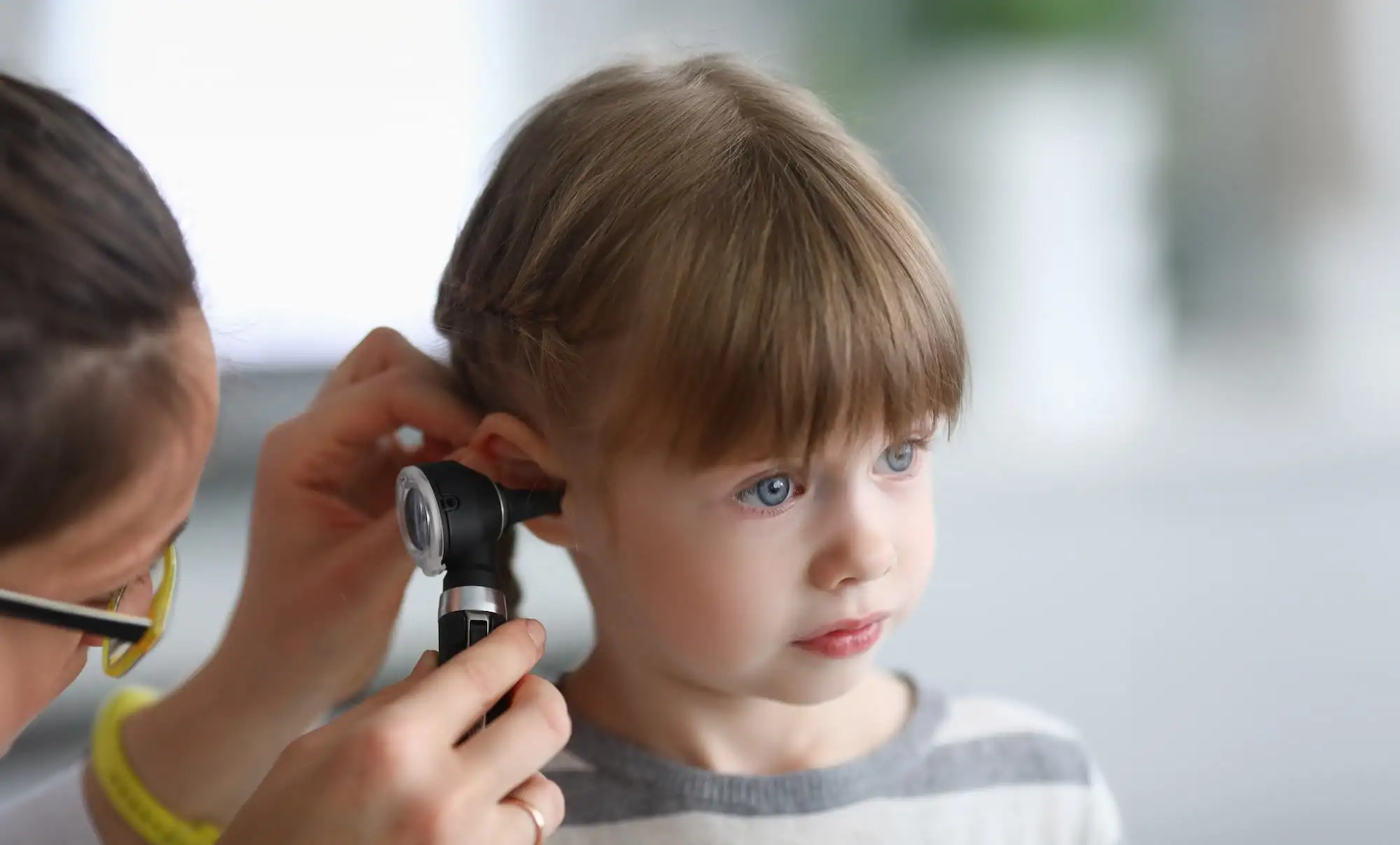
Otitis media (OM) remains one of the most common childhood infections worldwide and continues to demand timely, accurate diagnosis to reduce complications and avoid unnecessary antibiotic use.
Telehealth technologies are transforming pediatric otitis media management by supporting accurate diagnosis and more efficient care delivery.
Otitis media (OM) remains one of the most common childhood infections worldwide and continues to demand timely, accurate diagnosis to reduce complications and avoid unnecessary antibiotic use. Conventional assessment still depends largely on in-person pneumatic otoscopy, which can be difficult to access in remote or underserved settings, while rapid advances in telemedicine, digital imaging, and remote diagnostic tools are opening new possibilities for improving pediatric ear care without compromising diagnostic quality.
This study aimed to map the telehealth technologies and care models currently used for pediatric OM and to assess their diagnostic performance, implementation outcomes, and clinical utility in routine practice.
A scoping review was performed in accordance with Preferred Reporting Items for Systematic reviews and Meta-Analyses extension for Scoping Reviews (PRISMA-ScR) guidance. Comprehensive searches were conducted in MEDLINE, Scopus, Web of Science, and the Cochrane Central Register of Controlled Trials to identify original English-language studies published between January 2010 and February 2026 that assessed telemedicine or digital health interventions in children younger than 18 years with suspected or confirmed OM.
Eligible studies included clinical implementation reports involving telehealth-based diagnosis, monitoring, or management, while reviews, editorials, protocols, conference abstracts, adult-only studies, and purely technical validation studies were excluded. Two reviewers independently screened records, selected studies, and extracted data on telehealth model, technology platform, user group, comparator, clinical outcomes, and implementation barriers. The evidence was then synthesized using a practice-oriented mapping approach that aligned telehealth tools with care pathways, operational settings, and real-world feasibility.
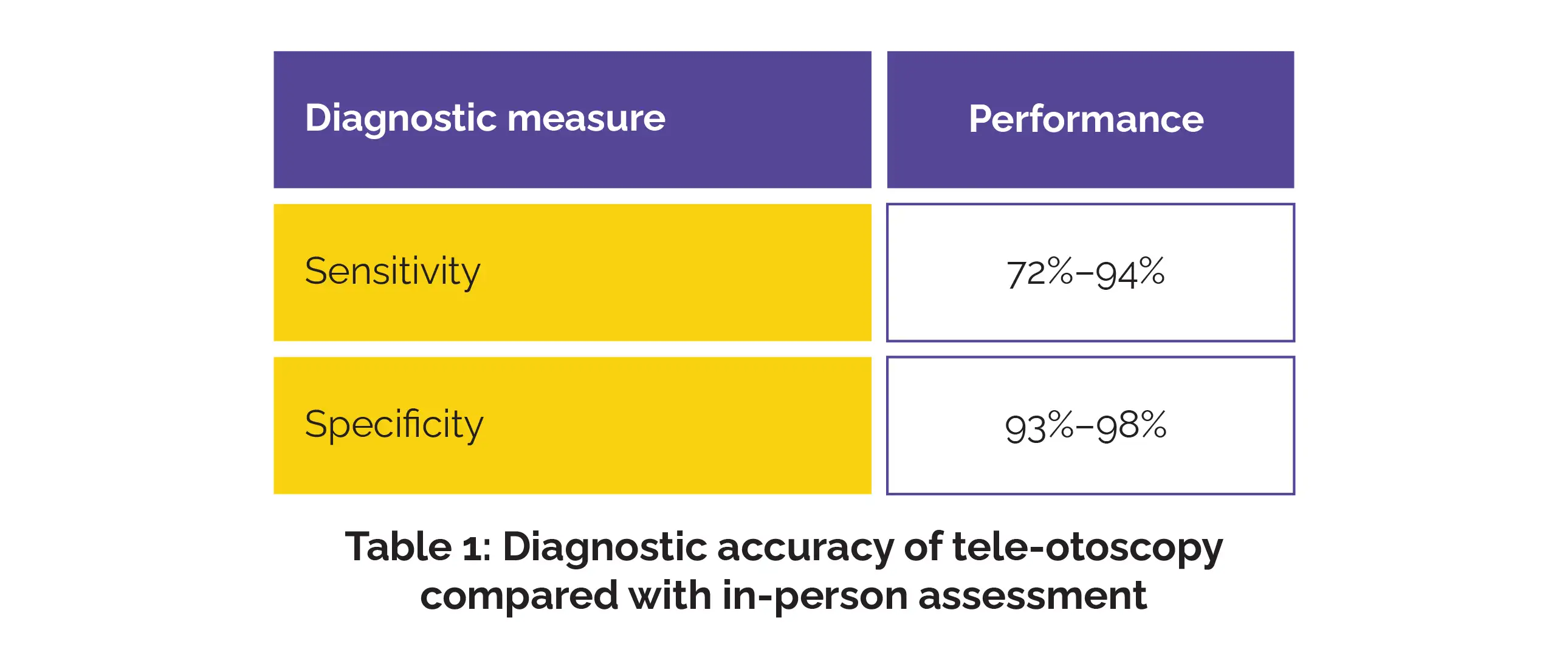
A total of 52 studies conducted across 18 countries were included, highlighting the growing global adoption of telehealth solutions for pediatric OM and providing important insights into their diagnostic performance and clinical utility (Table 1).
Diagnostic performance depended heavily on operator training: structured training improved image quality among parents and non-specialists, whereas brief or written-only instructions elicited few diagnostically useful recordings. Telemedicine enhanced access to care, supported perioperative follow-up, reduced repeat examinations in some settings, and encouraged more appropriate antibiotic use.
However, televisits without otoscopy illustrated lower rates of confirming middle ear effusion before tympanostomy tube placement. Overall, the evidence was limited by heterogeneous study designs, mostly small single-center studies, inconsistent reference standards and training, and rapidly evolving telemedicine technologies.
Telehealth demonstrated meaningful potential to reshape pediatric OM care by extending specialist evaluation beyond conventional clinic settings without compromising diagnostic accuracy. Tele-otoscopy, in particular, improved access, supported follow-up care, and enhanced service efficiency across diverse settings. Its success, however, remained closely tied to image quality, operator training, and workflow standardization.
JMIR Publications
Telehealth Approaches for Pediatric Otitis Media and Clinical Outcomes: Scoping Review
Masao Noda et al.















Comments (0)