

Categories
Change Password!
Reset Password!


Early exposure to antibiotics and stomach acid suppressors appears to reshape allergy risk, placing the infant microbiome at the center of food allergy prevention.
The early-life microbiome now stands at the forefront of allergy research, leading investigators to assess how medications that alter microbial ecosystems during pregnancy and infancy shaped childhood food allergy risk.
Researchers conducted a systematic review and meta-analysis of evidence drawn from major biomedical databases like Web of Science, Cochrane Library, EMBASE, and PubMed. The analysis integrated findings from 25 studies encompassing 1,662,861 mothers and 5,164,280 children to evaluate how exposure to microbiome-modulating medications during pregnancy and early life influenced the development of childhood food allergies.
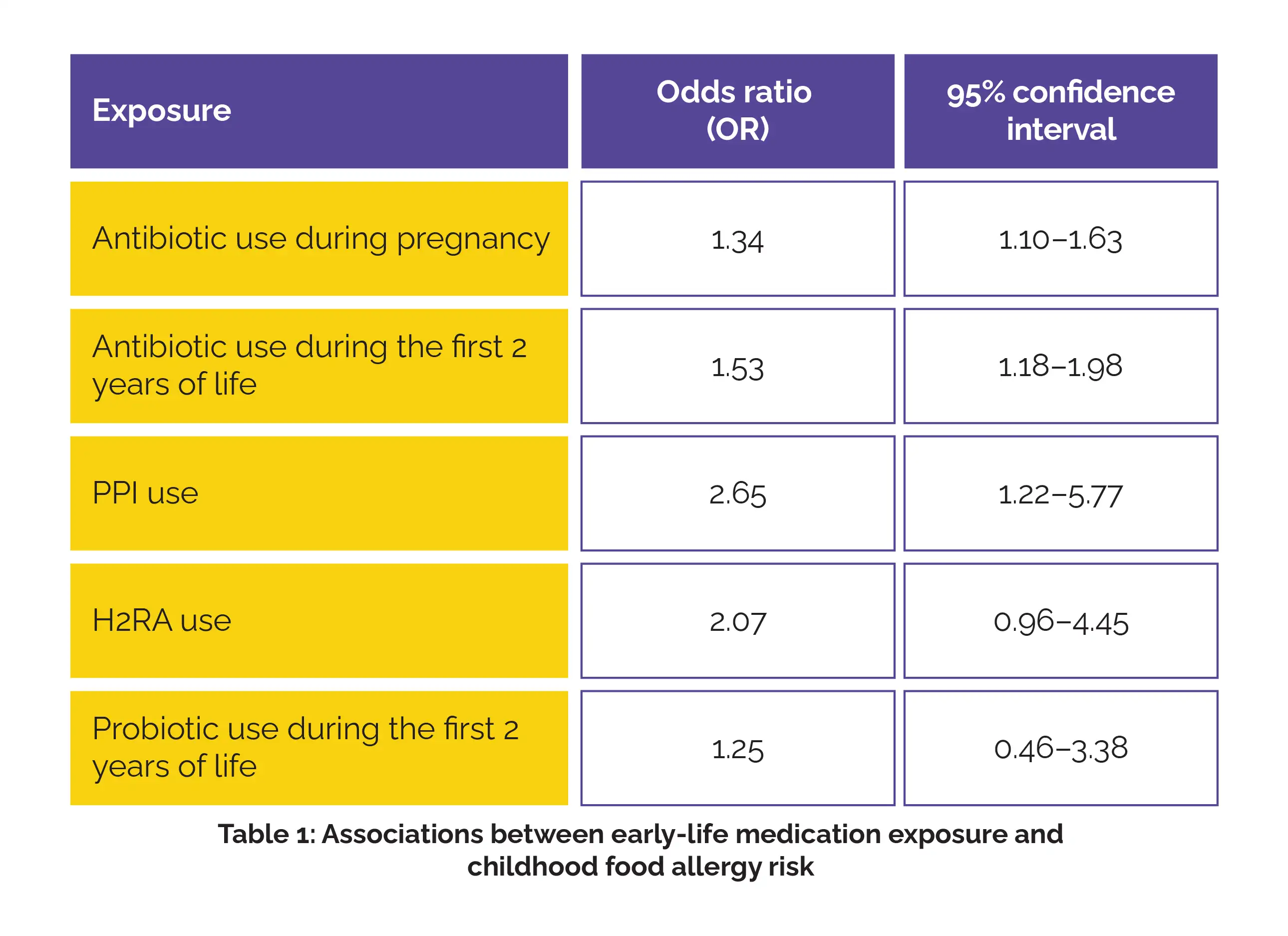
The findings showed that antibiotic exposure both before birth and during the first two years of life was associated with increased odds of childhood food allergy, with the strongest relationship observed for proton pump inhibitor (PPI) use. In contrast, histamine-2-receptor antagonists (H2-RAs) did not reach statistical significance, while probiotic supplementation during early childhood did not portray a measurable protective effect against food allergy development (Table 1).
The study added to mounting evidence that the developing microbiome may represent a critical window for shaping future allergy risk. Although causality was not established, the results underscored the importance of thoughtful prescribing practices during pregnancy and early childhood, especially in families already burdened by allergic disease.
Journal of Clinical Medicine
Prenatal and Early-Life Exposure to Microbiome-Modulating Medications and the Risk of Childhood Food Allergy: A Systematic Review and Meta-Analysis
Diána Bodó et al.












Comments (0)