

Categories
Change Password!
Reset Password!



Tirzepatide, a dual glucose-dependent insulinotropic polypeptide (GIP) and glucagon-like peptide-1 (GLP-1) receptor agonist, has demonstrated substantial benefits in weight loss, hemoglobin A1c (HbA1c) reduction, and overall glycemic control in adults with type 2 diabetes mellitus (T2DM) and obesity.
Tirzepatide, administered once weekly, provides greater weight reduction and HbA1c improvement than insulin in patients with type 2 diabetes mellitus and obesity.
Tirzepatide, a dual glucose-dependent insulinotropic polypeptide (GIP) and glucagon-like peptide-1 (GLP-1) receptor agonist, has demonstrated substantial benefits in weight loss, hemoglobin A1c (HbA1c) reduction, and overall glycemic control in adults with type 2 diabetes mellitus (T2DM) and obesity. This study sought to compare tirzepatide's effectiveness and safety profile across different weekly doses (5 mg, 10 mg, and 15 mg).
Eligible randomized controlled trials (RCTs) compared once-weekly tirzepatide (5 mg, 10 mg, or 15 mg) with placebo, insulin therapy, or GLP-1 receptor agonists in adults diagnosed with T2DM and/or obesity. Random-effects models were used for calculating mean differences (MDs) for the continuous outcomes and relative risks (RRs) for the categorical outcomes. Treatment hierarchy was evaluated via the Surface Under the Cumulative Ranking Curve (SUCRA). The evidence certainty was checked using the CINeMA framework.
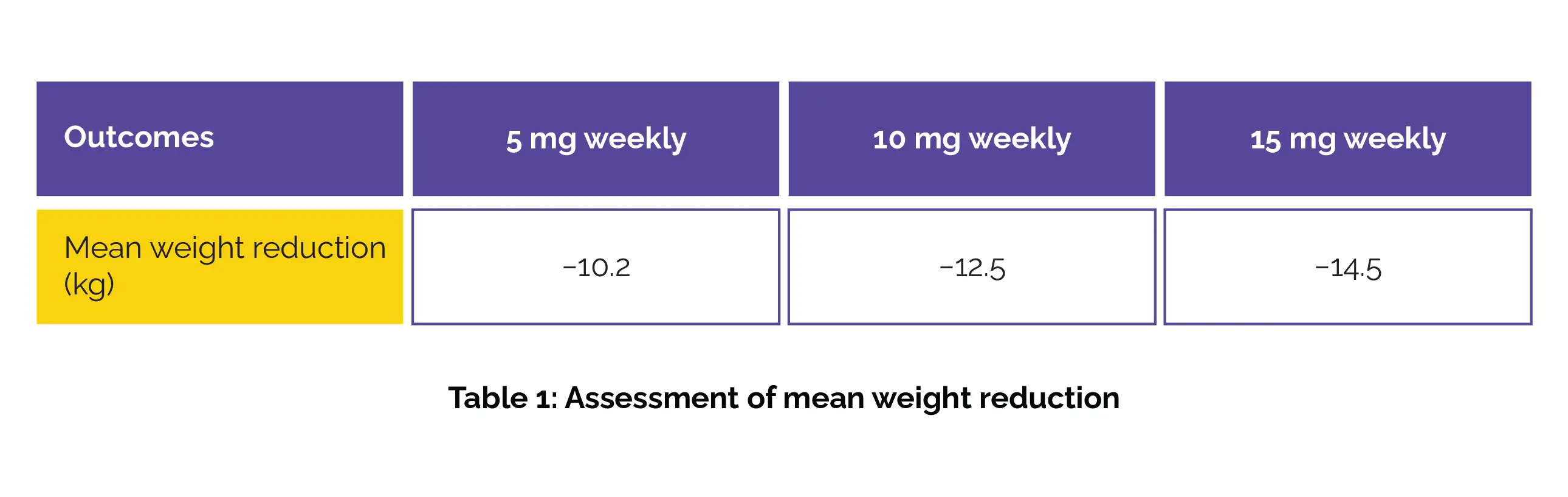
In this systematic review and network meta-analysis, 13 RCTs involving 14,007 volunteers were included. Tirzepatide demonstrated dose-dependent and clinically significant weight reduction when compared with insulin therapy, as depicted in Table 1:
Higher-dose tirzepatide substantially increased the likelihood of achieving:
Regarding safety outcomes, tirzepatide was associated with:
Tirzepatide illustrated dose-dependent superiority in weight reduction, glycemic control, and cardiometabolic improvement, with a lower risk of hypoglycemia and serious adverse events compared with insulin therapy. While gastrointestinal side effects were more frequent, the overall benefit–risk profile supported tirzepatide as a frontline treatment option for T2DM and obesity care, particularly at higher weekly doses.
Expert Opinion on Drug Safety
The efficacy and safety of dual GIP/GLP1 receptor agonists (tirzepatide) in diabetes and obesity: a systematic review and network meta-analysis
Karolina Hoffmann et al.














Comments (0)