

Categories
Change Password!
Reset Password!


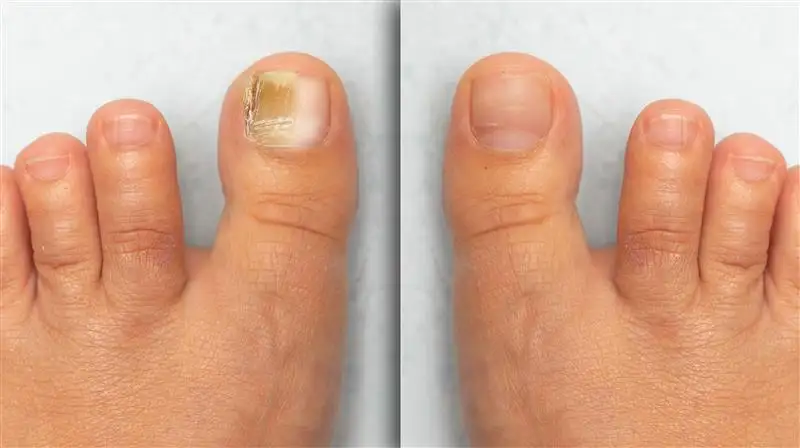
Onychomycosis (OM), a common fungal nail infection, often requires long-term therapy and remains cumbersome to treat successfully.
Topical efinaconazole 10% substantially improves mycologic and clinical cure rates in mild-to-moderate onychomycosis across White, Asian, and Black patients.
Onychomycosis (OM), a common fungal nail infection, often requires long-term therapy and remains cumbersome to treat successfully. Efinaconazole 10% solution, a topical triazole antifungal treatment for OM, has previously demonstrated significant efficacy and safety in phase 3 clinical trials. However, limited research has evaluated OM treatment outcomes in diverse skin-type populations. This post-hoc analysis examined the clinical efficacy and safety of efinaconazole across different racial populations to determine whether treatment responses differ among diverse patient groups.
Data were pooled from two multicenter, randomized, double-blind phase 3 trials. Adults aged 18–70 years with mild-to-moderate distal lateral subungual OM impacting at least one great toenail were randomized in a 3:1 ratio to receive once-daily topical efinaconazole 10% solution or vehicle for about 48 weeks. Key efficacy outcomes assessed at week 52 incorporated:
Treatment-emergent adverse events were also evaluated to explore the safety profile of topical antifungal therapy.
A total of 1,655 volunteers were included and categorized by self-reported race: White (n=1251), Asian (n=269), and Black (n=98). Across all racial groups, efinaconazole 10% solution elicited higher cure and response rates compared with vehicle treatment at week 52 (Table 1).

Overall, MC rates were substantially higher with efinaconazole treatment, ranging from 53.4% to 61.4%, compared with 10.7% to 30.4% in vehicle-treated patients. Most treatment-related adverse events were mild to moderate, and treatment discontinuation rates remained low (<6%), indicating good tolerability of the topical antifungal therapy.
Topical efinaconazole 10% solution illustrated consistent efficacy and a favorable safety profile for the treatment of mild-to-moderate OM in White, Asian, and Black patients. These findings are consistent with results from the overall phase 3 clinical trial population, supporting efinaconazole as an effective topical antifungal for fungal nail infections across diverse racial groups, including patients with skin of color.
Journal of Drugs in Dermatology
Topical Efinaconazole 10% for Onychomycosis: Pooled Phase 3 Analysis in White, Black, and Asian Participants
Shari R Lipner et al.













Comments (0)